Horse Pulling
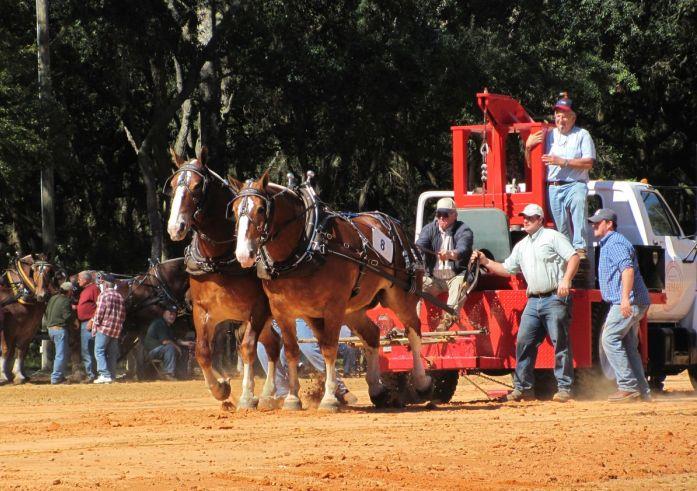
Horse pulling is a strength competition where draft horses, usually a harnessed pair, drag a weighted sled along a marked track, with the load going up each round until only one team can still complete the pull. It comes straight out of the working-horse tradition, and at its best it is a genuine test of training, footing, harness fit and cool-headed judgement. Watched or run properly, it is controlled and quietly impressive. Run badly, it slides into avoidable strain, heat stress and gear injuries. This guide covers what horse pulling is, how competitions typically work, the equipment involved, and the welfare checks that keep it fair to the horse.
What horse pulling actually is
In most places, horse pulling (also called horse weight pulling or a draft horse pull) is a competition in which a team, commonly a pair, pulls a weighted sled a set distance along a defined lane. Weight is added in rounds until only one team can still finish the required pull under the event's rules.
The rules are not standardised worldwide. Distance, number of attempts, lane width, starting weights and how the increments step up are set by the organising committee and published as event rules. Reading the rules for the exact show you are attending is part of doing this safely and fairly.4
History and Origin
Pulling contests grew out of farming communities, where working horses were judged on steady power rather than speed. In the UK and elsewhere, heavy horses have long been shown and compared at fairs and rural gatherings, and pulling stayed tied to that show tradition. Today you are far more likely to see a pull staged as part of an agricultural show program than as a standalone professional circuit.
How competitions are run
Most events follow the same pattern. A team pulls the sled for an official distance. Make the distance within the rules and they come back for the next round at a heavier setting. Miss it and they are out.
Common elements you will see in the rules:
- Weigh-in and classes: horses or teams are weighed and assigned to weight classes before competing.4
- A defined pulling lane: a marked lane keeps the team straight and cuts down collisions and tangles. Stepping out may count as a failed attempt, depending on the rules.4
- An official distance: many events require a set pull distance for the attempt to count.4
- Limited attempts, or trials: teams usually get a fixed number of tries at each weight, with time limits for hitching and pulling.4
As a spectator, the most useful thing to watch is not the final weight on the sled but how the run is managed: quiet hitching, straight pulling, consistent footing, and a team that is stopped promptly when a pull is clearly not happening.
Formats vary, and some events are local traditions rather than formal disciplines. You will commonly see team pulling in pairs, where two horses pull together in harness with a driver managing the start, line and stop; single-horse classes, where one horse pulls the sled, often with a different weight progression than pairs; and exhibition or novelty pulls, run for display rather than serious competition, which should still follow basic welfare and safety practice. Be wary of anything described as a tug-of-war. Traditional weight pulling is about moving a load forward under control, not hauling against another horse pulling the opposite way. If an event advertises itself in a way that encourages conflict or chaos, treat that as a red flag.
Training and conditioning
Horses that pull well are the ones trained patiently: fit enough to work, calm enough to stand, and comfortable with harness pressure and noise. Conditioning is built gradually, with close attention to soundness, recovery and any behaviour that suggests discomfort.
Good preparation tends to look like this:
- Vet and farrier basics handled early: pulling demands traction and stability, so feet that are overdue, unbalanced or sore show up fast under load.
- Progressive loading: start light, repeat calm and correct efforts, and add load in small steps over time.
- Stop and start control: a safe pull is one where the horse can be asked to stop, stand and step off quietly.
If a horse is repeatedly failing to move the sled, scrambling or showing distress, the right response is to end the attempt, not to ask harder. Welfare codes for working horses are clear that animals showing signs of distress or overwork should be rested immediately, and not worked beyond their fitness or soundness.8
Equipment and the handler's job
Most incidents in pulling trace back to a short chain of causes: poor fit, rushed hitching, bad footing, and too much load too soon. The equipment exists to break that chain.
A properly fitted harness spreads the load across the horse's body and avoids pressure points that rub, pinch or restrict breathing. Harness should be checked for fit and condition before use, and re-checked regularly, especially if several horses share gear or a horse's condition changes across the season.2 Sleds and attachments should be strong, well maintained and compatible, particularly the hooks, singletrees or doubletrees, and traces. Event rules often specify which attachments are allowed and how hitching is timed and managed.4 Footing is not a minor detail either. A well-prepared surface reduces slipping and sudden strain and gives horses consistent feedback as they lean into the load.
The handler, sometimes called the driver or teamster, is responsible for the horse's safety in the moments that matter: hitching, the first step into the collar, and the instant a pull becomes unsafe. That job is mostly judgement. Guidance for driving consistently stresses correct harness fit, appropriate equipment and ongoing safety checks, because small failures compound quickly once a horse is attached to a moving load.2
Safety and welfare
Horse pulling belongs to the wider world of working horses: animals asked to do physical labour in public, often around noise, crowds and unfamiliar surfaces. Welfare is protected when organisers and competitors treat fatigue, heat and pain as hard stop-signs rather than obstacles to push through.
Pulling is short but intense. In hot conditions horses can overheat quickly during strenuous work, and the risk climbs if humidity is high or cooling is delayed.6 The practical welfare advice in Australia is straightforward: avoid working horses in the hottest part of the day, provide plenty of water, and cool them down promptly after exertion, including hosing and shade where possible.7
If you are new to the sport, it helps to name what too much looks like. Stop and reassess if you see:
- stumbling, repeated slipping, or scrambling for traction
- gait irregularity, obvious lameness, or a sudden change in stride
- behaviour suggesting the harness is uncomfortable (buckling, backing, repeated head tossing) that does not settle with a simple check
- heavy panting or rapid breathing that does not settle quickly, dullness, or collapse risk in heat6
Cues need to stay lawful and humane. Different equestrian codes regulate whip design and use in detail. Australian harness racing rules, for example, specify approved whips and prohibit use that is excessive, improper, or causes injury.9 Even where pulling events do not mirror racing regulations, the underlying principle is consistent across reputable bodies: avoid methods that intentionally cause pain or distress, and prioritise controlled, competent handling over force.10
Honest claims and the sport's future
Horse pulling has strong local heroes and long-running rivalries, but many national champion claims online are unverifiable without a specific organising body, a results archive and a dated title. If you are writing up or promoting results, use the exact competition name, location and year, and link to the organiser's published results.
The sport's future rests on the same thing shaping every public animal competition: visible welfare standards, clear rules, and officials who will stop a run early when conditions turn against the horse. That is how pulling stays what it is at its best, measured, traditional and tightly controlled, rather than just heavy work in front of a crowd.
References
- Horse pulling (overview and competition format), Wikipedia
- Code of practice for horse-drawn vehicles (harness fit and safety), GOV.UK
- Horse care and welfare, The British Horse Society
- Horse pull rules (example event rules: weigh-in, lane width, distance, trials), Warren County Fair
- Code of Practice for the Welfare of Horses at Horse Hire Establishments (work limits, distress and overwork), Agriculture Victoria
- Hot weather and exertional heat illness risk in horses, RSPCA Australia Knowledgebase
- Tips for keeping horses cool in summer (work timing, cooling down, hydration), RSPCA Australia
- Supervisor responsibilities (rest immediately if distressed or overworked), Agriculture Victoria
- Australian Harness Racing Rules (whip use: approved use, not excessive, must not cause injury), Harness Racing Australia
- Animal Welfare Policy (welfare primary; no extended mental or physical distress), Australian Quarter Horse Association

Dog lover and writer at My Pets Australia, sharing practical breed guides and care advice for Australian pet owners.