Grey Cheeked Parakeet
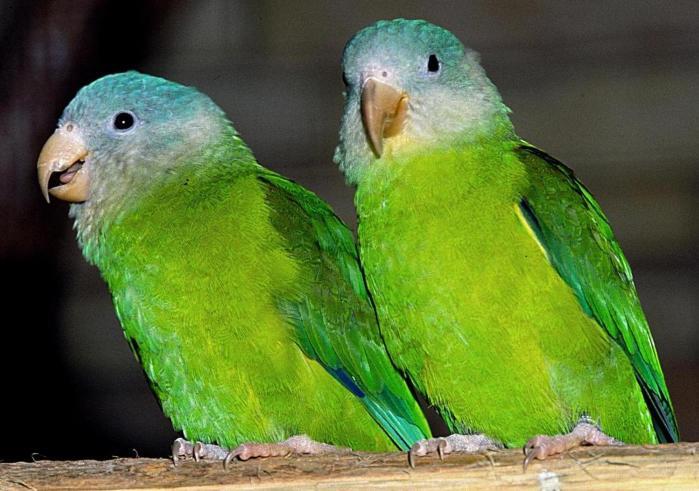
The grey-cheeked parakeet (Brotogeris pyrrhoptera) is a small, bright green South American parrot with a pale grey face, a bluish crown and flashes of orange-red under the wings. It is agile, chatty and social, the kind of compact parrot that fills a room with movement rather than sitting quietly on a perch. It is also confused online more often than almost any small parrot, usually with the unrelated "green-cheeked conure". Before you get attached, one practical point for Australian readers: this is a CITES-listed species with a restricted wild range, and keeping or importing one here depends on strict biosecurity and permit rules that vary with the Live Import List. This profile covers what the bird actually is, how it lives, and what responsible care and legality look like.1, 2
Quick facts
- Scientific name: Brotogeris pyrrhoptera1
- Adult size: about 20 cm, a small parrot3
- Typical weight: roughly 45 to 60 g3
- Wild range: south-west Ecuador and extreme north-west Peru1, 2
- IUCN Red List status: Vulnerable3
- CITES: Appendix II, so international trade is controlled5, 6
Appearance and Physical Characteristics
In the field the grey-cheeked parakeet reads as a compact, mostly green bird with a noticeably pale grey face and cheek. Look for a bluish crown and warm colour under the wings, with orange to red tones showing when it flies or stretches.1, 2
It is often mistaken for a "green-cheeked conure", which is a different group, usually Pyrrhura species, and it is sometimes wrongly described as an Australian or New Zealand native. It is neither. This species belongs to the South American genus Brotogeris and occurs naturally only in a small corner of Ecuador and Peru.1, 2
Habitat and Distribution
The species has a restricted natural range in south-west Ecuador and extreme north-west Peru. It uses a mix of wooded habitats, including dry forest and deciduous woodland, plus degraded forest edges and farmland with larger trees, the sort of places where flowering and fruiting trees still punctuate the landscape.2, 3
That limited range is part of why the bird is vulnerable. When the remaining forest is fragmented, the birds lose nesting hollows, feeding trees and safe travel corridors between sites.3
Temperament and Personality
In the wild, grey-cheeked parakeets are usually seen in pairs or small, moving groups rather than large stationary flocks. They are conspicuous by voice, with fast trilling calls in flight and sharper notes when perched, which often gives away the flock before you spot it in the canopy.3, 4
They are built for motion: short commutes between feed trees, quick climbs through branches and frequent flight. In captivity that same energy shows up as restlessness if the environment is too small or too bare.
Is a Grey-Cheeked Parakeet Right for You?
These are small parrots, but they are not small-needs birds. A grey-cheeked parakeet does best with room to move, daily interaction and a habitat set up for climbing, chewing and foraging rather than sitting still.
On the plus side, they are compact compared with many parrots while staying agile and expressive, and their active, social routines suit keepers who enjoy daily enrichment, training and observation. The honest counterweights are noise, since small parrots can produce surprisingly sharp calls in the morning and late afternoon; time and consistency, because behaviour problems usually start as boredom from too little flight time and an unchanging environment; and diet management, since seed-heavy feeding is easy, popular and often nutritionally lopsided over the long term.7
Care and Housing
Think in terms of movement, not just cage measurements. A larger enclosure helps, but the daily pattern matters more: safe out-of-cage time, opportunities to fly where possible, and set-ups that encourage natural foraging and chewing. Provide branches and destructible, bird-safe toys, rotate items regularly, and offer bathing options if your bird enjoys them.3
In their natural habitat these parakeets nest in tree cavities, typically in trees with suitable hollows. Clutch size is commonly around 4 to 5 eggs, and chicks generally fledge at about 6 to 8 weeks, though timing varies with conditions and parental experience. They rely on mature trees for nesting, and when those trees are cut, replacement hollows can take decades to form, long after a cleared patch has turned green again.3
Diet and Nutrition
In the wild, grey-cheeked parakeets feed mainly on plant material such as flowers, seeds and fruits, often taken from larger trees and seasonal food sources, and sometimes from cultivated areas where suitable trees or crops are available.3
At home, aim for a diet that is consistent, varied and not dominated by seed. Many parrots offered a seed-only mix will selectively eat the richest items and miss key nutrients over time, even if they look well fed. A practical baseline for many pet parrots is a quality pelleted diet as the main component, supported by fresh vegetables and smaller amounts of fruit, nuts and seed, with the seed often best kept for training and foraging.7
- Vegetables first: darker, more colourful vegetables tend to provide better nutrition than pale, watery ones.7
- Fruit is not a health food in large amounts: the sugar adds up quickly, so keep it modest compared with vegetables.7
- Known hazards: avoid foods recognised as unsafe for parrots, including avocado and onion.7
- Any major diet change: make it gradual and monitor weight, since small parrots can lose condition quickly if they refuse unfamiliar food.7
Conservation Status and Legality
The grey-cheeked parakeet is listed as Vulnerable on the IUCN Red List, reflecting its restricted range and pressures that have reduced or destabilised populations in parts of that range.3
Documented threats include habitat loss and degradation from logging, agriculture and grazing, and trade pressure that was historically significant enough for international trade controls to apply.3, 5 Internationally the species is listed on CITES Appendix II. That does not ban trade outright, but it does mean trade is regulated and requires permitting controls designed to stop wild populations being harmed by demand.5, 6
For anyone in Australia, importing pet birds is tightly regulated. Requirements can involve both biosecurity conditions and separate environment legislation permits, particularly for CITES-listed species, and eligibility can depend on whether the species appears on the Live Import List. In short, whether you can legally keep this bird here depends on federal import law and permits, so check the relevant Australian Government requirements before going any further.8
The Bottom Line
The grey-cheeked parakeet is a small bird from a small corner of the world, shaped by dry forests, flowering trees and the availability of nesting hollows. As a pet it can be engaging and busy, but it asks for the same essentials it would seek in the wild: a varied diet, room to move, and a life with daily purpose. Add the Australian import and permit hurdles, and it is a bird to research thoroughly rather than acquire on impulse.
References
- U.S. Fish & Wildlife Service, Gray-cheeked Parakeet (Brotogeris pyrrhoptera)
- Cornell Lab of Ornithology (eBird/Merlin), Gray-cheeked Parakeet species account (Ecuador)
- World Parrot Trust, Grey-cheeked Parakeet (Brotogeris pyrrhoptera) species profile
- Cornell Lab of Ornithology, Birds of the World: Gray-cheeked Parakeet (Brotogeris pyrrhoptera)
- CITES, Brotogeris pyrrhoptera listing (Appendix II)
- CITES, The CITES Appendices (how Appendix I/II/III work)
- Animal Welfare League Queensland, Pet bird care: diet, pellets, vegetables, weight monitoring, toxic foods
- Australian Government (Department of Agriculture, Fisheries and Forestry), Importing your pet bird

Dog lover and writer at My Pets Australia, sharing practical breed guides and care advice for Australian pet owners.