Gordon Setter
The Gordon Setter is the black-and-tan member of the setter family, a Scottish gundog bred to work rough country all day and still come home a calm, dignified housemate. It is loyal, clever and deeply attached to its people, with real stamina and a glossy feathered coat that turns heads. Given daily activity and patient handling, it settles into a steady, polite family dog. It is also a genuine working breed, which means the coat and the energy both come with a maintenance bill. Most Gordons are robust, but the demands are real and worth understanding before you commit.
History and Origin
The Gordon Setter developed in Scotland as a gundog built to work methodically over rough terrain, holding scent and covering ground with stamina rather than raw speed. The modern breed takes its name from the Duke of Gordon, whose kennels helped fix the black-and-tan setter type in the early 1800s. That background still shows. Many Gordons keep a strong nose, a habit of ranging when allowed to, and an appetite for purposeful activity such as tracking games, retrieving, and learning skills that feel like work rather than plain exercise.
Appearance and Physical Characteristics
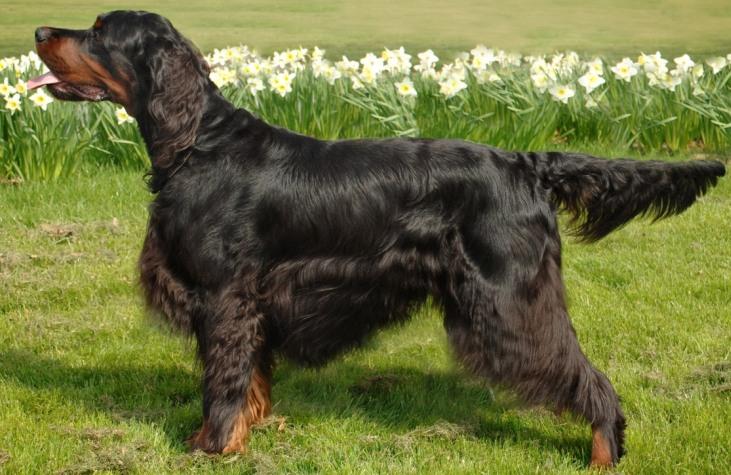
A Gordon Setter is a substantial, athletic dog with a balanced outline and a calm, watchful expression. The head and ears are distinctive. The ears sit low and lie close, with long silky feathering that easily collects burrs and grass seeds after a run through scrub or long grass.1 The coat is one of the breed's signatures. It should be flat and free of curl or wave, with feathering on the upper ears, backs of the legs, belly and tail.1 In real life, that feathering is where mats form first, especially if the dog swims, charges through wet vegetation, or sleeps on the same side night after night.
- Height (at shoulder): dogs about 66 cm; bitches about 62 cm (breed standard guide).1
- Weight: dogs about 29.5 kg; bitches about 25.5 kg (breed standard guide).1
- Coat: moderate length, flat and as free as possible from curl or wave, with distinct feathering on ears, legs, belly and tail.1
- Colour: deep coal black with rich chestnut or tan markings; other colours are not acceptable in the standard.1
Temperament and Personality
The breed standard describes the Gordon Setter as intelligent, able and dignified, with a bold, outgoing temperament and a kindly, even disposition.2 Many owners recognise the pattern: steady at home once their needs are met, more animated outdoors, and often deeply bonded to their family. They tend to do best with calm, consistent handling. Harsh corrections can shut a sensitive dog down, while loose boundaries can leave a clever dog improvising its own rules. With early socialisation and steady training, most Gordons settle into reliable, polite companions.4
Is a Gordon Setter Right for You?
This is not a low-effort dog. It is an active gundog with a coat that needs regular hands-on work, so the honest answer depends on how much time you can give to exercise and grooming week in, week out. If you can commit to a substantial daily outing, ongoing training, and weekly coat maintenance, a Gordon is a rewarding, affectionate companion. If your weeks are unpredictable and a skipped walk is common, this is the wrong breed, and a lower-drive dog will make both of you happier. Dogs Victoria notes the breed needs regular exercise and early training to become an obedient family member.4
Training and Exercise
Plan for daily exercise that includes both movement and thinking: brisk walks, runs in safe areas, swimming, retrieving, scent work, and short training sessions spread through the week. Dogs Victoria recommends early training and puppy pre-school for socialisation.4 Training works best when it is clear and reward-based, with rules that do not change from day to day. Many Gordons are enthusiastic learners, but they can be distracted by scent and movement, so a solid recall takes time. Treat it like a long project rather than a weekend lesson.
A daily routine that suits most Gordons
- One substantial outing (45 to 90 minutes), plus a shorter walk or a backyard training and play session.
- One nose job most days: scatter feeding, hide-and-seek treats, tracking a dragged scent, or finding toys in long grass.
- Short training blocks (5 to 10 minutes): loose lead walking, recall games, place or mat work, and gentle handling for grooming and vet checks.
Health and Lifespan
Most Gordons are robust, and life expectancy commonly sits around 10 to 12 years, varying with genetics, body condition and preventive care.3 The breed is known to have a few issues that owners and breeders should take seriously, especially when choosing a puppy. Dogs Victoria lists hip dysplasia, elbow dysplasia, bloat (GDV), and late onset progressive retinal atrophy among conditions that can occur in the breed.4
Hip and elbow dysplasia
Hip and elbow dysplasia are developmental joint conditions that can lead to arthritis and long-term pain. Responsible breeders screen breeding dogs, and your vet can guide exercise and weight management, especially during growth spurts.
Gastric dilatation-volvulus (GDV, or bloat)
GDV is a true emergency. The stomach can distend and twist, cutting off blood supply and becoming life-threatening quickly. Large, deep-chested dogs are at higher risk, and feeding and exercise routines can matter.5 Risk is never zero, but you can reduce it by spreading food into two or more meals, slowing fast eaters, and avoiding strenuous activity right after eating. AAHA recommends avoiding vigorous exercise for at least one hour before meals and at least two hours after meals when managing GDV risk.6
Progressive retinal atrophy (PRA)
PRA is a degenerative retinal disease that leads to progressive vision loss. It is inherited, and there is generally no cure, though many dogs adapt well with sensible management and stable routines. Diagnosis may involve a specialist eye exam or genetic testing, depending on the type suspected.7
Grooming and Care
A Gordon Setter coat is not wash and wear, but it is manageable with regular, unhurried maintenance. Brush and comb through to the skin at least weekly, more often during seasonal shedding or if the dog swims. Pay close attention to the feathering behind the ears, along the belly, the backs of the legs, and the tail, because those areas felt up quickly. Keep nails trimmed and check ears routinely. The drop ear and feathering can trap moisture and debris, so a quick check after paddocks, long grass or beach runs stops small problems becoming infections.
Diet and Nutrition
Feed to keep the dog lean. A fit body condition reduces strain on the joints and helps older dogs stay mobile. Split the daily ration into two or more meals rather than one large feed, slow down fast eaters, and keep vigorous activity away from mealtimes, all of which also help manage GDV risk.6
A Few Things Worth Knowing
- Make exercise non-negotiable. A Gordon with a skipped week does not simply miss a few walks; it stores the energy up.
- Train for real-world situations. Recall around scent, calm greetings, and settling on a mat matter more than tricks.
- Feed to stay lean. Keeping a fit body condition reduces strain on joints and helps older dogs stay mobile.
- Learn the GDV warning signs and have a plan. Sudden abdominal distension, unproductive retching, restlessness and rapid decline are reasons to go straight to an emergency vet.5
- Choose breeders who health test. Ask what screening is done for hips, elbows and eyes, and request documentation.
The Bottom Line
The Gordon Setter is a handsome working dog in family-dog clothing: loyal, steady and bright, with real stamina and a coat that asks to be maintained. If you can provide daily activity, patient training and routine grooming, and you are willing to plan ahead for health screening, you will often see the best of the breed: a calm presence at home, and a dog that comes alive outdoors with its nose down and tail flowing.
References
- Dogs Australia (ANKC) breed standard: Gordon Setter
- The Kennel Club (UK) breed standard: Gordon Setter
- Royal Canin Australia: Gordon Setter breed information
- Dogs Victoria: Gordon Setter
- Cornell University College of Veterinary Medicine: Gastric dilatation-volvulus (GDV) or bloat
- American Animal Hospital Association (AAHA): Understanding canine bloat (GDV)
- American College of Veterinary Ophthalmologists (ACVO): Progressive Retinal Atrophy (PRA)

Dog lover and writer at My Pets Australia, sharing practical breed guides and care advice for Australian pet owners.