Goldfish
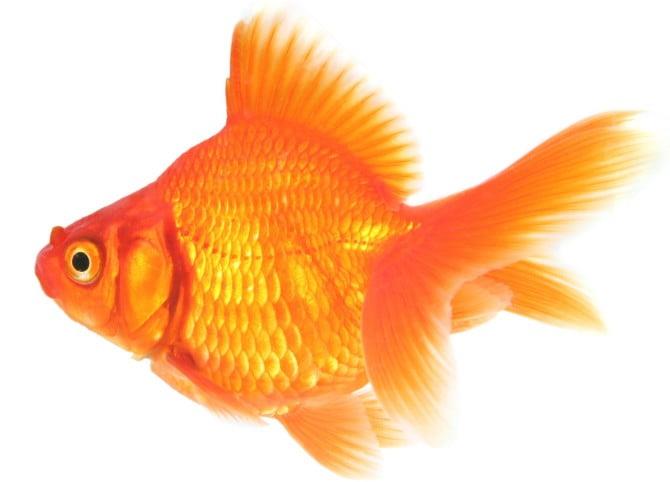
The goldfish (Carassius auratus) is one of the most widely kept ornamental fish in the world, and for good reason: it is hardy, sociable, colourful, and genuinely long-lived when it is looked after well. Kept properly, a goldfish is an active, busy animal that can share your home for a decade or more. It also grows far larger than the bowl on the shelf suggests. The main thing that shortens a goldfish's life is not bad luck but poor water quality and cramped housing, and both are things you control. Get the tank, the filter, and the feeding right, and the rest tends to follow.
Goldfish at a glance
- Scientific name: Carassius auratus1
- Adult size: commonly 20 to 30 cm, but they can reach around 40 to 45 cm in the right conditions, especially pond fish1, 2
- Lifespan: often 10+ years with good care, and some individuals live 20 to 25+ years1, 2
- Diet: omnivorous, taking plant material and small animals or invertebrates2
- Temperament: generally social and often kept in groups, given enough space and filtration to match their waste load1
- Habitat (pets): aquariums and ponds. Never release them into waterways6, 7
History and Origin
Goldfish were domesticated from carp relatives in China, where selective breeding produced the familiar orange colour and the many "fancy" body shapes seen today. They later spread to Japan and Europe and became one of the world's most widely kept ornamental fish.2
Appearance and Physical Characteristics
The first thing worth clearing up is size. Many care guides repeat a neat maximum length, often around 23 cm, but goldfish have indeterminate growth and keep getting larger when given space, oxygen, and stable water quality. In tanks, 20 to 25 cm is common. In ponds and the wild, much larger fish are well documented.1, 2
Beyond size, goldfish fall into two broad styles, and they do not behave the same way in a tank.
Single-tail, fast swimmers
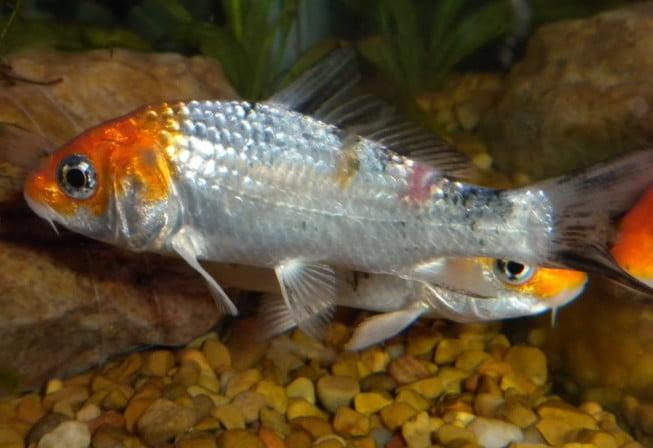
Common, comet, and shubunkin types are streamlined and active. They need more swimming room, stronger oxygenation, and careful planning if kept indoors, because they grow large and produce heavy waste.2, 4
"Fancy" goldfish
Fantails, orandas, ranchu, and other fancy varieties are rounder-bodied and less efficient swimmers. They can struggle in strong currents and are more prone to buoyancy problems when diet or water quality slips.4
Is a Goldfish Right for You?
Goldfish are sold as beginner pets, but their biology pulls the other way. They eat a lot, excrete a lot, and rely on you to keep ammonia and nitrite at zero through filtration and regular water changes.5 That is not difficult, but it is a routine, not a one-off setup. If you want a low-effort ornament in a bowl, a goldfish is the wrong choice. If you are happy to run a filtered tank and do steady maintenance, a goldfish rewards it with years of company.
Care and Housing
A small bowl cannot hold stable water chemistry, and it cannot support a proper filter. RSPCA Victoria notes that fish bowls are not adequate and that a filtered tank should be used instead.8
Tank size
- Start bigger than you think. For one goldfish, many experienced keepers treat around 75 L or more as a practical starting point, then scale up with each additional fish, especially for single-tail varieties.
- Plan for adult size. Buying a "small" goldfish and upgrading later often means months of stress on the fish, and recurring water quality problems, before the upgrade actually happens.
Filtration and oxygen
Goldfish thrive in clean, oxygen-rich water. Use a filter sized for the tank, often oversized, keep the media maintained without stripping out the beneficial bacteria, and ensure good surface agitation for gas exchange.5
Substrate and decorations
Choose smooth surfaces. Avoid sharp ornaments and gravel small enough to be mouthed and swallowed. Goldfish forage constantly, and anything they can fit in their mouth will be tested.5
Water requirements
Goldfish tolerate a fairly wide range, but they do poorly with sudden swings, especially in temperature and pH. Aim for steadiness rather than chasing a perfect number.
- Temperature: broadly 4 to 25 °C is often cited as a workable range, and many home aquariums sit comfortably around the high teens to low 20s depending on variety and season.3
- pH: keep it stable, with a commonly recommended window of around 6.0 to 8.0.3
- Ammonia and nitrite: always zero. These are toxic even at low levels.3, 5
Diet and Nutrition
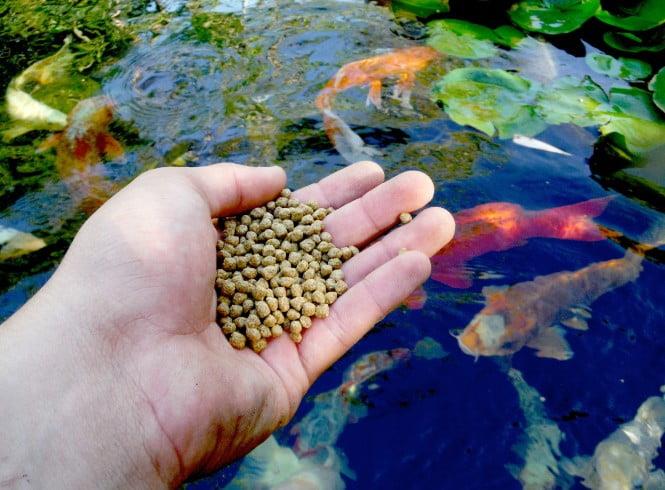
Goldfish are omnivores and do best on a varied diet. The quiet rule is restraint: overfeeding is the most common path to chronic water quality problems and digestive trouble.
- Feed small amounts they finish promptly, once or twice a day.
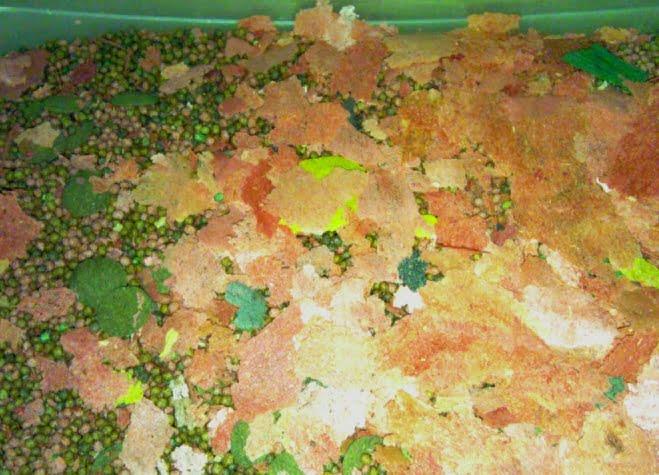
- Use a quality staple such as pellets or gel food, then rotate in vegetables and the occasional higher-protein treat.
- Remove leftovers, because food rots fast and goldfish waste is already heavy.
Health and Lifespan
Most goldfish "diseases" begin as husbandry problems: rising ammonia, unstable temperature, overcrowding, or chronic stress. Treat the water first, then the fish.
Buoyancy problems ("swim bladder" signs)
Floating, sinking, rolling, or struggling to stay level can be linked to constipation, gulping air while feeding, sudden diet changes, infection, or chronic water quality stress. Fancy varieties are more prone because of their body shape.10
White spots and flashing
Salt-grain spots, or scraping against objects, can point to parasites such as ich. A thermometer and test kit usually tell the rest of the story, because parasites take advantage when fish are stressed and water is unstable.
Fungal and bacterial infections
Cottony patches, ulcers, or fin rot are often secondary infections that bloom after injury or prolonged poor water quality. Improving conditions is not optional. It is the foundation of recovery.
A Few Things Worth Knowing
- Goldfish usually spawn in warmer seasons. Eggs are scattered and may stick to plants, and hatching often occurs roughly within a week, depending on temperature.2, 9
- In community tanks, most eggs and fry are eaten. If you intend to raise fry, plan for separate rearing space, gentle filtration, and a feeding regime suited to tiny mouths.
- In Australia, released goldfish can establish in waterways and contribute to ecological harm. Queensland Government guidance explicitly lists goldfish among ornamental species that must not be released into waterways, and NSW DPI also treats dumping or releasing pet fish as illegal and harmful.6, 7
- If you cannot keep your fish, rehome it through a pet shop, an aquarium group, or another keeper. Do not "set it free".7
The Bottom Line
A goldfish kept in clean, stable water with room to grow becomes a very different animal from the one seen in a bowl: active, long-lived, and quietly busy from morning to night. Most success comes down to three habits, a tank sized for the adult fish, filtration that can keep up, and a steady hand with feeding and water changes.
References
- Animal Diversity Web (University of Michigan), Carassius auratus (Goldfish): size, behaviour, lifespan
- Encyclopaedia Britannica, Goldfish: domestication, types, size, lifespan, breeding
- OATA (Ornamental Aquatic Trade Association), How to look after goldfish in an aquarium/fish tank (water parameters)
- Aqueon, Goldfish care guide (size, temperature ranges for varieties)
- PetMD, Goldfish care sheet (water testing, temperature guidance)
- Queensland Government, Identifying invasive freshwater animals (includes goldfish: do not release)
- NSW Department of Primary Industries, Aquarium owners and trade (responsible ownership; illegality of dumping/releasing)
- RSPCA Victoria, Fish: setting up an aquarium; fish bowls not adequate
- NSW DPI, Goldfish (pest fish): reproduction timing and general biology
- Merck Veterinary Manual, Disorders and diseases of aquarium fish (buoyancy/swim bladder signs and contributing factors)

Dog lover and writer at My Pets Australia, sharing practical breed guides and care advice for Australian pet owners.