Goffin's Cockatoo as a Pet
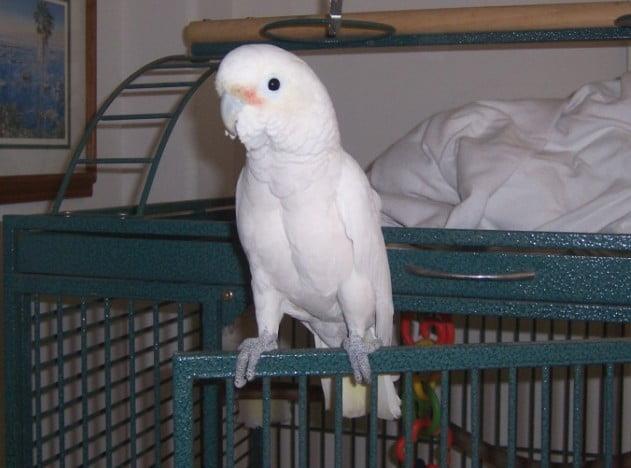
The Goffin's cockatoo, also called the Tanimbar corella (Cacatua goffiniana), is the smallest of the white cockatoos, and it carries a full-sized cockatoo personality: clever, tactile, endlessly busy, and intensely social. People are drawn to that combination of a compact bird with a big brain, one that solves puzzles, dismantles toys, and watches your every routine. It is also a serious commitment. These birds can live for decades, they are loud, and they develop real welfare problems when their daily needs go unmet. This guide lays out what living with one actually involves.
History and Origin
Goffin's cockatoos come from the Tanimbar Islands in the Banda Sea, part of Indonesia, and are not native to Australia.1 In the wild they move through forest and farmland, spending much of the day travelling, foraging, chewing, and staying in vocal contact with the rest of their group.1 That lifestyle explains a lot about the pet. A bird built to travel and forage for hours does not settle happily into a bare cage with a food bowl.
Appearance and Physical Characteristics
They are small for a cockatoo but robust and athletic. Adults are commonly around 30 to 32 cm long, though some sources report larger.1, 8 Weight is often roughly 250 to 450 g, varying by sex, condition, and reference source.1, 8 The plumage is mostly white, with a salmon-pink wash between the beak and eyes.
Temperament and Personality
A well-settled Goffin's cockatoo is curious, tuned in, and rarely idle. It tests objects, shreds toys, and tracks household routines with sharp attention. That intelligence is the appeal, and it is also the risk: the same mind turns inward when life gets too small. Repetitive behaviours, screaming, and feather-damaging behaviour are common outcomes of boredom, frustration, or chronic stress in parrots kept without enough enrichment and social contact.6, 7
Noise is part of the package. Calling is normal, especially at predictable times of day such as morning and late afternoon, or when something changes in the environment. You can shape when and how often it happens, but you cannot train a cockatoo to be silent.4
Is a Goffin's Cockatoo Right for You?
Be honest about your home and your schedule before you commit. The good side is genuine. These birds are engaging and bright, quick to learn routines and keen on puzzles and foraging challenges. Many seek frequent interaction and handling, on their own terms, and they are compact enough to suit homes that could not take a larger cockatoo.
The demands are just as real. They need daily out-of-cage time, training, and meaningful enrichment, not simply someone nearby.5, 6 Their normal calling can be a serious problem in units, townhouses, and anywhere with shared walls.4 Their beaks need work, and if you do not supply safe things to shred, they will choose your skirting boards, remotes, door frames, and power cords. Feather plucking is not just a bad habit: it can be linked to medical disease, nutrition, environment, and stress, often several at once, and it can be hard to reverse once established.2, 3 Add the decades of commitment and the cost of specialist avian veterinary care, and this is a bird for people who can plan the enrichment, not improvise it.
Care and Housing
Set the cage up as a working environment, not a display. A Goffin's cockatoo needs room to climb, flap, and move between perches without constantly brushing its feathers against the bars. Bigger is better, but the most important feature is safe, supervised daily access to a larger living area outside the cage.
- Natural perches of varied diameter to reduce pressure points on the feet.
- Chewable and shreddable items such as untreated branches, cardboard, paper, and bird-safe wood, rotated regularly to prevent boredom.5, 7
- Foraging opportunities so food takes time and effort to obtain, rather than appearing in a bowl with nothing to do.5, 7
- Sensible placement where the bird can see normal household life without being stuck in constant traffic, draughts, or cooking fumes.4
Training and Exercise
Training here is less about tricks and more about smooth daily care: stepping onto a hand or perch, going back into the cage without a fight, accepting gentle handling when needed, and staying settled through household routines. Keep sessions short and frequent, and reward calm, repeatable behaviour. If a bird becomes nippy or over-aroused, lower the intensity with fewer cues, a quieter room, and shorter sessions, then try again later.
Social needs are real. Many birds cope better with a compatible companion bird, but that is not a guaranteed fix for behavioural problems. If you keep a single bird, you become its main source of social contact, enrichment, and structure, every day.5, 7
Health and Lifespan
With excellent care these birds commonly live 40 years or more, and some sources report over 60 years in captivity.1, 8 That lifespan is the first health fact to plan around. Feather-damaging behaviour, including feather plucking, is one of the most common and most misunderstood problems in pet parrots. It can be linked to medical causes such as skin disease, parasites, organ disease and endocrine problems, to nutritional issues, to dry indoor air and a lack of natural light cycles, and to psychological stress or boredom.2, 3
Respiratory illness is another concern in household birds. Good ventilation matters, and so does avoiding fumes and aerosols, especially overheated non-stick cookware, cigarette smoke, incense, air fresheners, and harsh cleaning products.4 Get an avian vet check promptly if you notice any of the following:
- tail bobbing, open-mouth breathing, wheezing, or audible clicking
- a sudden change in droppings, appetite, or weight
- persistent feather breakage, bald patches, or skin irritation
- sleeping much more than usual, a fluffed posture, or reduced activity
Grooming and Care
Routine care is mostly about setting the conditions for healthy feathers and skin: appropriate humidity, regular chances to bathe by mist, shallow dish, or shower-perch depending on the individual, and plenty of safe chewing and climbing options.
Be cautious with wing clipping. It can reduce flight accidents in some settings, but it can also increase falls, remove a major form of exercise, and add to frustration in an already active bird. If you are considering it, discuss it with an avian veterinarian who can weigh welfare, safety, and your home set-up. Nails and beak generally maintain well when the bird has varied perches and chewable materials, and any trimming should be done carefully, ideally by an avian vet or experienced professional if you are unsure.
Diet and Nutrition
Many pet parrots become overweight or nutritionally unbalanced on seed-heavy diets. Seeds and nuts are useful as training tools and enrichment, but they are easy to overdo. A widely recommended approach for companion parrots is:
- Formulated pellets as the nutritional base
- Vegetables and some fruit daily for variety and micronutrients
- Seeds and nuts in smaller portions or as training rewards rather than the core diet
- Fresh water available at all times
If you are changing diets, do it gradually and monitor body weight. Sudden changes can lead to refusal and weight loss, especially in birds used to selective seed eating.
A Few Things Worth Knowing
- Goffin's cockatoos are not native to Australia, and rules around keeping, moving, importing, and selling exotic birds vary by state and territory.9, 10
- Import into Australia is tightly controlled through federal biosecurity and environment legislation.9, 10
- If someone in Australia is offering a Goffin's cockatoo, confirm the paperwork and licensing requirements with your state or territory authority before any money changes hands.
- They are also known as the Tanimbar corella.
The Bottom Line
A Goffin's cockatoo can be a remarkable companion: observant, quick, and full of intricate, beak-led curiosity. It also asks a lot, including space, structure, noise tolerance, and daily enrichment that is planned rather than left to chance. If you can reliably provide the social time, the safe chewing, the foraging, and calm routines, you will usually see the best of the species: busy, steady, and deeply engaged with its world. If you cannot, this is a bird that suffers for it, so decide with your eyes open.
References
- SeaWorld Parks & Entertainment (United Parks & Resorts), Goffin's Cockatoo Facts and Information
- Merck Veterinary Manual (Professional), Miscellaneous Diseases of Pet Birds (medical causes of feather plucking)
- Merck Veterinary Manual (Pet Owner), Skin and Feather Disorders of Pet Birds
- RSPCA Australia, How to help your pet bird have a good life
- Agriculture Victoria (Animal Welfare Victoria), Owning a bird
- RSPCA Knowledgebase, Keeping birds entertained (enrichment and behavioural problems)
- Merck Veterinary Manual, Table: Feather Loss (causes including nutrition, behaviour, medical factors)
- Encyclopedia of Parrots, Cacatua goffiniana (size, weight, lifespan overview)
- Australian Government (DAFF), Importing your pet bird
- Australian Government (DAFF), Importing live animals and reproductive material

Dog lover and writer at My Pets Australia, sharing practical breed guides and care advice for Australian pet owners.