German Wirehaired Pointer
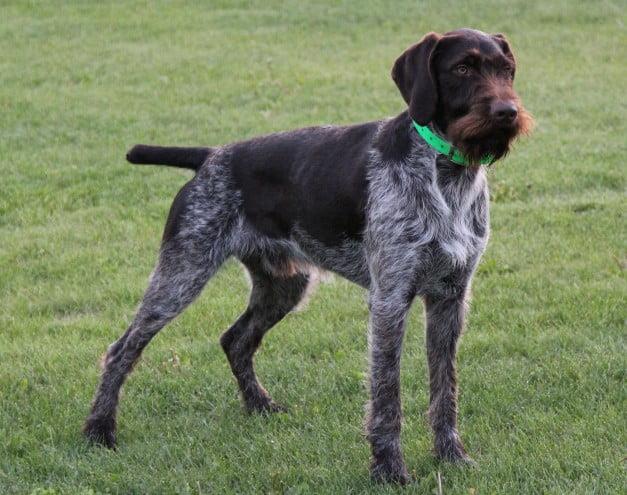
The German Wirehaired Pointer, known in Germany as the Deutsch-Drahthaar, is a versatile all-round gundog bred to work before and after the shot, on land, in woodland, and in cold water. It is athletic, weatherproof, and genuinely good at the job it was made for, with a harsh wiry coat that shrugs off rough country and a switched-on mind that learns fast. That same drive and stamina are the catch: they need a real outlet most days, not just when it suits you. This guide covers what the breed is built for, how it tends to behave, what daily care looks like in Australia, and the health checks worth asking about before you commit.
History and Origin
The GWP was developed in Germany as a versatile hunting dog, expected to find and work game across different environments and to retrieve on land and in water. The Australian breed standard describes it as a versatile working gundog and puts strong emphasis on functional soundness and suitability for work in varied terrain.1
Appearance and Physical Characteristics
The hallmark is the coat: a harsh, flat-lying wire outer coat of roughly 2 to 4 cm over a dense, water-resistant undercoat, with the typical brows and beard. It is built to shed water and buffer the skin against weather and rough cover, so a coat in good condition brings home less mud than you would expect, though it will trap burrs and grass seeds if you are often in long grass or scrub.1 The build is athletic and close to square, designed to cover ground efficiently. Dogs stand 61 to 68 cm at the withers and bitches 57 to 64 cm. Colours in the standard include brown roan, black roan, brown with or without a white chest patch, and light roan.1
Many older descriptions mention docked tails. In Australia, cosmetic tail docking has been banned since 2004, with docking permitted only for therapeutic reasons and in the dog's best interests, so most Australian-bred puppies should have natural tails.2, 3
Temperament and Personality
A well-bred, well-raised GWP is a quiet dog at home and a switched-on dog outside. The breed standard calls for a firm, self-controlled, well-balanced dog, neither shy nor aggressive, and not overly sensitive to gunfire.1 In everyday family life that usually shows up as:
- High engagement: they notice movement, smells, and patterns quickly, and they learn fast when training is clear.
- Strong drive outside: without enough outlets, that energy spills into nuisance behaviour, such as pacing, jumping, digging, or self-appointed patrols.
- Selective listening: a recall trained only in the backyard can unravel the moment a rabbit scent line appears.
Is a German Wirehaired Pointer Right for You?
This breed suits people who enjoy daily movement and treat training as part of life rather than a weekend project. For someone after a low-effort backyard dog, honestly, no. Before you commit, do a blunt check.
- Time outdoors: do you genuinely have time each day for vigorous exercise and skill work?
- Space and containment: can you provide secure fencing and safe outlets for running and sniffing?
- Noise and mess tolerance: a wet beard, muddy legs, and grass seeds in the coat are common realities after a good day out.
- Breeder or rescue diligence: can you confirm health testing, temperament, and early handling?
If those boxes are mostly ticked, a GWP can be a steady presence at home and a capable partner when there is real work to do.
Training and Exercise
This is a thinking athlete, and a slow stroll on a lead will not meet the breed halfway for long. Most GWPs do best with daily exercise that includes free running in safe, legal areas, structured training, and some kind of job: retrieving drills, scent games, obedience, tracking, or dog sports. Training goes best when it is reward-based and consistent. The RSPCA recommends reward-based methods (positive reinforcement) and does not support training approaches that rely on punishment or techniques that cause fear or pain.4, 5
For a young GWP, early socialisation and calm exposure matter. Not flooding, just steady experiences: different surfaces underfoot, people of different ages, well-mannered dogs, and short car trips that end somewhere neutral rather than exciting every time.
Health and Lifespan
German Wirehaired Pointers are often robust dogs, with a life expectancy commonly around 12 to 14 years depending on genetics, conditioning, and healthcare. Like many pedigree breeds, they have known risks worth screening for and managing early.
Joints (hips and elbows). Hip and elbow dysplasia are recognised concerns in many athletic breeds. If you are buying a puppy, ask what health screening has been done on the parents and whether results are recorded through recognised schemes (for example, OFA in the US). The German Wirehaired Pointer Club of America outlines common health testing priorities for the breed, including hip and elbow evaluations.6
Ear disease. Ear infections (otitis externa) are common in dogs, and certain ear shapes and conditions can increase risk, especially when moisture is trapped after swimming. Predisposing factors can include pendulous ear conformation and excess moisture, and successful treatment depends on addressing underlying causes such as allergy as well as the infection itself.7, 8 If ear disease spreads deeper (otitis media or interna), it can contribute to balance problems or hearing loss, which is one reason persistent ear issues deserve prompt veterinary assessment.9
Eyes and thyroid. Inherited eye disease and thyroid issues are also discussed within breed health programs. When assessing a breeder or an adult dog, ask what eye and thyroid screening has been done and whether there is a paper trail you can verify.6
Grooming and Care
The coat is practical rather than fluffy, but it is not maintenance-free. Aim for a weekly brush and comb-through, then check the usual trouble spots: armpits, between toes, ears, and the beard after meals.
- Brushing: weekly, more often during seasonal shedding or after field work.
- Hand-stripping and coat tidying: occasional, especially if the coat goes soft or starts holding debris.
- Ears: check after swimming and after time in long grass, and keep them dry and clean.
- Nails and teeth: routine trims and dental care, as for any active medium-to-large dog.
The Bottom Line
The German Wirehaired Pointer is built to travel, to search, and to keep going in weather that sends most dogs back to the car. In the right hands that becomes a calm, competent companion with a coat made for rough country. In the wrong setting the same design shows up as restlessness and friction. Choose for temperament and proven health screening, train with rewards and clarity, and plan for a life that includes real exercise most days, not some days.
References
- Dogs Australia (ANKC). German Wirehaired Pointer breed standard (FCI Standard No. 98)
- RSPCA Australia Knowledgebase. Is the tail docking of dogs legal in Australia?
- RSPCA Australia Knowledgebase. Why do some dogs still have docked tails?
- RSPCA Australia Knowledgebase. What is reward-based dog training and why does the RSPCA support it?
- RSPCA Australia. Make sure you teach that 'old' dog some tricks (reward-based training position)
- German Wirehaired Pointer Club of America. Health information & testing recommendations
- Merck Veterinary Manual (Professional). Otitis externa in animals
- Merck Veterinary Manual (Pet Owner). Ear infections and otitis externa in dogs
- Merck Veterinary Manual (Pet Owner). Otitis media and interna in dogs

Dog lover and writer at My Pets Australia, sharing practical breed guides and care advice for Australian pet owners.