Fox Hunting
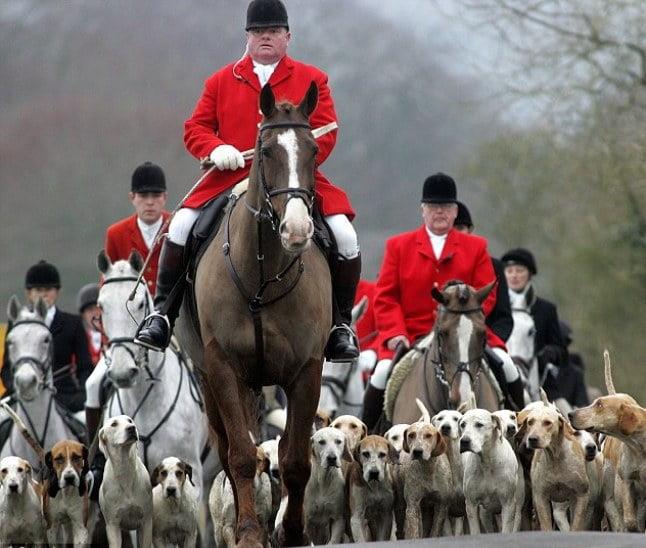
Fox hunting is the old British field sport in which riders on horseback follow a pack of hounds across country while the hounds work a fox's scent. It carries centuries of rural tradition, a distinct visual language of horn calls and matched coats, and a following that still runs deep in parts of Britain. It is also one of the most heavily litigated pastimes in the English-speaking world, because most hunting of wild mammals with dogs is now illegal in England and Wales and tightly restricted in Scotland. People usually look it up to settle three things: what it actually involves, what is legal and where, and why it still sparks such a fierce argument. This guide covers the British tradition and the law around it, then contrasts that with Australia, where the European red fox is an introduced predator managed as a pest rather than chased for sport.
What fox hunting is
Traditional fox hunting, in the British sense, means riders following a pack of hounds across farmland and woodland as the hounds track a fox by scent. Historically a hunt often ended with the fox being caught and killed by the hounds, and that outcome is exactly what sits at the centre of the modern legal and ethical debate. A few related activities look similar from a distance but are not the same thing:
- Drag hunting: hounds follow an artificial scent trail laid by a person. No live animal is involved.
- Trail hunting: hounds follow a laid trail meant to mimic a live-animal scent. Critics argue it can be used to mask illegal hunting, and its legal status is changing and politically live.6
- Flushing to guns: dogs flush a fox from cover so it can be shot, under strict conditions in some jurisdictions.2
A brief history in Britain
Fox hunting grew into a formalised mounted tradition over several centuries, with its biggest expansion in the 18th and 19th centuries as rural estates, horse breeding, and organised packs of foxhounds became part of country life. The horn calls, matched hounds, and distinctive coats all come from that world. One common myth is worth clearing up: there was no simple modernisation in which horses were swapped for vehicles and foxhounds for beagles. Mounted hunts with foxhounds remain the cultural reference point, while beagles are more commonly linked to hare hunting, where legal, or to organised scent work.
Why it is controversial
The argument is not really about tradition versus change. It is about what happens on the ground: a wild mammal pursued by dogs, the length and intensity of the chase, and the welfare outcome when the animal is caught or cornered. Supporters describe hunts as part of rural heritage and, in some cases, tie them to pest management. Opponents focus on animal welfare and on enforcement, particularly where an activity resembles a traditional hunt but is framed as a legal alternative.6
The law in the United Kingdom
England and Wales
In England and Wales, the Hunting Act 2004 makes it an offence to hunt a wild mammal with dogs unless a tightly defined exemption applies.1 One commonly discussed exemption allows the stalking or flushing of a wild mammal, including a fox, so that it can be shot, subject to strict conditions such as a limit on the number of dogs.2 Year after year, the practical dispute is less about the wording of the Act and more about what is actually happening in the field and what can be proved to the standard enforcement requires. UK Government statements continue to point back to the Act and to police enforcement rather than to broad prevalence reviews.7
Scotland
Scotland's framework changed recently. The Hunting with Dogs (Scotland) Act 2023 creates an offence of hunting a wild mammal using a dog unless an exception applies, with significant penalties set out in the Act.3 It also introduced a licensing approach in specific circumstances, which is part of the ongoing public debate about how tightly the restrictions work in practice.3
Australia: the fox is a pest, not a quarry
In Australia the European red fox is an introduced species, and it is managed as an invasive pest because of its impact on native wildlife and agriculture. New South Wales notes that foxes were introduced in the 1870s for recreational hunting and are now established across the mainland, contributing to declines and extinctions of native species.8 The state's threatened species authorities list fox predation as a key threatening process, which reflects its recognised role in biodiversity loss.9 Australian government guidance centres on integrated control, meaning coordinated baiting, trapping, shooting, exclusion measures, and monitoring, rather than mounted hunts as a management tool.10
Hunting with dogs: what "legal" means here
Australia has no single national fox hunting law. What is allowed depends on the state or territory, the land type (private land, state forest, or public land), licensing, and animal welfare requirements. Some jurisdictions regulate the use of dogs for particular kinds of hunting with detailed conditions, for example identification and tracking requirements on public land in NSW.5 If you are trying to work out what applies where you live, check the current state regulations and codes of practice for:
- where you can hunt (land access and permissions)
- what species can be targeted
- whether dogs can be used, and under what conditions
- firearms and safety requirements
- animal welfare obligations, including humane killing
Does hunting control fox numbers?
Claims that fox hunting reduces fox populations are often overstated, especially when they are presented as a tidy percentage reduction. Fox numbers respond to food availability, habitat, immigration from surrounding areas, and the intensity and coordination of control. In Australia official programs emphasise integrated control over time and across neighbouring properties, because isolated effort is quickly diluted by reinvasion.10 In Britain, even where lethal control happens under an exemption, the question is not only whether local fox numbers shift but whether the method meets current animal welfare expectations and legal thresholds. That is where much of the argument now sits.
The animals involved and welfare
In a traditional mounted hunt the hounds do the tracking and pursuit while riders follow across open country, and that has unavoidable knock-on effects: pressure on non-target wildlife, risk to livestock and pets if boundaries fail, and risk to horses and riders moving at speed over uneven ground. In Australia, where fox management is framed as pest control, welfare expectations are generally expressed through requirements for humane methods and limits on dog use in certain contexts, rather than through the continuation of mounted, hound-led pursuit as a sport.5
Alternatives without a live animal
For people drawn to the riding and the pageantry rather than the killing, the simplest alternatives remove the live quarry entirely:
- Drag hunting, using a laid scent and no live animal
- Riding clubs and cross-country events, for the speed and terrain without hounds
- Scent work and tracking sports for dogs, using structured, controlled trails
These keep the outdoor skill and the movement through country while stepping away from the welfare problems at the centre of the fox hunting debate.
The Bottom Line
Fox hunting means different things depending on where you stand. In Britain it is a tradition reshaped and constrained by law, enforcement, and shifting public attitudes to animal welfare.1 In Australia the fox is an introduced predator, and the conversation is far more often about coordinated control to protect native wildlife and livestock under modern animal welfare rules.8, 9, 10
References
- Hunting Act 2004 (England and Wales), offences and framework (legislation.gov.uk)
- Crown Prosecution Service, Hunting Act 2004 legal guidance (including exemptions)
- Hunting with Dogs (Scotland) Act 2023 (legislation.gov.uk)
- Hunting Act 2004, full text (legislation.gov.uk)
- NSW Department of Primary Industries, hunting rules and regulations (including hunting with dogs)
- Financial Times, UK plan to ban trail hunting in England and Wales (reporting and context)
- UK Parliament, Defra written answer referencing Hunting Act 2004 enforcement (answered 19 March 2025)
- NSW Environment and Heritage, Foxes in NSW (introduced species, impacts, distribution)
- NSW Scientific Committee, listing of fox predation as a Key Threatening Process
- Agriculture Victoria, Integrated fox control (approach and impacts)

Dog lover and writer at My Pets Australia, sharing practical breed guides and care advice for Australian pet owners.