Fish Tank Filtering - Ph, NItrites and Nitrates
Filtration is the single system that keeps a closed glass box of water liveable, and once you understand it the weekly tests stop feeling like a mystery. A good filter does two jobs at once: it traps debris, and it houses the bacteria that turn toxic fish waste into safer forms. Most people go looking for answers after a test result surprises them, a drifting pH, nitrite that suddenly appears, or nitrate creeping up week on week. Those numbers are not trivia. They are early signals that tell you whether the biology in your filter is keeping up or quietly falling behind.
What the filter is really doing
A filter is less a vacuum cleaner and more a moving river. It keeps water flowing across surfaces where waste can be trapped, and, more importantly, where beneficial bacteria can live and convert toxic nitrogen waste into less harmful forms.1, 2
There are three types of filtration, and one of them does the heavy lifting.
- Mechanical filtration traps suspended debris such as uneaten food, plant fragments and fine particles.1
- Biological filtration houses the bacteria that process fish waste. This is the engine room of a stable tank.1, 2
- Chemical filtration uses media such as activated carbon to adsorb certain dissolved substances. It is optional and situation dependent, not the core of day to day stability.1
The nitrogen cycle: where nitrite and nitrate come from
Fish excrete ammonia, and leftover food and decaying plant matter break down into ammonia as well. In a cycled aquarium, bacteria convert ammonia into nitrite, then nitrite into nitrate.1, 2
This is why a brand new tank often has a dangerous early period. The bacteria colonies take weeks to establish, so ammonia or nitrite can rise before the system catches up.1, 2
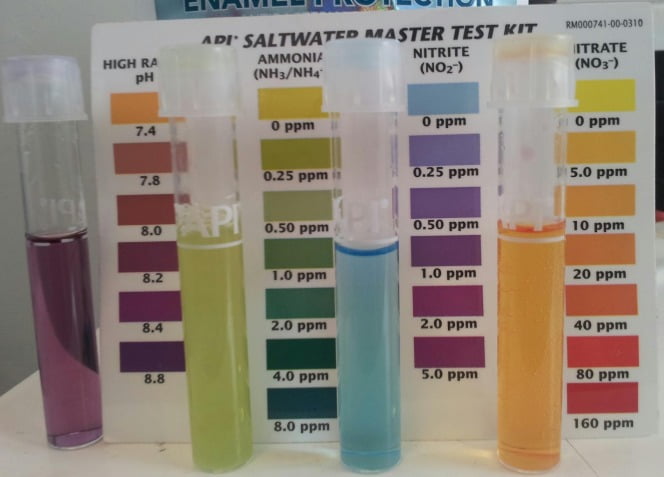
In plain numbers, a cycled tank looks like this:
- Ammonia: ideally 0
- Nitrite: ideally 02
- Nitrate: present to some degree in most stocked tanks, and controlled with maintenance (water changes, plants, sensible feeding).1, 2
pH: stability beats chasing a perfect number
pH measures how acidic or alkaline the water is, and for most common aquarium fish a steady pH that suits the species matters far more than a textbook figure.2 Frequent adjustments cause swings, and swings stress fish.
pH also changes how dangerous ammonia can be. As pH and temperature rise, a greater proportion of total ammonia shifts into a more toxic form, which means the same waste load can hit harder on a high pH day.3, 4
A few practical checks keep pH readings honest:
- Test at roughly the same time of day each time, so you are comparing like with like.
- If pH drifts over weeks rather than hours, check carbonate hardness and alkalinity too. Low buffering can let pH fall suddenly in established systems.5
- Avoid pH up or pH down corrections unless you understand the cause. A quick swing stresses fish more than a slightly imperfect but steady number.
Nitrite: small numbers, real risk
Nitrite appears during the middle stage of the nitrogen cycle. In a stable, cycled tank it should read zero, so any detectable nitrite means the biofilter is not keeping up or has been disrupted.2, 5
Common reasons nitrite shows up:
- A newly set up tank that has not finished cycling.1, 2
- Over cleaning filter media, especially in tap water, since chlorine and chloramine can damage beneficial bacteria.1
- A sudden increase in feeding or stocking that outpaces the existing bacteria colonies.
- Filter stoppage or reduced flow from clogging or a power interruption, which starves bacteria of oxygenated water.1, 5
Nitrate: the slow build in the background
Nitrate is the end product of nitrification. It is generally less acutely toxic than ammonia or nitrite, but it accumulates in closed systems and becomes a chronic stressor at high levels.1, 2, 5
In most freshwater community tanks, nitrate is managed with routine partial water changes and sensible feeding. Live plants also use nitrate as a nutrient, acting like a quiet, steady drain on the system.1, 5
Turning test numbers into a routine
Test kits do not prevent problems on their own. They tell you which part of the system is under strain, whether that is waste input, bacterial processing, or maintenance pace.1, 2
How often to test depends on the tank's age:
- New tanks, first 4 to 6 weeks: test frequently for ammonia and nitrite while the biofilter establishes.1, 2
- Established tanks: test every 1 to 2 weeks, and any time fish behave unusually, you have cleaned the filter, or you have changed stocking or feeding.1
If a reading is off, start with these calm, high impact moves:
- Stop overfeeding. Feed lightly until the numbers settle.
- Do partial water changes to dilute toxins, especially if ammonia or nitrite is detectable.1, 2
- Check filter flow and aeration. Nitrifying bacteria need oxygenated water moving across their surfaces to work well.1, 5
- Review anything that changed recently, such as new fish, new food, replaced media, medications, or a power outage.
Choosing and maintaining a filter
Pick a filter that can move enough water for your tank size and provide plenty of surface area for biological media. The goal is stable biological filtration with steady flow, not just crystal clear water.1, 2 Match the setup to your bioload, meaning how much waste the tank produces. A lightly stocked planted tank is a different world from a busy goldfish tank at the same volume.
Maintenance is where many tanks tip from stable to shaky. Clean enough to keep water moving, but gently enough to keep the bacterial colony intact.1 A simple, safe rhythm works:
- When flow slows, rinse sponges and media in a bucket of tank water, not under the tap.1
- Avoid replacing all media at once. If you must replace something, stagger the changes so bacteria can repopulate.
- Keep the filter running continuously. Long stoppages reduce oxygen and harm the biofilter community.5
The bottom line
A healthy aquarium is usually a quiet one: steady pH, zero nitrite, and nitrate rising slowly enough that your weekly routine keeps it in check. When the numbers move, treat them as field notes that show where the system is under pressure, then respond with small, consistent corrections rather than sudden chemical swings.1, 2
References
- RSPCA Knowledgebase, Why is water quality important when setting up a fish aquarium?
- RSPCA, Choosing an aquarium for pet fish (filters, cycling, safe ammonia/nitrite)
- NSW Department of Primary Industries, Monitoring ammonia
- University of Florida IFAS Extension, Ammonia in Aquatic Systems
- Oklahoma State University Extension, Nitrification and maintenance (oxygen/pH considerations)

Dog lover and writer at My Pets Australia, sharing practical breed guides and care advice for Australian pet owners.