Finnish Spitz
The Finnish Spitz is Finland's national breed, a fox-like northern dog that is bright, athletic, and devoted to its family. It was built for forest hunting, and its most famous trait is its voice: this is one of the most vocal breeds you can own. In a suitable home it makes a warm, watchful companion that loves training and outdoor time. It is also a genuine commitment, because that barking is a core feature of the breed rather than a habit that fades with age. This guide covers the breed's size, temperament, care, and common health considerations, grounded in recognised breed standards and veterinary guidance.
History and Origin
The Finnish Spitz is Finland's national breed and has a long history as a hunting dog, shaped for forest work where sound matters as much as speed. Its hallmark behaviour, persistent ringing barking, was selected to help a hunter locate game, including birds, by holding an animal's attention and signalling its position in thick country.2, 3 The breed's own name, Suomenpystykorva, simply means Finnish pricked-ear dog.2
Appearance and Physical Characteristics
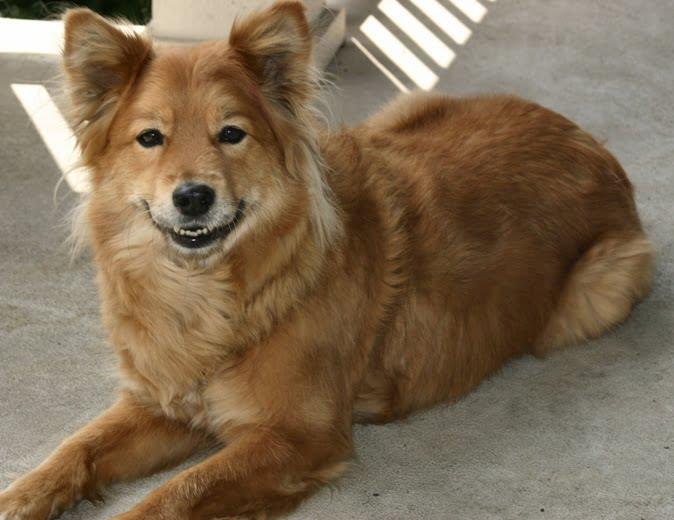
In profile the Finnish Spitz carries the classic northern spitz outline: a fox-like head, pricked triangular ears, and a tail that curls forward over the back. The coat is a weather-resistant double layer, usually in shades of golden red, with lighter hair often visible on parts of the body and in the undercoat.1, 3
This is a medium breed, often described as medium-small. Males typically stand 43 to 50 cm at the withers and females 39 to 45 cm, with weight usually around 14 to 16 kg, though individuals vary.1, 2 It is not a large dog, but it is solid and athletic, built for quick bursts of movement and an alert, upright carriage. The overall impression is compact, lively, and ready to move.1, 2
Temperament and Personality
The Finnish Spitz is typically lively, alert, and people-oriented with its family. Many are affectionate without being clingy, often happiest keeping a quiet watch on the household and then switching into play or training with little warning.3
One trait sits at the centre of the breed's personality: vocalising. These dogs were developed to bark as part of their work, and that tendency does not disappear in suburban life. With training, enrichment, and good routines, barking can be shaped and reduced, but it is rarely eliminated, and it should be treated as a core breed feature rather than a problem that will fade with age.3
In everyday life the barking cuts both ways. It can be useful, because these dogs are naturally alert and will announce movement, visitors, and unfamiliar sounds.3 It can also be hard work, because close neighbours, shared walls, and noise restrictions can turn normal spitz vocalising into real friction. Either way it needs management: enough exercise, predictable routines, and reward-based training reduce boredom noise and help you teach a calmer default.
Is a Finnish Spitz Right for You?
Be honest about the noise before anything else. If you live in an apartment, share fences with close neighbours, or fall under strict noise rules, a breed developed to bark is a difficult fit. This is not a quiet dog, and no amount of training will make it one.
The Finnish Spitz suits an active household that enjoys training and outdoor time, and someone who can offer daily exercise, patient reward-based training, and steady management of barking. Given all that, it rewards you with a bright, observant companion that is closely bonded to its people. Given none of it, both you and the dog will struggle.
Training and Exercise
This is an energetic, intelligent breed that does best with daily activity and regular mental work. Long walks, varied sniffing time, and short training sessions suit them well. Repeated drills tend to bore them, while games with clear rules keep their attention.3
Reward-based training is the safest and most reliable approach for building recall, calm greetings, and cooperative grooming. Early socialisation matters just as much. Steady exposure to different people, surfaces, sounds, and other dogs helps prevent over-alertness from hardening into reactivity later on. Good socialisation looks quiet and ordinary: meeting the world in manageable doses, with plenty of reward for calm choices. It is less about forcing friendliness and more about giving the dog a steady catalogue of normal experiences to draw on later.6
Finnish Spitz are generally social with their family and can do well with respectful children and other animals, especially when raised alongside them. As a breed developed for hunting and alerting, some individuals are quick to notice movement and may chase smaller pets if not taught calm behaviour early.
Health and Lifespan
No breed is problem-free. Finnish Spitz are often described as generally robust and typically live about 12 to 15 years, but responsible owners still plan for the common issues seen across many medium and small breeds and keep regular vet checks on the calendar.3
Patellar luxation, or kneecap dislocation, is a common orthopaedic condition in dogs where the kneecap slips out of its normal groove. Signs can include an intermittent skipping gait or a sudden hop on a hind leg that resolves after a few steps.9, 10
Like many active breeds, individual Finnish Spitz can develop joint problems over time. Keeping your dog lean, building fitness gradually, and addressing any limping early are simple choices that protect comfort and mobility in the long run.
Grooming and Care
The Finnish Spitz has a thick double coat that sheds seasonally, sometimes heavily. Weekly brushing is a good baseline for most dogs, with more frequent brushing during heavy shedding to lift loose undercoat and reduce mats.2, 7
Bathing is not something most dogs need on a rigid timetable. Over-washing can dry the skin and strip natural oils, so bathe when your dog is genuinely dirty or smelly, or when your vet advises it, and use a dog-appropriate shampoo.4, 7
Nails matter more than many people expect. If you can hear nails clicking on hard floors they are usually too long, especially dewclaws, which often do not wear down naturally.8
Diet and Nutrition
Look for a complete and balanced diet appropriate to your dog's life stage, then adjust portions to keep a clear waist and easy-to-feel ribs under a light covering. Ingredient lists are often less useful than people think. What matters is whether the food is nutritionally appropriate and made with good quality control.5
If your Finnish Spitz is very active you may need to increase energy intake slightly, then re-check body condition every couple of weeks. If weight creeps up, reduce treats first. Small changes made early are kinder than big corrections later.
A Few Things Worth Knowing
- It is Finland's national breed, also known as the Suomenpystykorva.2
- The famous ringing bark was bred in on purpose to help hunters find birds and other game.3
- Coat colour is typically golden red, with a weather-resistant double coat.1, 3
- Seasonal shedding can be heavy, so expect a bigger brushing job at coat-change time.3
The Bottom Line
The Finnish Spitz suits people who like a dog with its own point of view: bright, observant, and built for movement. In the right home it is a warm companion with a watchful edge and a voice you will hear. The best match is an owner who can offer daily exercise, reward-based training, and enough patience to shape that famous bark into something the neighbourhood can live with. If close neighbours or noise rules are part of your life, look at a quieter breed instead.
References
- The Kennel Club (UK), Finnish Spitz breed standard (size and weight)
- The Finnish Kennel Club, Finnish Spitz (breed overview and ideal height)
- Encyclopaedia Britannica, Finnish Spitz (history, size range, barking bird-dog role)
- RSPCA Pet Insurance (Australia), Guide to dog cleaning and grooming (bathe only when necessary, avoid over-bathing)
- WSAVA, Global Nutrition Guidelines (how to assess pet foods beyond the ingredient list)
- RSPCA Knowledgebase, Why and how should I groom my dog? (general grooming guidance, vet advice where needed)
- RSPCA Pet Insurance (Australia), Washing and brushing your dog (avoid over-washing, brushing guidance)
- RSPCA Pet Insurance (Australia), When to groom your dog (nail-length clicking check, bathing frequency guidance)
- American College of Veterinary Surgeons, Patellar luxation (overview and clinical significance)
- Cornell University College of Veterinary Medicine, Patellar luxation (overview and skipping gait sign)

Dog lover and writer at My Pets Australia, sharing practical breed guides and care advice for Australian pet owners.