Fainting Goat
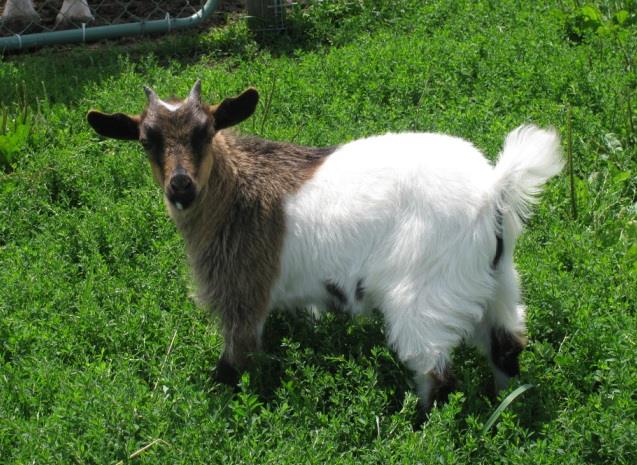
The fainting goat is a domestic goat known for one odd party trick: when it gets startled, its muscles briefly lock up and it may stiffen or topple over, then get up and carry on as if nothing happened. Most people meet one in a video or at a farm and want to know what the "fainting" really is. The short answer is that they do not actually faint. They have an inherited muscle condition, and the goat stays fully conscious the whole time.2, 3, 4 Beyond the trait they are steady, easy-to-handle goats, which is a big part of the appeal. They are also still goats, with all the fencing, company and care that implies.
History and Origin
Myotonic goats are one of the better-known goat types developed in the United States. Historical accounts place the breed's early presence in central Tennessee in the 1880s, and many modern lines trace back to a small founding group documented in that period.1, 6, 7
You will still see the Tennessee connection reflected in common names and registries. They also go by myotonic goat, Tennessee fainting goat and wooden-leg goat.2, 6 The breed is now kept far beyond the US, including here in Australia as small-farm stock and pets.6
Appearance and Physical Characteristics
Fainting goats feel solid because they usually are. The myotonic trait is often linked with heavier muscling, and some strains have been selectively bred with meat production in mind.1, 7
Typical animals stand about 43 to 64 cm at the shoulder and weigh roughly 27 to 79 kg, with a wide range depending on strain, sex and breeding.1 Colours and patterns vary widely, and coats can be short or longer and shaggy depending on line and climate. Some individuals also have noticeably prominent eyes, a feature often mentioned in breed descriptions.1, 2
What the Fainting Actually Is
The name oversells it. A fainting goat has a heritable condition called myotonia congenita. When it is startled by a sudden movement, an unexpected noise or a burst of excitement, its muscles contract and then relax more slowly than normal, leaving the body briefly rigid.2, 3, 4
An episode is usually short, commonly around 5 to 20 seconds. Some goats just stiffen and stay on their feet; others lose balance and fall, then rise and walk on once the stiffness passes.2, 3 They do not lose consciousness. The "faint" is a muscle lock-up, not a blackout.2, 3, 4
It is sometimes described as a predator defence, but it is safer to treat it as a side-effect of the condition rather than a purposeful strategy. During an episode the goat is briefly less able to flee, which could increase risk in a real predator encounter.3
Temperament and Personality
Most of the time a myotonic goat behaves like any other goat: alert, food-motivated and busy with the small work of grazing, browsing and testing boundaries. Owners generally find them quiet and easy to handle, though individuals vary like any goat.3, 4, 5
The difference shows up in moments of surprise. Severity varies: some goats give only a mild stiff-legged pause, while others are more dramatic, especially when young or highly excited, and can fall more readily.3
Is a Fainting Goat Right for You?
For a small property, a settled myotonic goat is a manageable animal. The catch is motive. Choosing one purely for the "fainting" behaviour leads to poor handling: too much startling, too many visitors, too much stress on the animal.
They are also still goats, which means herd animals that need space, secure fencing and the company of at least one other goat, not just humans. If you want a calm, manageable goat, look for an animal with a settled temperament and a good health history, and set up your property so the goat never has to test its myotonia on hard ground.
Care and Housing
Myotonic goats need the same basics as any domestic goat: secure fencing, appropriate feed, clean water, shelter and routine health care. What changes is planning the environment so that a goat going rigid does not turn into an injury.
- Avoid steep drops and hard edges in yards and pens, especially around feeders and gateways where excitement is common.
- Use calm stock handling. Steady movement, minimal chasing and predictable routines reduce sudden startle events.
- Think about footing. Slippery surfaces make a stiff-legged stumble more likely to become a fall.
Health and Lifespan
The myotonic episodes themselves are usually brief and are not a loss of consciousness. The bigger welfare risk is secondary injury: falling awkwardly, being startled repeatedly, or being kept in environments that make toppling dangerous.2, 3
Like other goats they can still face common issues such as internal parasites and hoof problems, so regular monitoring and basic goat husbandry still apply. Some sources note myotonic goats may show comparatively good parasite resistance, but that does not replace routine checks.5
A Few Things Worth Knowing
- The trait is inherited, so if you breed myotonic goats the fainting passes down the line.1, 7
- Breeding decisions should prioritise welfare: sound legs and feet, calm handling, and housing that minimises injury risk during episodes.
- If you are buying, ask how the herd is managed and whether animals are selected for extreme episodes or for practicality and robustness.
- Common uses include meat, small-farm utility and companion animals, with some lines bred for heavier muscling.5, 7
The Bottom Line
Fainting goats are calm, sturdy, generally easy to keep, and the myotonia is real but far less dramatic than the name suggests: a brief muscle lock-up, never a blackout. Kept for the right reasons and on safe ground they make good small-farm animals. Kept as a novelty to be startled for laughs, they get a raw deal. Give them company, secure fencing and soft footing, and they are just a good goat that occasionally goes stiff.
References
- Wikipedia, Fainting goat (overview, size range, history summary)
- Live Science, Fainting goats do not lose consciousness; myotonia explanation
- Natural History Museum (UK), Why goats faint: typical triggers and episode duration
- The Guardian, Explanation of myotonia as muscle stiffness (not true fainting)
- Goat Journal (Countryside), Myotonic goat breed profile (temperament, uses, notes)
- The Livestock Conservancy, Myotonic goats: Tennessee origins and heritage-breed context
- Ohio State University Extension (Small Ruminant Team), Myotonic goats: alternate names, lock-up description, origin notes

Dog lover and writer at My Pets Australia, sharing practical breed guides and care advice for Australian pet owners.