Essential Horse Grooming Tips for Australian Horse Owners
Grooming a horse is one of the most useful things you will ever do with one, and it takes ten to fifteen minutes. It clears dust, dried sweat, and loose hair, and it puts your hands on the animal every day so you catch heat, swelling, or a rub before it becomes lameness. Most people go looking for grooming tips when something already feels off: a dull coat, a stubborn itch, mud that will not shift, or a hoof that smells wrong. This guide sets out a practical routine for Australian conditions, where dust, heat, sweat under tack, wet winters in some regions, and insects all put pressure on the skin. The aim is to keep things simple and observant rather than over-washing or over-complicating the kit.
Why Grooming Matters
Grooming is not about looking tidy, it is about maintenance. Clearing dirt, dried sweat, and loose hair lets the skin work properly, and it gives you your best daily chance to notice heat, swelling, rub marks, cuts, ticks, scabs, or a change in the way your horse stands and moves.1
Regular brushing also spreads the coat's natural oils. Frequent bathing strips those oils, so washing is best saved for when it is genuinely needed: heavy grime, shows, or veterinary direction.1
Safety First
Even steady horses startle, lean, or step sideways during grooming. Work in a calm, familiar spot with good footing, keep your tools organised, and stay close enough to the body that a sudden movement is less likely to land as a full-force kick. If you are new to handling, ask for help, because injuries around horses can be serious.2
The Coat Through Australian Seasons
The coat tells you what season the horse thinks it is in. Most horses grow a thicker coat through the cooler months, then shed as the days warm, and when shedding ramps up the grooming needs to be more frequent and more thorough, especially under rugs where sweat and dead hair build up.1
In summer, sweat, dust, and insect irritation are the main pressures. Focus on removing dried sweat, particularly along tack lines, checking for rubs, and keeping the skin clean and dry rather than constantly shampooing. During a heavy shed, a rubber curry comb is one of the most effective tools for lifting loose hair without over-stripping the coat.1 If your horse is rugged, take the rug off daily to check the skin, lift sweat and dead hair, and make sure nothing is rubbing. Hair loss from rugs is common and easy to miss early.1
A Simple Grooming Kit
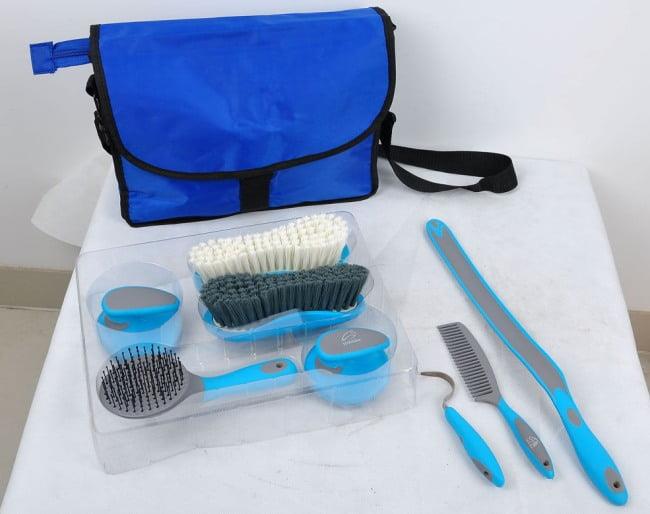
You do not need much, and a small kit that you actually use beats a full box that stays shut.
- Rubber curry comb for loosening dirt and shedding hair on large, muscled areas.1, 3
- Stiff or dandy brush to flick off the dirt the curry lifts.3
- Soft or body brush for sensitive areas and finishing, to smooth the coat and distribute oils.3
- Small soft face brush for around the eyes, muzzle, and ears. Keep it separate and clean.3
- Hoof pick for daily hoof cleaning and inspection.1, 4
- Mane and tail comb, or your fingers, for careful detangling.
- Towel or cloth for wiping, drying after work, and quick clean-ups.1
- Sweat scraper for after rinsing or heavy sweating.
Choosing tools for your horse
Go softer if your horse has fine skin, a recent clip, or gets reactive around bony areas. Save firm currying for the big muscle groups, the neck, shoulder, barrel, and hindquarters, and avoid grinding a curry comb into the legs and face.3
A Calm Daily Routine
The whole thing runs to ten or fifteen minutes and tells you a lot.
- Quick scan before you start. Look for swelling, heat, new marks, or an uneven stance. Run your hands lightly over the neck, withers, girth area, back, and legs.
- Curry comb on large areas. Small circles, moderate pressure. Let the tool lift dirt and loose hair rather than scrubbing the skin raw.3
- Stiff brush to remove debris. Long strokes in the direction of hair growth, with a flick at the end to clear the brush.3
- Soft brush to finish. Especially along the topline, belly, and sensitive patches where grit hides.
- Face carefully. Use a dedicated soft brush or damp cloth around the eyes and muzzle. Move slowly, because many horses dislike surprise contact near the head.
- Pick out hooves. Clean from heel toward toe, and pay attention to the grooves beside the frog where debris packs in.1, 4
- Mane and tail. Detangle gently from the ends upward, using fingers first if there are tight knots.
Mane, Tail and Hoof Care
Most mane and tail damage comes from yanking. Work from the bottom up and keep the hair supported in your hand so you are not pulling at the dock or crest. If you wash, rinse extremely well, because residue can irritate skin and attract more dirt, and let the hair dry before you comb hard, since wet hair stretches and breaks easily. Keep brushes and combs clean, and if a horse develops suspicious bald, scaly patches, stop sharing grooming gear between horses until you know what you are dealing with.5, 6
Hooves are where a lot of mystery problems start. Pick them out at least daily, and more often in wet, muddy conditions. Thrush thrives where manure and moisture sit tight in the frog and sulci, and the early signs can be subtle until the smell gives it away.1, 4
What to look for while picking out
- Foul odour, black discharge, or soft, degraded frog tissue, which are common thrush clues.4
- Stones wedged in the sole or along the white line.
- New cracks, sudden sensitivity, or a strong digital pulse, all worth a call to your farrier or vet.
Bathing
Bathing is the step people reach for too often. Wash when the coat is genuinely dirty, before a competition, or when your vet recommends it. Choose a warm day, wet the coat thoroughly first, shampoo sparingly, and rinse until the water runs clear, because leftover product can cause irritation.1 After work, cooling down matters more than looking spotless, so dry the horse properly before turning out, especially in cooler weather or wind.1
Skin and Coat Health
A good coat is mostly a sign of a healthy horse underneath. Grooming keeps the skin clean, but two things sit behind coat quality: contagious disease control and nutrition.
Contagious skin disease
Ringworm, or dermatophytosis, is a superficial fungal infection that can spread through direct contact and contaminated grooming tools and tack. Typical signs are circular hair loss with scaling or crusting. Isolation and good equipment hygiene are a big part of control, and it is best to confirm the diagnosis properly, for example by microscopy or fungal culture, before assuming it is just a scrape.6, 7
Nutrition
A shiny coat starts with overall health: enough energy and protein, appropriate minerals, and steady access to clean water. If you are considering oil, supplements, or major feed changes for coat quality, check with an equine vet or nutritionist first, especially if there are also hoof, skin, or weight concerns.
Grooming for Shows
Show grooming is normal grooming, done thoroughly and at the right time. Bathe the day before if possible, let the coat dry completely, and avoid piling on products that can trap dust or irritate the skin. On the day, focus on small clean-ups: a wipe over the face, a soft brush over the coat, and clean hooves. Keep it neat and simple.
The Bottom Line
A good grooming routine is quiet, regular, and observant. It keeps hooves clean, skin comfortable, and tack areas free of grit. More than anything it gives you a consistent baseline, so when something changes, you notice it early.
References
- RSPCA Knowledgebase, Why do I need to groom my horse?
- WorkSafe Queensland, Animal handling (risks and controls)
- Horse Illustrated, Equine U: Grooming 101
- The Horse, Preventing Thrush Before It Starts (management strategies)
- WorkSafe Queensland, Horse handling (injury and disease risks)
- Merck Veterinary Manual, Dermatophytosis in Horses
- UC Davis Center for Equine Health, Ringworm in Horses (Dermatophytosis)
- Equine Disease Communication Center, Ringworm (Dermatophytosis)

Dog lover and writer at My Pets Australia, sharing practical breed guides and care advice for Australian pet owners.