Essential Guide to Horse Health Care in Australia
Most horse care is quiet routine: steady feed, sound feet, and an eye that notices when something changes. Get the basics right and the majority of horses stay well for years without drama. The trick is knowing which small problems are worth acting on before they turn into a vet bill, from a cough that might just be dust to spring grass that might tip an easy keeper into laminitis. Australian conditions add their own edges, including heat, sudden pasture flushes, dust, long travel to events, and in some regions the risk of Hendra virus. The sections below cover what to watch for, what to prevent, and the practical routines that keep most horses ticking over.
Common health issues in Australian horses
Colic
Colic is the one that rewards early action. It is a broad term for abdominal pain, ranging from a mild gut spasm to a surgical emergency, and it does not always look dramatic at first. Common early signs include pawing, flank-watching, repeated lying down and getting up, reduced manure output, dullness, and refusing feed.
Because colic can escalate quickly, treat "something's not right" as a prompt to check vital signs and call your vet, rather than waiting for obvious rolling.
Laminitis
Laminitis is a painful inflammation and failure of the structures that support the hoof. In Australia it is often linked to easy-keeper body types, sudden access to rich pasture (especially during seasonal growth), and metabolic risk such as equine metabolic syndrome (EMS).1
Watch for a pottery gait, reluctance to turn, shifting weight, warm feet, and a strong digital pulse. Early action matters, because laminitis can become a long-term welfare problem.
Respiratory irritation and chronic airway disease
Dusty yards, dry hay, poor stable ventilation, and smoke can all aggravate equine airways. Signs include a persistent cough (especially at the start of exercise), increased respiratory effort, nasal discharge, or reduced performance. If breathing looks laboured at rest, treat it as urgent.
Preventative health care
Routine veterinary checks
A calm, scheduled check-up catches the slow problems: weight drift, subtle lameness, skin conditions hiding under a winter coat, and dental issues that only show up as poor condition. Your vet can also tailor advice to your region, covering pasture risks, parasites, travel, and local disease patterns.
Vaccinations: what is commonly recommended
Vaccination needs vary by location and exposure (events, agistment turnover, breeding, travel), so follow your veterinarian's plan. In many parts of Australia, routine programs commonly include:
- Tetanus (core protection for a wound-prone species)
- Strangles (risk increases with mixing and movement, and boosters may be more frequent for higher-exposure horses)2, 3
- Hendra virus in risk areas, particularly where flying fox exposure is possible (your vet can advise whether it is relevant on your property and where you travel)4, 5
Two practical rules help: keep written records (date, batch, due date), and plan boosters ahead of competition season or travel so you are not rushing at the last minute.
Nutrition and diet
Start with forage, then balance
Good-quality forage is the foundation for most horses: enough fibre for gut health, long chewing time, and steady energy. Hard feed should be added for a reason (growth, lactation, heavy work, poor pasture), not by habit.
Managing weight and metabolic risk
Many pleasure horses and ponies in Australia gain weight easily. Excess body fat increases the risk of insulin dysregulation and pasture-associated laminitis. If your horse is an easy keeper, the healthy diet often looks like controlled access to pasture, measured hay, and a balancer for vitamins and minerals rather than extra calories.
For horses with EMS or a laminitis history, veterinary guidance commonly focuses on keeping dietary non-structural carbohydrates (NSC: sugars plus starch) low, and on management strategies such as tested hay, soaking hay when appropriate, and strict pasture control during high-risk growth periods.1, 6
Exercise and physical activity
Movement as daily maintenance
Regular movement supports gut motility, hoof health, muscle tone, and mental steadiness. The best program is consistent and suited to the horse in front of you: age, soundness, workload, and the weather you are actually riding in.
Match work to build
Fit Thoroughbreds tend to cope well with varied aerobic work and careful conditioning. Heavier breeds often benefit from slower strength-building work such as hills, transitions, and correct posture. Ponies and easy keepers may need more deliberate, frequent activity alongside diet control to manage weight.
Grooming and day-to-day maintenance
Daily checks disguised as grooming
Grooming is less about shine and more about noticing: heat, swelling, new tenderness, rub marks, insects, and small wounds before they turn into infections. Pick out feet daily where possible, especially in wet conditions or after travel.
Seasonal adjustments
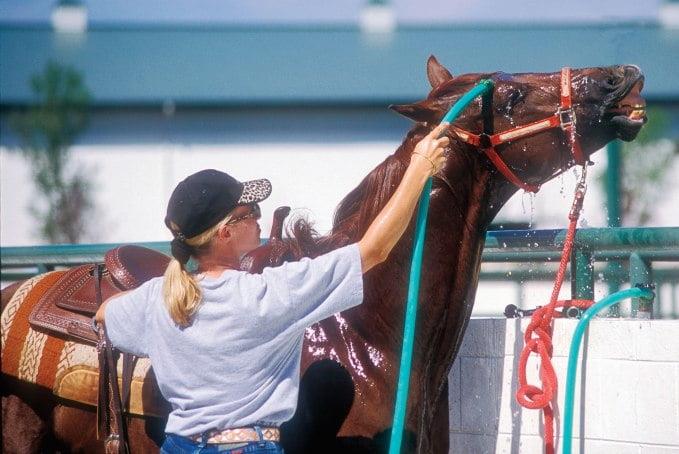
Australian seasons push care in different directions. In hot weather, plan work for cooler parts of the day and watch hydration. In wet spells, be more vigilant about mud fever and dermatitis, and about soft feet. During the spring flush, reassess pasture access for horses at laminitis risk.
Dental and hoof care
Dental checks
Dental pain can look like fussiness under saddle, slow eating, dropping feed, or unexplained weight loss. Regular dental assessment by a veterinarian or qualified equine dental practitioner helps prevent sharp points, ulcers, and secondary problems.
Hoof care and common problems
Consistent farrier work keeps the hoof capsule balanced and reduces strain on tendons and joints. Many horses do well on a regular trim or shoeing cycle, adjusted for growth rate, workload, and season.
Common issues to watch for include:
- Thrush (black, smelly discharge and tender frogs in damp or dirty conditions)
- Cracks and chips (often from imbalance, dryness, wet-dry cycling, or nutritional gaps)
- Abscess (sudden severe lameness, heat, bounding pulse)
- Laminitis signs (see the earlier section, and treat as urgent)1
Parasite control
Know what you are targeting
Australian horses commonly deal with strongyles (including small strongyles, or cyathostomins), ascarids (especially in young horses), and bots. The goal is not no worms ever, but a parasite burden that does not cause disease and does not contaminate the paddock unnecessarily.
Move away from calendar-only worming
Modern guidance favours evidence-based worming using faecal egg counts (FEC) to identify high shedders, combined with pasture hygiene (manure removal, stocking density management) and periodic checks that the products you use are still working (faecal egg count reduction testing). This approach helps slow anthelmintic resistance and avoids treating when it is not needed.7, 8
Mental health and wellbeing
Signs a horse is not coping
Stress in horses often shows up as tension, appetite changes, vigilance, restless movement, or repetitive behaviours such as weaving or crib-biting. These behaviours do not prove a single cause, but they are a nudge to look at routine, feed, turnout, pain, and social contact.
What helps most horses settle
Horses generally do best with predictable handling, regular turnout, safe social contact where possible, and enough forage to keep the gut busy. When behaviour changes suddenly, consider pain or illness first, then environment and training pressures.
Emergency care and first aid
What to have ready
A simple first aid kit and a plan save time when things go wrong. At minimum, keep a thermometer, clean dressings, saline, antiseptic, a hoof pick, and your vet's after-hours number somewhere everyone can find.
When to call the vet urgently
- Suspected colic that does not settle quickly, or any colic with repeated rolling, sweating, or worsening pain
- Breathing difficulty at rest, or significant respiratory distress
- Severe or sudden lameness (including suspected hoof abscess or injury)
- Profuse bleeding, deep wounds, eye injuries, or a horse that seems shocked or dangerously dull
- Any sudden unusual symptoms or unexpected death in areas where Hendra virus is a possibility (use precautions around body fluids and follow official guidance)4, 5
Final thoughts
Good horse care in Australia is mostly quiet consistency: steady feed, steady feet, steady observation. The details shift with climate and region, but the pattern holds. Prevent what you can, notice change early, and do not wait too long to ask for help when something feels off.
References
- The Horse (2025), Tips to reduce an EMS horse's risk of laminitis
- Virbac Australia, Routine vaccination in horses (tetanus and strangles protocols)
- Virbac Australia, Routine vaccination in horses (booster timing and higher-risk horses)
- Queensland Government (Queensland Health), Hendra virus infection (prevention and actions)
- Business Queensland, Hendra virus vaccine for horses
- UQ VETS (The University of Queensland), Hendra virus vaccination information (schedule and admission requirements)
- American Association of Equine Practitioners (AAEP), Internal parasite control guidelines (revised May 2024)
- Virbac Australia, Worming recommendations for adult horses (FEC-based approach)

Dog lover and writer at My Pets Australia, sharing practical breed guides and care advice for Australian pet owners.