Endurance Test for Dogs
An endurance test is a way of measuring whether a dog can keep moving at a steady pace over a long distance without overheating or breaking down. People search for it when they are planning a big hike, starting a canicross season, or entering a formal club test, and they want to know what counts as safe and sensible. Done well, endurance work builds steady fitness and quiet confidence. Done badly, it tips into heat stress, sore pads, or a dog that shuts down mid-run. This is a plain look at what these tests are, which dogs suit them, and how to prepare with a light hand and a close eye.
What endurance looks like in a dog
Endurance is more than lungs and legs. It is paw pads on rough ground, joints on hard surfaces, hydration, coat type, and how efficiently a dog cools itself by panting. Breed and body shape matter, but they do not decide everything. A well conditioned crossbreed may outlast a poorly conditioned working breed. Age matters too: puppies should not be pushed into long, repetitive distance work while they are still growing, and older dogs often need shorter sessions with longer recovery.
Dogs that need extra caution
- Flat-faced (brachycephalic) breeds such as pugs and French bulldogs, which struggle to cool themselves efficiently, especially in warm or humid weather.1
- Overweight dogs and dogs with heart, airway, or joint disease, where heat load and strain rise quickly even at easy speeds.1
- Dogs with thin pads or sensitive feet, which can go tender or lame on mixed surfaces before they look tired.
What people mean by an endurance test
The term is used in two main ways. A formal club endurance test runs under set rules and oversight, including veterinary checks and temperature limits. An informal endurance check is simply an owner working out whether their dog can comfortably handle a planned activity, such as a long run, a hiking day, or a full sport season. Both are useful. They just answer different questions.
Formal endurance tests
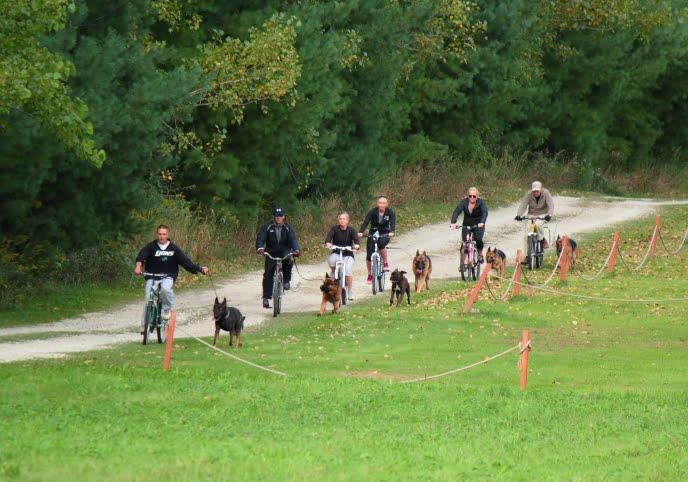
In Australia, canine controlling bodies and their affiliates run structured endurance tests. A typical format is a 20 km course over varying surfaces, with rules around event management and safety. Some state guidance notes that the event must be cancelled if the ambient temperature reaches a set threshold, for example 24 °C.2 Similar tests exist overseas in breed and working-dog circles. One widely known format is a 20 km trot alongside a bicycle, with scheduled breaks and fitness and feet checks during the event.3
Informal endurance checks
If your goal is a bushwalk or a steady run, you do not need a formal test. You need a repeatable, calm way to check a few things:
- Can your dog hold a steady trot without pulling, lagging, or constantly stopping?
- Do their paws stay sound on the surfaces you will actually be using?
- Do they recover quickly with a short rest and drink normally?
- Do they stay mentally present, still responding to cues and moving safely around traffic or other dogs?
Preparing your dog: the slow build
Endurance is built by small, regular efforts, not one big push. Increase distance and difficulty gradually, and change only one variable at a time: distance, speed, hills, heat, or surface. Keep most sessions easy enough that your dog could trot along and still take in the world around them.
A quick health check first
- Book a vet check if your dog is overweight, middle-aged or older, flat-faced, or has any history of lameness, collapse, coughing, or exercise intolerance.
- Keep routine parasite prevention current. In many parts of Australia, ticks are a practical risk during outdoor exercise and need tailored prevention advice from your vet.4
Conditioning sessions that work
- Start with time, not kilometres. A relaxed 15 to 20 minutes out and back, then slowly lengthen it.
- Add surface variety. Grass, dirt, and a little bitumen, checking feet closely after each new surface.
- Practise settled movement. Loose lead, steady pace, calm starts and stops. The dog that can settle is the dog that can last.
- Include rest days. Adaptation happens after the work, not during it.
Heat, humidity, and hard ground
Most endurance problems are quiet, not dramatic: a dog that pants a little too hard for a little too long, pads that start to sting, a dog that stops taking water. Heat is the sharp edge, because dogs cool themselves mainly through panting and can overheat quickly in warm conditions.4
Hot-weather rules that prevent most trouble
- Exercise early or late on warm days, not in the middle of the day.1
- Check the ground temperature. Place the back of your hand on the pavement for five seconds. If it is too hot for you, it is too hot for paws.1
- Carry water and offer small drinks during breaks, especially on longer efforts.1
- Be ready to turn back early. The finish is optional. Heat stress is not.
Nutrition and hydration
Most dogs do not need a special endurance diet for everyday conditioning. They need a complete, balanced food that suits their life stage and workload, and a body condition lean enough to move easily. Veterinary nutrition guidelines emphasise individual assessment, because the right plan depends on the dog in front of you rather than the label on the bag.5 On the day of longer exercise, avoid a large meal immediately before or after hard work, particularly in deep-chested dogs where bloat is a concern. If you are entering organised events, ask your vet what timing suits your dog's breed, age, and history.
Monitoring your dog during the effort
Watch the dog, not the watch. A dog can keep moving while already in trouble. Stop and rest if you notice any of the following:
- panting that becomes harsh, noisy, or does not ease during a break
- staggering, weakness, disorientation, or collapse
- excess drooling, vomiting, or diarrhoea
- bright red, very pale, or dark gums
- a change in gait, reluctance to bear weight, or licking at feet
These signs can be consistent with heat stress or heatstroke, which is an emergency. Begin first aid cooling with cool or tepid water (not ice), use airflow from a fan or air-conditioning, and seek urgent veterinary care.6
Choosing the right test for your dog
The best endurance test is the one that matches what you actually plan to do, and that leaves your dog finishing bright, sound, and willing.
- Training for hiking: build time on feet, hills, and varied surfaces, and practise calm breaks and drinking.
- Training for canicross: prioritise steady pacing and cue response, then add speed in small doses.
- Entering a formal endurance test: follow the event rules, train on similar surfaces, and treat the temperature cut-off as non-negotiable.2
The Bottom Line
Endurance is not bravado. It is quiet preparation, honest observation, and the willingness to stop early when the day turns against you. Build gradually, respect heat and hard ground, and let your dog's recovery tell you whether the work is helping.
References
- RSPCA Pet Insurance (Australia), Safely exercise your dog or puppy
- Dogs Victoria, Endurance Test (event overview and safety notes)
- German Shepherd Dog League of Great Britain, AD Endurance Test (20 km format and breaks)
- RSPCA Pet Insurance (Australia), Safely exercise your dog or puppy (heat and parasite considerations)
- WSAVA, Global Nutrition Guidelines
- RSPCA Australia, Keeping your pet safe during the heat (heatstroke first aid guidance)

Dog lover and writer at My Pets Australia, sharing practical breed guides and care advice for Australian pet owners.