EINSIEDLER and FREIBERGER Horses - Swiss Warmblood
If you are trying to work out what an "Einsiedler" actually is today, you are not alone: the name gets used loosely online, often as if it were interchangeable with the Freiberger (the Franches-Montagnes) or the modern Swiss Warmblood. They are three different things. The Freiberger is Switzerland's best-known native breed, the Swiss Warmblood is its modern sport horse, and the Einsiedler is the older warmblood line that helped build the sport horse and is now mostly a heritage thread rather than a large studbook of its own. Getting the distinction right matters when you are reading a pedigree, shopping for a horse, or judging what sort of animal you are likely to end up with. What follows is a clearer map of where each type comes from, what it was bred to do, and how Swiss studbooks treat them now.1, 2, 3
At a glance: Einsiedler vs Freiberger vs Swiss Warmblood
- Einsiedler (Einsiedeln horse): a historic warmblood type tied to the Benedictine Abbey of Einsiedeln. As a separate studbook it was largely absorbed into what became the modern Swiss Warmblood, though a small traditional population is still bred at the abbey.1
- Freiberger (Franches-Montagnes): Switzerland's best-known native breed, a light draught and riding type from the Jura region, used mainly today for riding and driving.2
- Swiss Warmblood: a modern sport-horse population created in the mid-20th century, built partly from the Einsiedler and other local types, then shaped with selected outside bloodlines for jumping and dressage.3
History and Origin
The Einsiedler is closely tied to the Benedictine Abbey of Einsiedeln in the canton of Schwyz. Sources trace the population back many centuries, with organised breeding at the abbey and formal record-keeping becoming part of that tradition over time.1 In the mid-20th century the Einsiedler studbook was discontinued and the type was merged into the developing Swiss Warmblood population. That is why you see the name used both historically, as a distinct type, and informally today, as a heritage line within Swiss sport-horse breeding.1, 3
The Freiberger comes from the Jura region of north-west Switzerland and has long been valued as a practical, all-round horse. Where the Swiss Warmblood aims at modern sport performance, the Freiberger has stayed a versatile riding-and-driving breed with a recognisable national identity in Switzerland.2 The Swiss Warmblood itself was created by combining the Einsiedler with other Swiss populations and then refining the type for sport, primarily as a jumping and dressage horse, with driving also common.3
Appearance and Physical Characteristics
These are typical ranges, not guarantees. Because "Einsiedler" can mean either the historic type or a small conserved population, descriptions vary, but modern sources generally describe it as a warmblood saddle and carriage type rather than a heavy draught horse.1
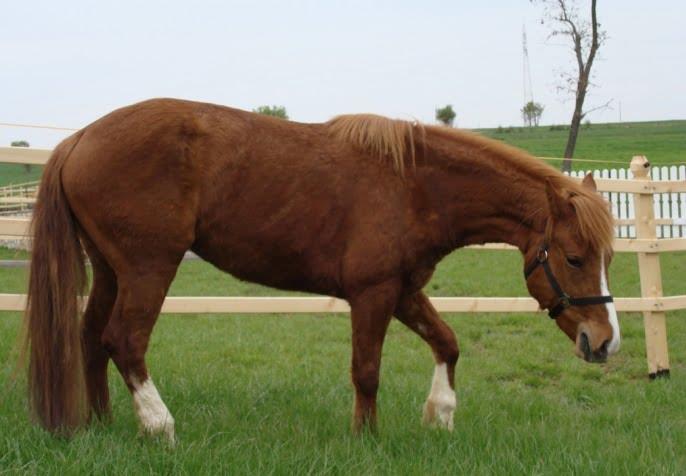
Freiberger horses usually stand around 147 to 155 cm at the withers (roughly 14.2 to 15.1 hands), with a sturdy but not heavy build. Bay is the most common colour, chestnut is also common, and other colours occur more rarely.2 Swiss Warmbloods are bred as sport horses, commonly seen in chestnut and bay with other colours possible. They are selected for athletic movement and jumping ability and sit in the riding-horse height range rather than a draught range.3
Temperament and Personality
Across these Swiss types, breeders tend to value trainability and steadiness. Temperament still depends on the individual horse, its handling, and its training history. A Freiberger is often chosen for level-headed riding and driving work, while a Swiss Warmblood is usually chosen with sport performance in mind.2, 3
What These Horses Are Used For
- Freiberger: riding and driving are its central modern uses, and it was historically used for farm and military work.2
- Swiss Warmblood: bred as a sport horse, commonly trained for showjumping and dressage, with driving also occurring.3
- Einsiedler: historically a saddle and carriage type, today most often seen as a heritage population or as part of Swiss Warmblood history rather than a large separate breed.1, 3
Breeding and Registration
In Switzerland the modern sport-horse breeding landscape runs through recognised breeding bodies. The Zuchtverband CH-Sportpferde (ZVCH) is a federally recognised breeding organisation, and it describes the historical presence of warmblood types in Switzerland, including the Einsiedler, and how breeding responsibility shifted over time.4
The Swiss National Stud Farm at Avenches is a federal competence centre for equines. It also has a specific role in supporting and promoting the Freiberger, which is often described as the only typically Swiss horse breed still in existence.5, 6
Training and Riding
These are not one-method horses. They generally do best with steady, legible handling and training that builds in small increments, especially early on. In practice that usually means:
- consistent groundwork and clear boundaries before asking for more athletic work
- short, repeatable sessions that protect soundness and keep the horse confident in the task
- fitness built gradually, particularly for jumping, fast work, or harness work
The Swiss Warmblood is explicitly a sport-horse breeding outcome, so it is usually started and conditioned with performance disciplines in mind. The Freiberger, by contrast, is often trained for a calmer mixed workload: riding, harness, and steady kilometres rather than peak sport intensity.2, 3
Care and Maintenance
The health concerns often listed for these horses, such as lameness, colic, and respiratory problems, are not unique to Swiss breeds. They are broad risks across horse ownership generally. What matters most is day-to-day management: a diet based on forage, regular hoof care, parasite control, vaccination appropriate to your region, and a workload matched to fitness and footing.
If you are buying, the most useful single step is a pre-purchase veterinary examination, with imaging where appropriate for performance horses, because it focuses on the actual animal in front of you rather than a breed stereotype.
Sorting Fact From Myth
Two common mix-ups are worth correcting:
- "The Freiberger is a cross between the Einsiedler and another Freiberger." The Freiberger is a distinct Swiss breed originating in the Jura region. It is not defined as a simple cross with the Einsiedler.2
- "The Einsiedler is a late-20th-century breed." The Einsiedler is a historic Swiss warmblood type with deep roots at the Abbey of Einsiedeln, later merged into the Swiss Warmblood population.1, 3
The Bottom Line
A quick rule of thumb: the Freiberger is the grounded, practical Jura horse still recognised as a Swiss-native breed; the Swiss Warmblood is the modern Swiss sport horse; and the Einsiedler is the historic thread running through Swiss warmblood breeding, still visible today but no longer the large separate studbook people sometimes imagine.1, 2, 3
References
- Wikipedia, Einsiedler
- Wikipedia, Freiberger (Franches-Montagnes)
- Wikipedia, Swiss Warmblood
- ZVCH (Zuchtverband CH-Sportpferde), Verband
- Switzerland Tourism, The Swiss National Stud (Avenches)
- Avenches.ch, Swiss National Stud Farm
- Canton of Vaud, Swiss National Stud Farm
- ZVCH (Zuchtverband CH-Sportpferde), Home

Dog lover and writer at My Pets Australia, sharing practical breed guides and care advice for Australian pet owners.