Eclectus Parrots as Pets
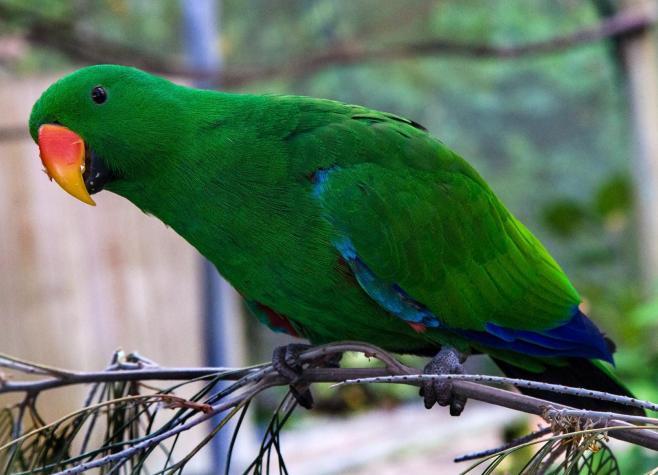
The Eclectus parrot is a striking rainforest bird known for two things: colours so different between the sexes that they were once thought to be separate species, and a calm, watchful temperament that suits people who want a companion rather than a clown. Adult males are mostly green, adult females mostly red with blue and purple, and both can live for decades in the right home. In Australia they are native to far north Queensland, and depending on your state you may need a licence to keep one, so check with your state wildlife authority first. They can be steady, observant, long-term companions. They are also a serious daily commitment, not a low-maintenance pet.
Quick facts (at a glance)
- Size: about 35 to 42 cm (varies by subspecies)1, 2
- Weight: roughly 250 to 330 g (many pet birds fall in this range)1
- Colour: strongly sexually dimorphic (adult males mostly green; adult females mostly red with blue and purple)1, 2
- Lifespan: long-lived; commonly decades, and may reach 50+ years in some cases1, 3
- Temperament: intelligent, socially oriented; can be vocal and needs daily engagement3, 7
History and Origin
The Eclectus parrot (Eclectus roratus) comes from the rainforest canopy and nearby woodland edges across New Guinea and surrounding islands, with an Australian population in far north Queensland on the Cape York Peninsula.2 In the wild they spend long stretches moving through the treetops, foraging on fruit, seeds, nuts, blossoms and other plant material.2 That canopy lifestyle explains a lot about what they need in captivity: room to move, things to forage for, and a diet built around plants.
Appearance and Physical Characteristics
Eclectus parrots are one of the clearest cases of sexual dimorphism you will see in any parrot. Adult males are predominantly green, while adult females are predominantly red with blue and purple areas, and the beak colour differs too: males have a lighter-coloured beak, females a darker or black one.1, 2 Colour varies a little by subspecies and age, so small differences between individual birds are normal. If the sex of your bird matters for your household, whether for noise expectations, breeding risk or pairing plans, confirm it with an avian vet or a reputable breeder rather than relying on photos alone.
Temperament and Personality
In the home, Eclectus parrots are usually watchful and engaged rather than constantly busy. They can learn words and household sounds, and many settle into regular calling times through the day, especially when the house shifts from quiet to active or as dusk sets in.3 What they do not cope with is long empty hours with nothing to do. Parrots are intelligent animals with strong welfare needs around enrichment, normal behaviour, companionship and health care, and without those, stress behaviours become far more likely.6
Is an Eclectus Parrot Right for You?
An Eclectus parrot suits a household that can offer daily interaction, a large and safe living space, regular out-of-cage flight time, and a varied, mostly plant-based diet. In return you get a bird that watches closely, learns patterns, and often forms a stable attachment to its people. If what you need is a pet that can be left largely alone, or one that will thrive in a small cage with minimal noise, this is not the bird for you. With parrots the mismatch shows up in behaviour first, usually as screaming, feather damage or weight gain.
Care and Housing
Choose the largest safe enclosure you can fit, and prioritise width over height. Birds need horizontal space to move, climb, hop and flap properly.4, 8 Two practical rules matter more than any single cage measurement:
- The cage must allow full wing extension without touching the sides, and perching without the tail scraping the floor.5
- If the bird spends many hours caged, the enclosure must be large enough to support grooming, play, climbing and movement between perches and stations for food, water and toys.5, 8
Materials and setup matter too. RSPCA guidance recommends stainless steel and warns against galvanised or copper wire because of the heavy metal poisoning risk.4 Use varied, natural perches of different diameters and textures, and place the cage where the bird can feel secure rather than constantly startled by traffic through the room.4, 5
Out-of-cage time is not optional. If a bird is largely confined to a cage, welfare guidance recommends regular chances to fly in a safe indoor space, or access to a flight aviary, paired with mental stimulation and appropriate housing.8 Out time is where muscles, coordination and much of the day's curiosity get used up, before that energy turns into noise or frustration.
Diet and Nutrition
Get the diet right and you prevent most of the common problems before they start. In the wild, Eclectus parrots feed on a mix of berries and other fruit, nuts, seeds and blossoms, often foraging through the canopy in pairs or small groups.2 In captivity, aim for a diet built around variety and plant foods, with pellets used thoughtfully rather than as the entire menu. Australian animal welfare guidance for pet birds stresses that seed-heavy diets are commonly linked with obesity, and recommends commercially prepared pellets plus fresh vegetables daily, with seeds used more as a treat than a staple.6
- Offer fresh vegetables daily, and rotate the types to keep interest and broaden nutrients.6
- Use a quality pellet as part of the diet rather than relying on mixed seed as the base.6
- Monitor body condition. Obesity creeps in quietly, especially with constant access to energy-dense foods.6
- Provide fresh, clean water daily.
If you want a precise plan, including safe foods and quantities, an avian vet is the right place to start. The best diet depends on the bird's age, activity, hormone cycles, and what it actually eats, not just what is offered.
Training and Socialisation
Eclectus parrots tend to learn best through calm repetition and clear rewards. Keep sessions short and end early, while the bird is still interested.
- Reward the behaviour you want, such as stepping up, calm stationing or gentle touch, with praise, a small food reward, or access to a favourite activity.
- Build predictability: same cue, same response, same reward.
- Avoid punishment-based training. It often produces fear responses and can worsen biting or avoidance.
Social needs matter as well. Victorian animal welfare guidance lists companionship as a core welfare need for pet birds, alongside environment, diet, behaviour, and protection from pain and disease.6 Some birds do well as a single bird with extensive daily contact; others settle better with a compatible bird companion, introduced carefully.
Health and Lifespan
Eclectus parrots are long-lived, commonly reaching decades and in some cases 50 years or more, so their care is a genuine long-term plan.1, 3 Routine health care for parrots is less about vaccines and more about prevention: regular checks, and early investigation of weight change, changes in droppings, breathing noise, persistent sneezing, reduced appetite, or any shift in behaviour that lasts more than a day or two. Feather plucking and other feather-destructive behaviour is a common red flag with many possible causes, including poor enrichment, stress and diet problems. Welfare organisations consistently link inadequate enrichment and boredom with behaviours such as feather plucking, screaming, aggression and self-mutilation.7 Treat it as a health and husbandry problem, not a bad habit.
Common Challenges (and What They Usually Mean)
Most Eclectus problems trace back to the same short list of unmet needs. Noise comes first: these birds can be vocal, and calling often increases with boredom, inconsistent routines and limited flight time. When noise becomes a household problem, look first at enrichment, predictability, and opportunities to forage and move.7, 8
Feather plucking is a sign to slow down and investigate. It can be triggered by stress, low stimulation, social isolation, medical issues, or a diet that does not suit the individual bird. Start with an avian vet check, then rebuild the daily rhythm: sleep, diet, flight, foraging and calm interaction.6, 7
Diet drift is the quiet one. Many diets slide over time towards convenience: more seed, more treats, fewer vegetables. Welfare guidance warns this pattern is common and is associated with obesity in pet birds.6 A weekly chop and prep routine, with rotating vegetables, keeps the diet steady without becoming a daily chore.
The Bottom Line
The Eclectus parrot is a beautiful, intelligent, long-lived bird that can form a stable attachment to a committed household. It rewards people who can give daily interaction, a large and safe cage, real out-of-cage flight time, and a varied plant-based diet. It punishes neglect quickly, through noise, feather damage and weight gain. Check your state licensing before you commit, get your setup and diet right from day one, and build a relationship with an avian vet early.
References
- United Parks & Resorts (SeaWorld.org), Grand Eclectus Parrot: Facts and information
- Australian Museum, Eclectus Parrot (Eclectus roratus)
- WebMD, What to know about the Eclectus parrot
- RSPCA NSW, Housing for pet birds
- RSPCA Knowledgebase, What kind of enclosure does my bird need?
- Agriculture Victoria (Animal Welfare Victoria), Your bird's welfare needs
- Animal Welfare League Queensland (AWLQ), Bird care: enrichment and environment
- RSPCA Australia, How to help your pet bird have a good life

Dog lover and writer at My Pets Australia, sharing practical breed guides and care advice for Australian pet owners.