Draft Horse Showing
Draft horse showing is where big, steady horses are presented in hand or in harness and judged for the things that once mattered on farms: correct build, sound movement, safe gear, and calm handling. Most people come to it wanting to know what the judge is actually rewarding, which classes exist, and how to prepare a horse and handler so the day runs smoothly. The appeal is real. A well-turned-out heavy horse walking evenly and standing quietly in a busy ring is a genuinely good thing to watch and to own. The details shift a little between show societies and breed groups, but the pattern holds everywhere. It is also work: welfare sits underneath all of it, and a horse that is uncomfortable, overworked, or poorly handled shows it.1, 2, 3
What draft horse showing is
Draft horse showing covers several related styles of competition, and it helps to know which one you are entering.
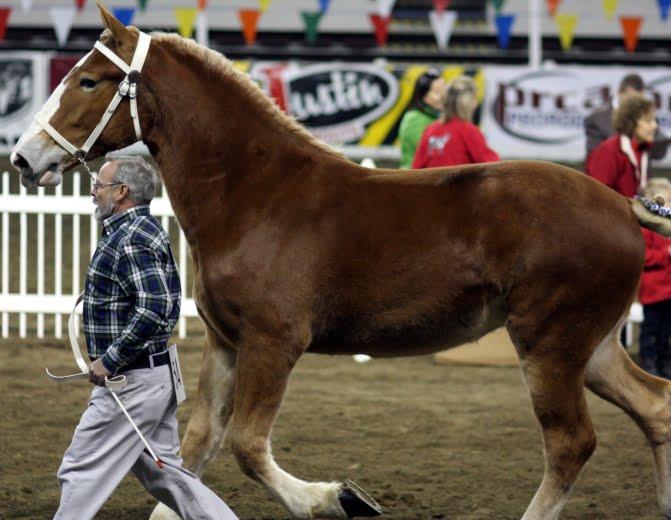
- In-hand (halter) classes: the horse is presented on the ground for assessment of conformation, breed type, and manners.
- Harness and driving classes: the horse works in harness, usually pulling a vehicle, with judging focused on way of going, responsiveness, turnout, and safe performance.
- Working or utility-style events (where offered): demonstrations of practical skills such as manoeuvring, obstacle patterns, or agricultural displays. Agricultural shows may also run separate pull or strength events, which are governed by their own rules and safety requirements.
It is worth separating draft horse showing from modern sport-horse competition. Draft breeds do appear in ridden disciplines, but draft showing itself is usually about type, soundness, turnout, and controlled work rather than speed, height, or technical difficulty.4
A brief history and the agricultural thread
Draft breeds were developed to move heavy loads, ploughing, logging, carting, and transport, before internal-combustion machinery took over. As those working roles shrank, shows became the place to compare breeding stock and preserve the traits people valued: bone, muscle, feet, temperament, and an efficient walk and trot.5
In Australia, agricultural shows still carry that thread. The same venues that celebrate produce and livestock often run horse sections where heavy breeds appear alongside other breeds and harness classes, judged independently under published schedules. Even when the horses no longer do farm work, the show ring acts as a public ledger of the breed: what good legs look like, what calm handling looks like, and how a tradition survives when it is practised carefully. Major show societies continue to run heavy horse and harness sections as part of broader horse programs, with qualification pathways and published judging schedules.4
Breeds and classes you will see in Australian rings
What turns up depends on the region and the show, but heavy horse sections commonly feature:
- Clydesdale (often shown with feather and traditional turnout)
- Shire (tall, substantial, often feathered)
- Percheron (powerful, generally less feather, known for strong movement)
Breed standards and presentation preferences differ, so the most reliable guide is the schedule for your show and the breed society's guidance for turnout and type. Schedules vary, but many draft sections are built from familiar building blocks: age and sex divisions (stallion, mare, gelding; juniors through to mature), breed or type classes where a show splits heavy horses by breed, champion and reserve champion line-ups, harness and driving classes, and handler or led classes at community shows. If you are planning an entry, read the schedule slowly. It will tell you eligibility, gear requirements, and exactly how the ring runs on the day.4
How draft horses are judged
Three things carry most of the result: how the horse is built, how it moves, and how it behaves.
Conformation and soundness. Judges generally reward a horse that looks built for a lifetime of steady work: balanced proportions, straight limbs, strong joints, and feet that appear capable of carrying weight without strain. Movement should be free and even, and any obvious lameness or unevenness becomes hard to ignore once the horse is asked to walk and trot in company.
Movement and way of going. In hand, the horse is usually walked away and back, then shown on a circle or along a long side at trot. In harness, judges look for rhythm, straightness, and a willing, controlled frame, with the handler or driver able to maintain a safe space and consistent pace.
Manners and handling. A draft horse does not need to be silent and statue-still, but it does need to be safe: standing when asked, moving off promptly, and accepting handling without escalating. This is where preparation pays off. Big horses can make small problems feel enormous in a crowded ring.
Training and preparation that actually helps
Good show preparation is quiet and repetitive rather than dramatic. The goal is a horse that can do ordinary things in an unusual place.
- Fitness for the job: enough conditioning to travel, stand, and work without fatigue. Basic welfare guidance across Australian jurisdictions emphasises adequate nutrition, water, exercise, and prompt care for injury or illness.6
- Desensitisation, done gently: flags, PA systems, prams, dogs, flapping tents. Introduce pressure in small doses and keep the exit easy.
- Ring-craft: walk to halt to walk transitions, trotting up straight, standing roughly square, and maintaining personal space around other horses.
- Loading and travel practice: shows are often won or lost in the float before you arrive.
Start earlier than you think, but keep it gentle. The aim is familiarity, and short, consistent sessions tend to work better than last-minute drilling.
Turnout and gear: comfort first, polish second
Draft turnout can be beautifully traditional, but it still needs to be practical. Gear should be clean, well-maintained, and correctly fitted so it does not rub or pinch. Australian animal welfare codes and state guidance keep coming back to this point: equipment must be appropriate and maintained to avoid injury, and horses must be suitable and fit for the purpose they are being used for.3, 6
If you are showing under an equestrian body or an affiliated event, check the relevant welfare rules and regulations in advance. At many levels of sport, horse welfare is explicitly stated as paramount, and rules can cover everything from unacceptable practices to prohibited modifications and medications.1, 2, 7
Common challenges, and how people manage them
Draft horses are powerful, and shows compress horses, people, vehicles, and noise into narrow lanes. The safest handlers are often the least conspicuous: they keep distance early, avoid tight corners, and never rely on strength alone.
Cost and logistics add up quickly with heavy horses. Feed, farriery, transport, and gear maintenance are all significant, and planning matters especially during dry seasons, when feed prices can spike and welfare problems appear fast if owners are stretched.8 Busy events bring their own pressures: long waits, heat, and limited shade. The simplest habits prevent the most serious issues, so keep water on offer, check the horse regularly, give it breaks from the bustle, and be willing to scratch an event if the horse is not right.6
A few things worth knowing
- You do not always need a purebred draft horse. Some shows run breed classes that require registration, while others offer heavy horse or harness divisions that are open by type. The schedule for your specific event is the deciding document.4
- Movement matters more than grooming. Turnout helps a judge see the horse clearly, but movement and soundness are hard to disguise. A clean, well-presented horse that steps evenly and stands quietly usually outcompetes a glossy horse that looks uncomfortable or unsettled.
- Welfare and compliance are tightening. Australian equestrian governance increasingly foregrounds welfare and clean-sport expectations, and state welfare codes continue to set minimum standards for care, handling, and equipment.1, 2, 6, 7
The bottom line
Draft horse showing rewards preparation over drama. Lead with a sound, well-conditioned horse, present it cleanly, handle it safely, and read the schedule for your show before you enter anything. Show culture is slowly broadening, with more people coming to heavy horses through driving, breed preservation, farm demonstrations, and plain admiration for a calm, capable animal doing a job with weight in it. If you keep the horse comfortable and do the quiet groundwork, the rest of the day tends to look after itself.
References
- Equestrian Australia, FEI Code of Conduct (welfare of the horse)
- Fédération Équestre Internationale (FEI), Code of Conduct for the Welfare of the Horse
- NSW Department of Primary Industries, Animal Welfare Code of Practice No 3: Horses in riding centres and boarding stables
- Royal Agricultural Society of NSW, Horse competitions overview (conformation, movement, presentation; includes Clydesdales and harness classes)
- Encyclopaedia Britannica, Draft horse
- Agriculture Victoria, Code of Practice for the Welfare of Horses (Revision 1)
- Equestrian Australia, Policies & Bylaws (General Regulations effective 1 January 2025 listed)
- The Guardian (Australia), Report on RSPCA Victoria horse welfare pressures and feed-cost stress (May 2025)

Dog lover and writer at My Pets Australia, sharing practical breed guides and care advice for Australian pet owners.