Dog Shows- Showing your Dog
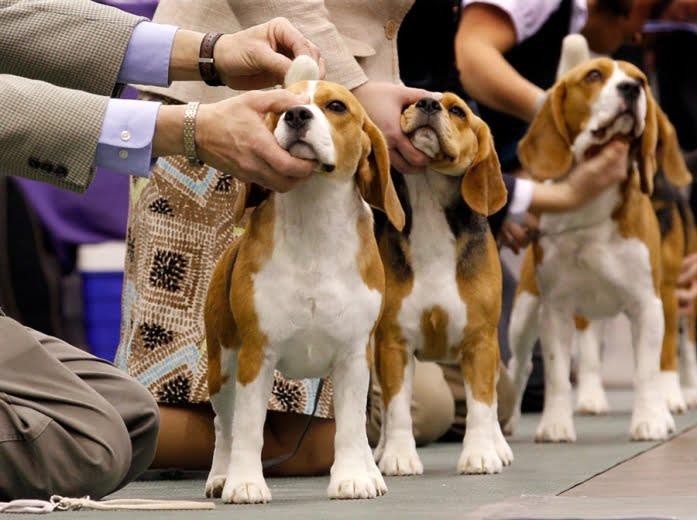
Showing your dog is conformation: your dog is assessed against the written breed standard, the agreed description of the ideal for its breed. Most people arrive at a guide like this with an entry form open, a young dog at their feet, and a page of unfamiliar terms like Challenge, Best of Breed and Best in Group. The rewarding part is that a well-run show day is a genuinely social, structured way to learn your breed and meet people who know it well. The awkward part is that a small slip, the wrong class, a missed ring call, or missing paperwork, can quietly undo a whole day's preparation. This is an Australia-focused walk-through of how showing works under Dogs Australia, the Australian National Kennel Council (ANKC).1, 2, 3
What a conformation show is (and what it isn't)
Conformation shows assess dogs against the breed standard, which covers structure, movement and breed character. Dogs are not judged against each other in the everyday sense. They are judged on how closely they match that standard on the day, under that judge.1, 3
Because conformation is an expert opinion applied to a written standard, results vary between judges. A dog overlooked in one ring may place strongly under another judge on another weekend.
Who runs dog shows in Australia
Conformation shows are conducted through Dogs Australia's member bodies, the state and territory canine associations, and their affiliated clubs, under Dogs Australia rules and regulations.1, 3
Common show types you'll hear about
Championship shows
Championship shows are where Challenge Certificates, and the points that count towards titles such as Australian Champion, are available.4, 5
Open shows
Open shows are a lower-pressure way to gain ring experience. They do not award Challenge points, but they let dogs and handlers practise the routine of entering, stacking, moving and working around distractions.5
Members' competitions and club events
Many breed clubs and all-breeds clubs run informal competitions as well. Schedules vary by club, so check the event schedule and any extra class lists before you enter.
Eligibility and paperwork
Rules differ by event type, but for Dogs Australia conformation events you will typically need:
- a dog registered with the relevant Dogs Australia state or territory body (usually on the Main Register for conformation); and
- a current membership (for you, and sometimes for any co-owner listed), plus entry lodged by the closing date.
If you are unsure what registration you have, confirm it before you pay entry fees. It is far easier to fix paperwork at home than ringside.4, 6
Age classes: what you'll usually see
Exact class lists differ slightly by schedule, but Australian conformation commonly uses age-based classes and separates dogs (males) from bitches (females). Many shows include baby puppy (3 to 6 months) and puppy (6 to 12 months) options, with other age classes above that.4, 5
Always rely on the schedule for the show you are entering. If the schedule does not make sense, ask the show secretary before entries close. Small clarifications save big disappointment later.
How judging usually flows at an all-breeds show
In an all-breeds show, breeds are organised into seven groups. In Australia these are Toy, Terriers, Gundogs, Hounds, Working Dogs, Utility and Non-Sporting.2, 7
Breed judging (in the breed ring)
For each breed, dogs are generally judged before bitches, and each class enters the ring in catalogue order. The judge will:
- watch the exhibits move as a group, then one by one;
- examine each dog's structure (often on the ground; some breeds are examined on a table);
- check bite and teeth, overall balance, feet, and other breed-specific points; and
- ask for movement patterns so they can assess gait from different angles.4, 5
For entire male dogs, judges also check that two apparently normal testicles are present. In ANKC conformation this is a standard requirement.8
Challenge and Best of Breed
At a championship show, the best eligible dog (male) may be awarded Challenge Dog, and the best eligible bitch may be awarded Challenge Bitch. Those two then compete for Best of Breed, followed by Reserve (Runner-up) Best of Breed under the usual Dogs Australia process.4, 5
The word eligible matters here. Baby puppy classes are often judged and placed, but Challenge points are calculated for exhibits six months and over in the general classes.6
Group judging (Group Specials)
After breed judging is complete for a group, Best of Breed winners return to compete for Best in Group and Runner-up Best in Group.4
General Specials (In Show judging)
The seven Best in Group winners compete for Best in Show, with Runner-up Best in Show selected next. This is often the slowest judging of the day, because the General Specials judge may be examining many dogs they have not assessed earlier.4, 5
Challenge points and the Australian Champion title
At championship shows, points towards the Australian Champion title are earned through Challenge and Best of Breed certificates. A dog needs:
- a total of 100 points; and
- not fewer than four Challenge or Best of Breed wins under not fewer than four different judges; and
- at least 25 of those points gained after six months of age, which aligns with points being calculated from exhibits six months and over in general classes.6, 9
How points are calculated (and the 25-point cap)
For a Challenge Certificate, points are calculated as five (5) points plus one (1) point for each exhibit of the same sex of that breed shown in the eligible classes. There are also point calculations for Best of Breed, Best in Group and Best in Show under the Dogs Australia points system, but points do not stack up without limit. The maximum any exhibit can receive at a single show is 25 points.9
This is why a dog can, in theory, earn a championship in a low-entry breed without constant head-to-head competition, although the ring still asks the same question each time: how close is this dog to its standard, today, under this judge.4, 9
Advice for first-time exhibitors
Attend a show before you enter one. Sit near your breed ring, watch how handlers time their warm-up, and see how they keep dogs settled between classes. A few practical habits go a long way:
- Arrive early. Parking, check-in and finding your ring always take longer than they look on paper.
- Listen for steward calls. If you miss your class, you cannot be judged.
- Practise the pace that suits your dog. Movement is easier to assess when the dog is travelling at its natural, efficient stride.
- Give space in the line-up. Crowding can distract other dogs and may trigger tension, especially in busy rings.
- Do a gear check before you leave home. Collar, lead, number holder, bait, brush, towel, water bowl, and anything your breed needs for last-minute grooming.
- Bring a crate or secure set-up where permitted. It helps many dogs rest between classes and keeps walkways safer.
- Clean up after your dog. Shows run on goodwill as much as rosettes.
Keep your expectations narrow and steady. You are buying one judge's assessment on one day, not a verdict on your dog's worth.
References
- Dogs Australia (ANKC), Conformation
- DogsWest, Groups of Breeds
- Dogs SA, Dog Shows
- Dogs SA, Conformation (Showing your dog)
- Dogs NSW, Conformation
- Dogs Victoria, Conformation (Showing)
- Dogs SA, Dog shows (recognised groups overview)
- DogsWest, Breed standards (Dogs Australia standards access)
- Dogs ACT, Champion points system (Challenge points)

Dog lover and writer at My Pets Australia, sharing practical breed guides and care advice for Australian pet owners.