Doberman Pinscher - Dobermann
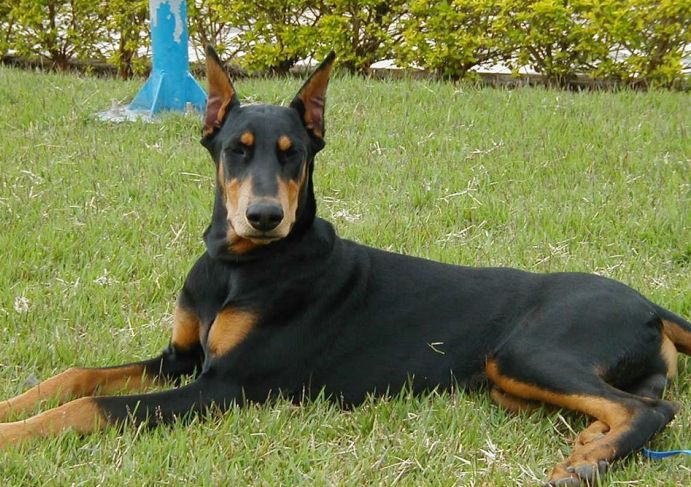
The Dobermann is a lean, fast, working dog from Germany, prized for intelligence, athleticism, and a watchful loyalty that keeps it close to its people. Give one a job and steady handling and you get a devoted, quick-learning companion who moves through the house like a shadow at your heel. Outside Europe it is often called the Doberman Pinscher. It is also a serious commitment: this is a large, high-drive dog that needs daily exercise, real training, and an owner who takes a few known health risks seriously. In the right home it thrives, and in the wrong one the same traits turn into noise and friction.
Dobermann at a glance
- Breed type: Working dog (Pinscher-type)
- Country of origin: Germany
- Size: Medium to large, athletic
- Also known as: Dobermann; Doberman Pinscher (common name outside Europe)
- Typical height (at withers): Males 68 to 72 cm; females 63 to 68 cm1
- Typical weight: Males about 40 to 45 kg; females about 32 to 35 kg (healthy weight varies with build)1
- Exercise needs: High for most adults (both physical exercise and mental work)
- Coat care: Low to moderate (short coat, but regular shedding)
- Typical lifespan: Commonly around 10 to 12 years (individuals vary; genetics and preventative care matter)2
- Often suited to: Active homes; experienced owners; structured training; canine sports; some working roles (where appropriate)
History and Origin
The Dobermann originated in Germany in the late 1800s. The breed is widely linked to Karl Friedrich Louis Dobermann of Apolda, who is commonly described as developing a protective, reliable dog suited to personal security work in his era.3
Consistent selection over time produced a dog that combines speed, stamina, and quick learning with a strong tendency to notice changes in its environment. Those traits are an asset with good handling and a challenge without it.
Appearance and Physical Characteristics
A well-bred Dobermann is lean, muscular, and balanced, built for efficient movement rather than bulk. The coat is short, hard, and close-lying.4
Most people picture the classic black-and-tan pattern, but breed standards describe different accepted colours depending on the registry. Under the FCI standard, black or brown with rust-red markings are described.1
In Australia you will also see natural ears and long tails. Ear cropping and tail docking are not necessary for health, and are restricted or prohibited in many places. If you are unsure what is legal where you live, check your state or territory rules before taking advice from overseas sources.
Temperament and Personality
A Dobermann is typically alert, people-focused, and quick to learn patterns, both the ones you intend to teach and the ones you do not. They often stay close, watch the front gate, and track routine with an intensity that can feel like shadowing. That is the breed's tendency to keep tabs on its world.
Many Dobermanns are reserved around strangers. That is not the same thing as aggression, but it does mean early, positive social experiences and steady training matter more than they do in more easygoing breeds.
Is a Dobermann Right for You?
A Dobermann can be an excellent family dog in the right home: devoted, biddable, and tuned in to the household's daily rhythm. But the phrase "right home" is doing real work here.
Often a good fit if you have
- time for daily exercise and training
- interest in structured activities (obedience, scent work, agility)
- confidence managing a large, fast, intelligent dog
- a plan for calm socialisation and visitors
Think carefully if
- your days are long and the dog would be under-stimulated
- you want a dog that happily greets every stranger
- you are not ready to budget for screening and potential breed-associated health care
Training and Exercise
Most Dobermanns need substantial daily activity and mental work to stay steady, and a stroll around the block rarely touches the sides. Think in terms of a mix: brisk walking, structured play, scent games, obedience, and, for many individuals, running alongside you once mature and cleared by a vet. A tired Dobermann is not just physically spent, it is mentally satisfied.
They respond best to training that is consistent, reward-based, and calm, the kind that builds reliable habits without pushing the dog into fear or conflict. The RSPCA recommends reward-based training and warns against aversive methods and equipment such as shock devices, prong collars, and choke chains.5
Early socialisation helps a puppy learn that new people, surfaces, sounds, and other dogs are part of normal life. The RSPCA notes a critical socialisation period in puppies of roughly 3 to 12 or 14 weeks of age, when positive exposure is particularly important.6
Simple habits that make a big difference
- Short sessions, often: two minutes of focused work beats twenty minutes of repetition.
- Teach an off switch: settle on a mat, quiet time after exercise, and calm greetings.
- Do not skip adolescence: many Dobermanns hit a challenging phase as teenagers; keep training steady and reduce high-arousal games if reactivity starts creeping in.
Health and Lifespan
No breed is guaranteed healthy, and Dobermanns have several well-recognised risks. The most helpful approach is plain: choose a breeder who tests, keep your dog lean and fit, and do not ignore early signs.
Dilated cardiomyopathy (DCM)
Dobermanns are one of the breeds particularly at risk of dilated cardiomyopathy, a disease where the heart muscle becomes weak and the chambers enlarge over time. It can have a long silent phase before symptoms appear, which is why screening matters.7
If you are buying a puppy, ask what cardiac testing is done in the breeding dogs. If you already own a Dobermann, ask your vet when to start screening (often involving tests like echocardiography and heart rhythm monitoring, depending on age and risk).
Gastric dilatation-volvulus (GDV, bloat)
Dobermanns are a deep-chested breed and are recognised as being predisposed to GDV, where the stomach distends and can twist. It is a true emergency that can become life-threatening very quickly.8
Seek urgent veterinary care immediately if you see signs such as repeated unproductive retching, a swollen abdomen, sudden restlessness, drooling, weakness, or collapse.9
Hip dysplasia and orthopaedic issues
Hip dysplasia can occur in many medium to large breeds. It is not a Dobermann-only problem, but it is worth treating as a real possibility: keep your dog at a healthy weight, avoid excessive high-impact exercise in young dogs, and ask about hip scoring in breeding lines.
Grooming and Care
The coat is low-maintenance, but not maintenance-free. Weekly brushing lifts loose hair and keeps the skin healthy, and nails, ears, and teeth need routine attention like any breed.
- Coat: quick weekly brush; more during seasonal shedding.
- Nails: trim before you hear them clicking on hard floors.
- Ears: check for redness, odour, or wax build-up; see a vet if anything looks inflamed.
- Teeth: regular brushing reduces dental disease risk (your vet can show you a realistic routine).
The Bottom Line
The Dobermann is a precise animal: quick, athletic, and watchful. In a home with consistent training, humane handling, and enough daily work, they often settle into a steady companion who moves through life like a shadow at your heel. In a home that cannot meet those needs, the same traits can spill out as noise, restlessness, and friction. Choose carefully, train kindly, and take health screening seriously, and the breed's best qualities tend to show up quietly and often.
References
- Fédération Cynologique Internationale (FCI), Dobermann (Standard No. 143): size and weight
- RSPCA, Dog health (general guidance on health and lifespan variation)
- Encyclopaedia Britannica, Doberman pinscher (history and origin overview)
- The Kennel Club (UK), Dobermann breed standard (coat and general characteristics)
- RSPCA Knowledgebase, Reward-based training and why the RSPCA supports it
- RSPCA Knowledgebase, Training recommendations and puppy socialisation period
- Merck Veterinary Manual (Professional), Dilated cardiomyopathy (DCM) in dogs; breed predisposition including Doberman Pinschers
- Cornell University College of Veterinary Medicine, Gastric dilatation-volvulus (GDV): risk factors and breed predisposition
- Today's Veterinary Practice, GDV: signalment and typical clinical signs in deep-chested breeds

Dog lover and writer at My Pets Australia, sharing practical breed guides and care advice for Australian pet owners.