Discovering the Buckskin Horse: Characteristics, History, and Care
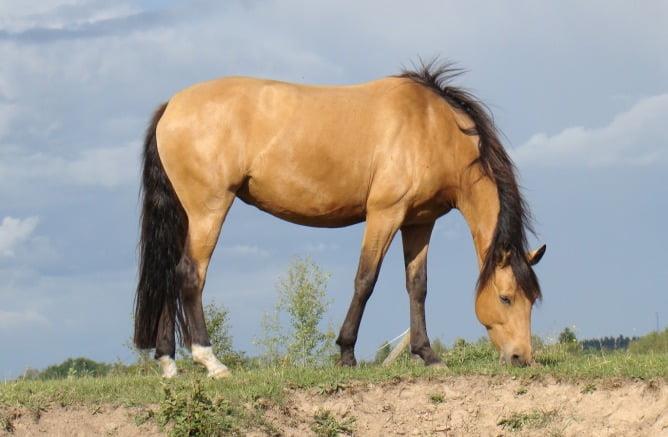
A buckskin is one of the most recognisable coats in the horse world: a gold or honey body set off by a black mane, tail and lower legs. People usually go looking for the term when they are trying to name a horse's colour, tell it apart from dun, or work out whether that striking coat comes with any special care needs. Here is the key point up front. Buckskin is a coat colour, not a breed, so the horse underneath can be a Quarter Horse, Stock Horse, Warmblood, pony, or almost anything else.1 Once you know what creates the colour and what does not, the rest is ordinary good horse keeping.
Buckskin Horse: Quick Facts
- What it is: A coat colour, not a breed1
- Typical look: Gold or tan body with black points (mane, tail, lower legs)1
- The genetics, in plain terms: A single cream dilution gene acting on a bay base coat1, 2
- Often confused with: Dun, a different dilution with primitive markings such as a dorsal stripe1, 3
- Typical lifespan with good care: Around 25 to 30 years for many horses4
What Buckskin Actually Means
A buckskin is a bay horse whose red pigment has been lightened by one copy of the cream dilution gene. That single gene is why the body shifts to a tan, honey or gold shade while the black points usually stay dark.1, 2
Because it is a colour and not a breed, there is no single buckskin height, weight or temperament. Those traits come from breeding, training, handling, diet and the individual horse, just as they do in any other horse.
Buckskin vs Dun: The Quick Field Check
Buckskin and dun can look almost identical at a glance, especially in bright sun or on a dusty coat. The difference sits in the genetics: buckskin involves the cream gene, while dun involves the dun gene.1, 2
If you are trying to decide which one you are looking at, start here:
- Dun is more likely if you see clear primitive markings, especially a crisp dorsal stripe down the spine, sometimes with leg barring and shoulder shadowing.3
- Buckskin is more likely if the horse has a clean golden body with black points but no consistent primitive markings.1
Colour alone can be deceptive. Shedding coats, sun bleaching, clipped coats and dust all blur the picture. When it matters, for a sale description, a breeding decision or registry paperwork, a DNA test is the dependable option.2
History and Origin
Buckskins are often linked with Spanish horses and the American West, but the reliable story is narrower. The buckskin colour can occur in any population where the cream gene and a bay base coat come together, and it has been present across many breeds for a very long time.1
It is better to think of buckskin as a recurring colour pattern in horse history than as a single breed with one tidy place of origin.
Temperament and Suitability
There is no universal buckskin temperament. A quiet buckskin and a sharp buckskin can share the same paddock, because colour does not train a horse and it does not choose the horse's parents.
When you are assessing whether a particular horse suits your plans, whether that is a family horse, a trail partner, stock work or performance, judge the individual:
- handling and education (ground manners, float loading, farrier behaviour)
- soundness and hoof quality
- fitness and body condition
- the temperament you can observe, consistently, over time
Care and Housing
Feeding: forage first, steady routines
Most horses do best when the bulk of the diet is good quality pasture or hay, with concentrates added only when the work level, life stage or body condition calls for it. Regular feeding routines and plenty of roughage support digestive health.5, 6
Fresh, clean water should be available at all times. Water needs climb in hot weather and with exercise, and a 500 kg horse may drink tens of litres a day.5, 7
Turnout, shelter and the everyday environment
Horses need space to move and access to shade and shelter. In hot conditions, a poorly ventilated stable can become a heat trap, so outdoor shade is often safer and more comfortable.7, 8
Training and exercise
Sound, repeatable basics shape a safer horse than any colour ever will: calm handling, consistent cues, and gradual exposure to new places. Keep exercise regular, increase the workload slowly, and aim for variety so the horse stays fit without being overcooked.
Health and Lifespan
Buckskin horses are not inherently fragile, but they are still horses. They can develop laminitis, colic, parasites, dental issues, and the usual wear and tear of hard ground and hard seasons. With good care, many horses live to around 25 to 30 years.4
Laminitis
Laminitis is a serious, painful condition of the hoof. The risk can rise with high sugar pasture, grain overload, and metabolic problems such as insulin dysregulation. This is one of the reasons horse diets are managed with such quiet discipline, especially during the spring flush, after rain on stressed pasture, or when a horse gains weight too easily.9
Colic
Colic is a broad term for abdominal pain, and it is always worth taking seriously. Sudden feed changes, inconsistent routines, dehydration, parasites and dental problems can all contribute. If you suspect colic, contact a veterinarian promptly.10
A Few Things Worth Knowing
- Buckskin describes a coat colour, so any care advice is really just good horse care that applies to every horse.
- In popular Western television, Roy Rogers famously rode Trigger, who was a palomino, not a buckskin. Dale Evans rode Buttermilk, a buckskin Quarter Horse, on The Roy Rogers Show.2, 8
The Bottom Line
Buy or admire a buckskin for the horse, not the colour. The golden coat is genuinely lovely, but it tells you nothing about height, temperament or soundness. Judge the individual animal, feed forage first, keep routines steady, watch for the common problems that affect all horses, and the coat will keep looking after itself.
References
- Buckskin (horse), definition and genetics overview (Wikipedia)
- Equine coat colour, buckskin, palomino and related colour terms (Wikipedia)
- Primitive markings, dorsal stripe and related markings (Wikipedia)
- How long do horses live? (WebMD, medically reviewed)
- Feed requirements of horses (Agriculture Victoria)
- Caring for horses, feeding guidance and water needs (NSW DPI)
- Horse welfare, water and shelter basics (RSPCA WA)
- How to care for your horse, feeding, shelter and management (RSPCA NSW)
- Laminitis in horses, risks and common triggers (ThoroughBred Racing, Australia)
- First aid management of colic, when to call the vet and prevention tips (VetZone/Virbac)

Dog lover and writer at My Pets Australia, sharing practical breed guides and care advice for Australian pet owners.