Discovering the Appaloosa Horse: History, Characteristics, and Care
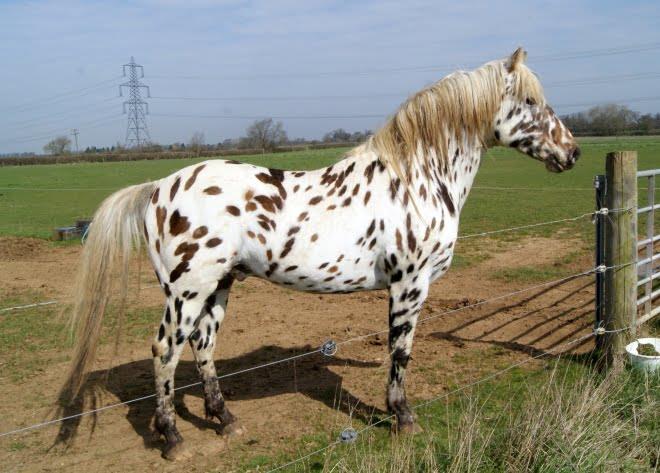
The Appaloosa is a North American breed best known for its spotted coat, and it is one of the most recognisable riding horses in the world. Beyond the pattern, it is a genuinely versatile all-rounder used for trail riding, ranch work, showing and endurance, with a reputation for being steady and quick to learn. The breed also carries a distinctive trio of physical markers, mottled skin, striped hooves and a visible white sclera, that tend to travel with the leopard complex (LP) genetics behind the coat.1, 2 It has deep roots in the Nez Perce people of the Palouse region, and a long record as a practical working horse. It is also a breed with one clear health lesson attached, and most of that lesson is about the eyes.
History and Origin
The Appaloosa is closely tied to the Nez Perce (Niimiipuu), who became skilled horse breeders in the Pacific Northwest and selected for hardy, enduring riding stock. Early settlers described the spotted horses as "a Palouse horse", a phrase that gradually shifted into "Appaloosa".3, 4 After the Nez Perce War in 1877, large numbers of horses were confiscated, sold or destroyed, and the distinctive spotted herds declined. The breed survived through scattered working stock and the efforts of breeders who later pushed for formal preservation.1, 4
The Appaloosa Horse Club (ApHC)
In 1938, the Appaloosa Horse Club was incorporated to preserve and promote the breed. It remains the main international registry for Appaloosas, based in Moscow, Idaho, right in the Palouse region where the name took shape.3, 6
Appearance and Physical Characteristics
The spotted coat is the headline, but the breed is often identified by a set of core features that can show up even in horses with very little visible patterning:
- Mottled skin, often around the muzzle, eyes and under the tail.
- White sclera visible around the iris when the eye is in a normal position.
- Striped hooves, with vertical light and dark banding.
These traits are commonly associated with the leopard complex genetics that underpin Appaloosa patterning.1, 2
Coat patterns you will commonly see
Appaloosa patterning presents in several well-known forms. Names vary a little by registry and country, but these are widely used terms:
- Leopard: a light body with darker spots across most of the horse.
- Blanket: a lighter "blanket" over the hindquarters, with or without spots.
- Snowflake: small white spots on a darker body.
- Varnish roan: progressive roaning that often leaves darker "varnish marks" over bony areas.
- Fewspot or snowcap: very minimal spotting, often with extensive white.
Patterns can shift subtly with age and seasonal coat changes, especially in varnish roan types.1
Temperament and Personality
Many owners describe the Appaloosa as steady, capable and quick to learn. It is widely used as both a riding and a working horse, though temperament still depends on the individual animal, its early handling and the job it has been trained for.4 Many Appaloosas live comfortably in mixed herds and busy yards, where introductions, boundaries and supervision matter more than breed.
Is an Appaloosa Right for You?
A well-trained, appropriately matched Appaloosa is commonly used for lessons, trail riding and general family riding, and it can make a good family horse. The deciding factors are not the spots. They are training, soundness and a calm, proven history under saddle.3 For children in particular, prioritise a horse with a reliable education, good ground manners and a record of safe handling. It is also worth going in with clear eyes about the breed's known health risks, covered below, because they affect long-term care and cost.
Training and Exercise
Appaloosas are used across both western and English disciplines. They tend to do best with consistent handling, clear cues and enough variety to keep the mind engaged while repetition builds confidence.4 Daily exercise needs vary with age, diet and workload. A paddock-kept horse still benefits from regular movement, whether that is ridden work, in-hand sessions or turnout that encourages steady walking rather than standing at a feeder all day.
Health and Lifespan
Most Appaloosas live long, useful lives, and many reach their 20s with good care, though individual longevity varies with management and health history. The one point every owner should know is that the breed is well recognised for a higher risk of equine recurrent uveitis (ERU), an inflammatory eye disease that can cause cumulative damage and may lead to blindness.5, 7
Equine recurrent uveitis (ERU)
ERU can appear as painful flare-ups, or as a more subtle, "insidious" form with low-grade inflammation that quietly harms the eye over time. Appaloosas are reported to be at notably higher risk than many other breeds, and LP genotype is one recognised risk factor, with LP/LP horses at highest genetic risk, though not all LP/LP horses are affected.5, 8 Because ERU can progress between obvious episodes, regular eye checks matter, especially if a horse has a known LP/LP genotype, a fewspot pattern or a prior history of uveitis.8
Congenital stationary night blindness (CSNB)
Some Appaloosas are also predisposed to congenital stationary night blindness, which has been linked with leopard complex genetics. It is typically present from birth and affects vision in low light. It does not progress in the same way as ERU, but it can change how safely a horse copes at dusk, at night or in shaded arenas.1
Practical preventative care
- Book routine veterinary and dental care, and keep vaccination and parasite control up to date.
- Take eye changes seriously. Tearing, squinting, light sensitivity, cloudiness, a red eye or a dull look to the pupil are all reasons to call your vet promptly.7, 9
- Discuss ERU risk with your vet if your Appaloosa is LP/LP, heavily patterned (including fewspot), or has had any previous uveitis diagnosis.8
- Provide shelter from harsh weather and intense sun. This is not a cure, but it is sensible baseline management for comfort and general wellbeing.
Grooming and Care
Appaloosas do not require exotic grooming, but they reward simple, regular routines. Brushing lifts dirt, spreads natural oils through the coat, and gives you a quiet daily chance to notice skin irritation, rub marks or early signs of injury. Hoof care follows the usual rhythm: pick out feet often and keep farrier visits consistent. Do not rely on "striped hooves" as a health indicator, because striping is a trait, not a diagnosis.2
Diet and Nutrition
Like most horses, Appaloosas do best when high-quality forage, from pasture or hay or both, forms the foundation, with concentrates added only to meet workload and body-condition needs. Keep fresh water available at all times, and make any changes to feed gradually to protect gut function.
A Few Things Worth Knowing
- Origin: North America, with historic development in Nez Perce country, the Palouse region of today's Idaho, Washington and Oregon.3, 4
- Common uses: trail riding, ranch work, showing, and some racing and endurance, often described as versatile all-rounders.4
- Distinctive traits: leopard-pattern coats plus mottled skin, striped hooves and a visible white sclera, even when the coat pattern is minimal.1, 2
- Known breed-linked health risks: higher risk of equine recurrent uveitis (ERU), with some LP-associated lines also linked to congenital stationary night blindness (CSNB).1, 5
The Bottom Line
The Appaloosa is a horse you can often pick at a glance: the shifting map of spots, the mottled skin, the pale rim of sclera catching light. Underneath that patterning is a practical, versatile riding type with a long history and one clear management lesson. If you own or are buying an Appaloosa, build your care plan around sound basics, and give the eyes the attention they deserve.5, 7
References
- Wikipedia, Appaloosa
- Appaloosa Museum & Heritage Center, Horses (core Appaloosa traits)
- Appaloosa Horse Club, Who We Are
- Oregon Encyclopedia (Oregon Historical Society), Appaloosa horse breed
- UC Davis School of Veterinary Medicine, Equine Recurrent Uveitis
- Appaloosa Museum, History of the ApHC
- Merck Veterinary Manual (Professional), Equine recurrent uveitis
- UC Davis Veterinary Genetics Laboratory, Leopard Complex (LP) linked to increased ERU risk
- Veterinary Ophthalmology (PubMed abstract), Risk factors for ERU in Appaloosa horses (Sandmeyer et al., 2020)

Dog lover and writer at My Pets Australia, sharing practical breed guides and care advice for Australian pet owners.