Dartmoor and Exmoor Ponies
Dartmoor and Exmoor ponies are two native British breeds from the moorlands of south-west England, small, sturdy, and built to live out on rough country. They are known for hard feet, thick weatherproof coats, and a steady way of moving over uneven ground, which makes them capable riding, driving and trekking ponies. People group them together because they share a landscape and a compact moorland look, but they are separate breeds with separate societies and separate standards, especially around height and colour. Both are legal to keep in Australia as ponies, though they are far more common in the UK than here. Get the basics right and either can be a calm, useful partner for many years.
Quick Facts: Dartmoor vs Exmoor
- Origin: South-west England. Dartmoor in Devon, Exmoor across Devon and Somerset.1, 2
- Height: Dartmoor must not exceed 12.2hh (127 cm).1 Exmoor is typically around 11.2 to 12.3hh, with breed guidance commonly setting mares to 12.2hh and stallions and geldings to 12.3hh.2, 3
- Colour, Dartmoor: bay, brown, black, grey, chestnut or roan. Broken colours are not allowed, and while some white can be acceptable, excessive white is discouraged.1
- Colour, Exmoor: brown, bay or dun with distinctive mealy (pale) markings. No white markings are accepted in the stud book.2, 3
- Lifespan: often mid-20s, and with good care commonly 25 years or more, with normal individual variation.4
- Common uses: riding (often for children and smaller adults), driving, showing and trekking. Both also appear in conservation grazing.1, 2, 4
History and Origin
The Dartmoor pony is the native pony breed of Devon, with long records of ponies living on Dartmoor's high ground and being shaped by the climate and sparse grazing.5 The Exmoor pony is tied to Exmoor's commons and open moor, where managed herds still roam. Written records of ponies on Exmoor go back many centuries, and modern herds continue under clear ownership and management rather than being truly wild.2 Both breeds share the same broad corner of Britain and the same moorland build, compact bodies, thick coats and hard feet, but they developed as distinct native breeds.1, 2
How to Tell Them Apart
The quickest tell is colour and markings. Dartmoors come in a wider range of solid colours and a more refined, riding-pony outline, while Exmoors have a uniform primitive look with mealy markings and no white at all.
Dartmoor
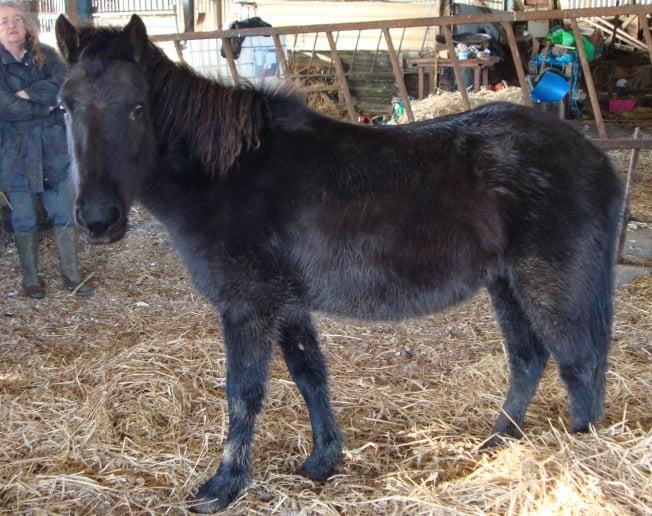
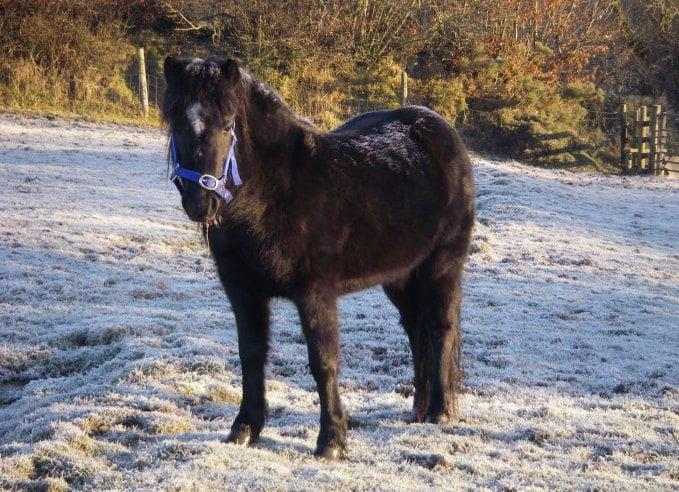
Dartmoors are pony-sized and workmanlike, but with a refined feel: a small head, alert ears, a generous ribcage, and strong limbs with hard, well-shaped feet.1
- Height limit: must not exceed 12.2hh (127 cm).1
- Colours allowed: bay, brown, black, grey, chestnut, roan. Broken colours (piebald, skewbald, spotted) are not allowed.1
- White markings: some white has historically been acceptable, though heavy white is discouraged in the breed standard.1
Exmoor
Exmoors have a more uniformly primitive look. The classic Exmoor colour is brown, a dark bay variant, often with mealy markings around the eyes and muzzle and on the underparts. White markings are not accepted for registration.2, 3
- Colour and markings: brown, bay or dun, with mealy (buff) areas around eyes, muzzle and underparts, and darker points on mane, tail and legs.2
- No white: white markings are not accepted for stud book registration.3
- Seasonal coat: a fine summer coat, and a thick winter coat well suited to wet, windy uplands.2
Habitat and What "Wild" Really Means
Both breeds are closely linked to moorland, open windswept country with thin soils and patchy grazing. That is why they tend to be economical to keep compared with some larger horse types, but it is also why weight can creep on quickly when they move to richer pasture. On Exmoor, the ponies people see on the open moor are usually part of managed herds grazing the commons. They may look wild, but they belong to someone and are brought in seasonally for checks and management.2
Temperament and Trainability
Dartmoor ponies are widely valued as sensible all-rounders, often chosen as children's ponies because they combine hardiness with a tractable nature when well handled and trained.4, 5 Exmoors are also used under saddle and in harness. Their steadiness tends to show in the way they travel, economical, direct, and comfortable over distance, especially when they have been brought on with patient, consistent handling.3
Care and Management
The basics carry most of the load: forage-first feeding, weight control, and routine hoof and health care.
Feeding
Start with forage. Good-quality hay and appropriately managed grazing is the base for most ponies, with hard feed added only when there is a clear need, such as workload, growth, pregnancy, poor condition, or veterinary guidance.
Weight and laminitis risk
Many native ponies are good doers. On improved pasture they can gain weight quickly, which raises the risk of laminitis. Regular body condition scoring, sensible grazing management, and steady exercise are the quiet foundations of prevention.6
Hooves, teeth and routine health
- Feet: even with naturally hard hooves, ponies still need regular farrier trimming, or shoeing where appropriate, to maintain balance and prevent cracks and lameness.
- Teeth: routine dental checks help prevent weight loss, quidding and bitting discomfort.
- Vaccination and worm control: follow local veterinary advice and use targeted parasite control based on risk and testing.
Conservation Grazing
Hardy native ponies can be useful conservation grazers because they cope with coarse, low-nutrient vegetation and can help keep some habitats open. The exact outcomes depend on stocking rate, season, and what the site is trying to achieve. Grazing is a tool, not a guarantee.7 These breeds are culturally familiar, but that does not always mean they are numerically secure. Breed organisations and conservation bodies monitor numbers and promote responsible breeding to maintain genetic diversity.8 On open-access moorland, everyday pressures also matter: road traffic, gates left open, and inappropriate feeding can all cause harm. On Exmoor, the National Park specifically advises people not to feed or touch the ponies and to take care when driving on moorland roads.2
Choosing Between a Dartmoor and an Exmoor
If you are buying or leasing, start by deciding whether you need a registered animal to a specific breed standard, for showing or breeding, or a pony-type that simply suits your riding and management set-up.
- Choose Dartmoor if you want a native riding pony with a breed standard that allows a wider range of solid colours and limited white, and you prefer the more riding-pony outline described in the standard.1
- Choose Exmoor if you are drawn to the primitive colouring and mealy markings, want a pony strongly associated with living out, and you are comfortable with a stricter standard on colour and the absence of white markings.2, 3
The Bottom Line
Dartmoor and Exmoor ponies are shaped by the same sort of country: open, wet, windy uplands where survival rewards thrift, balance and tough feet. Get the basics right, forage-first feeding, weight control, steady handling, and routine hoof and health care, and either breed can be a calm, capable partner for years.
References
- Dartmoor Pony Society, The Breed Standard of the Dartmoor Pony
- Exmoor National Park Authority, Exmoor Ponies
- Oklahoma State University, Breeds of Livestock: Exmoor Pony
- PetMD, Dartmoor Pony (care overview and lifespan snapshot)
- Dartmoor Pony Society of America, The Dartmoor Pony (history overview)
- RSPCA, Laminitis in horses and ponies
- NatureScot, Grazing management for conservation (guidance)
- Rare Breeds Trust of Australia, Dartmoor Pony (breed overview and conservation context)
- Rare Breeds Survival Trust (UK), Exmoor Pony (Watchlist entry)

Dog lover and writer at My Pets Australia, sharing practical breed guides and care advice for Australian pet owners.