Dandie Dinmont Terrier
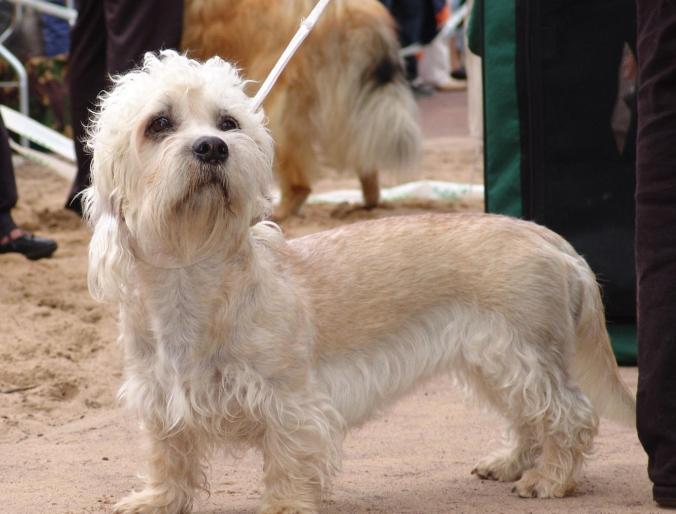
The Dandie Dinmont Terrier is a small dog with a big-dog build: long in the back, low to the ground, and wrapped in a crisp pepper or mustard coat topped with a soft "topknot" of hair. It is a genuinely companionable breed, steadier than many of its terrier cousins, happy with a good sniff around the yard and a long sprawl indoors afterwards. It also comes with a few real commitments. The coat needs consistent grooming or it mats, the long spine needs sensible handling, and the terrier brain needs proper training. What follows is a practical picture of the breed, grounded in recognised breed standards and welfare guidance.1, 2, 5
Dandie Dinmont Terrier at a glance
- Height (at withers): about 20 to 28 cm1, 2
- Weight: about 8 to 11 kg1
- Coat: double coat with a soft undercoat and a harder outer coat that feels crisp rather than harshly wiry1
- Colours: pepper or mustard, with a pale topknot on the head1
- Exercise needs: usually up to about an hour a day, plus sniffing and thinking work2
- Typical lifespan: often over 12 years, with many sources citing around 12 to 15 years2, 3
History and Origin
The Dandie Dinmont Terrier developed in the border country around Scotland and northern England as a working terrier, used for hunting and dispatching quarry such as otters and badgers.3 The name comes from Sir Walter Scott's novel Guy Mannering, where "Dandie Dinmont" is a character associated with terriers called Pepper and Mustard. Those names later stuck as the two recognised colours of the breed.2
Appearance and Physical Characteristics
A Dandie is built on long, low lines: short legs, a flexible body, and a head topped with a softer fall of hair, the topknot. Breed standards describe a double coat, soft underneath with harder hair over the top, meant to lie in separated "pencils" rather than dropping flat down the back.1
Size is part of the working shape. The standard gives a height of 20 to 28 cm at the withers, with body length not more than twice the height, and preferably slightly less.1
Temperament and Personality
For a terrier, the Dandie tends to read as steady. It is still alert and still keen to investigate, but often less frantic than some of its relatives. Many are affectionate with their own people, independent in the way terriers often are, and quick to notice what is changing around the house or yard.2
Expect a dog that enjoys routines and small adventures: a walk with time to sniff, a short training session, then a long, quiet sprawl in a familiar corner.
Is a Dandie Dinmont Terrier Right for You?
Dandies can suit smaller homes, provided they still get daily walks and enough mental work to keep the terrier brain satisfied.2 They settle well indoors, but they are not ornamental dogs. They notice movement, they investigate scents, and they can be vocal when something is different. With children, the usual rules apply: supervision, calm handling, and giving the dog a safe place to retreat. With other animals, early introductions and good management matter, remembering the breed's working history and the likelihood of a strong chase response in some individuals.3
If you are ready for regular grooming, sensible spine management, and consistent training, this is a rewarding companion. If you want a low-maintenance lap dog, look elsewhere.
Training and Exercise
Terriers learn fast, but they also learn selectively. The most reliable path is calm repetition and reward-based training, reinforcing the behaviour you want and avoiding punishment-based methods that can increase stress and make problems worse.6 Early, gentle socialisation matters too. Keep exposures short and controlled: new surfaces, friendly people, calm dogs, everyday noises. Watch for signs of overload such as freezing, pulling away or frantic barking, and step back before the dog tips into panic.
- Keep sessions brief: a few minutes, several times a day.
- Reward what you like: four paws on the floor, checking in, coming when called.6
- Practise handling: paws, ears, beard and coat, because grooming is part of life for this breed.
Health and Lifespan
No breed is problem free, and the Dandie's long back and short legs mean you should think about the spine early, not after an injury. In dogs with chondrodystrophic body shapes, meaning short legs relative to body length, intervertebral disc degeneration can begin very young and may lead to intervertebral disc disease (IVDD), where disc material can press on the spinal cord and nerves.7 In practical terms, that means being sensible about impact and twisting:
- Use ramps or steps for sofas and beds if your dog likes to jump up and down.
- Keep the dog lean and well-muscled, since extra weight adds load through the spine.
- Avoid rough play that encourages hard twisting and sudden drops.
Eye conditions are also listed in breed discussions, including glaucoma and progressive retinal atrophy, so routine veterinary checks and asking breeders about eye screening are worthwhile steps when choosing a puppy.4 Lifespan is typically over 12 years, with many sources citing around 12 to 15 years.2, 3
Grooming and Care
The Dandie's coat is not a wash-and-wear jacket. The double coat is meant to feel crisp, with a softer undercoat, and it benefits from regular brushing and combing to prevent mats, especially on the legs and undercarriage where friction builds.1 Many owners use hand-stripping, or a stripping knife, to keep coat texture and shape closer to the standard, while others choose careful clipping for convenience. Either way, plan for consistent upkeep rather than occasional big sessions.
- Brush and comb: several times a week for most coats.
- Check ears and feet: tangles and debris hide there first.
- Nails: keep them short so the dog stands comfortably and moves cleanly.
A Few Things Worth Knowing
- The colours Pepper and Mustard trace back to characters in Sir Walter Scott's Guy Mannering.2
- The breed is recognised by Australian kennel bodies, with a published standard through Dogs Victoria.5
- If you are drawn to showing, start with the breed standard. It sets out the coat texture, the allowable pepper or mustard colours, and the size range that keeps the classic long-and-low silhouette without tipping into exaggeration.1
- When looking for a puppy, ask direct questions about health screening, temperament in the parents, and how puppies are raised and socialised.
The Bottom Line
The Dandie Dinmont Terrier is a small dog built like a working specialist: compact, low, and surprisingly substantial in the hand. Kept lean, trained with rewards, and groomed consistently, they tend to be deeply companionable, alert in the yard, calm in the house, and always ready to inspect the world one scent-trail at a time.2, 6
References
- The Kennel Club (UK), Dandie Dinmont Terrier breed standard
- The Kennel Club (UK), Dandie Dinmont Terrier breed information
- The Kennel Club (UK), background on naming (Guy Mannering) and the Pepper and Mustard colours
- The Spruce Pets, Dandie Dinmont Terrier breed profile (general care and commonly discussed health issues)
- Dogs Victoria, Dandie Dinmont Terrier breed standard (Australian kennel body publication)
- RSPCA Knowledgebase, reward-based dog training and positive reinforcement
- Cornell University College of Veterinary Medicine, chondrodystrophy and intervertebral disc disease (IVDD)
- The Kennel Club (UK), coat structure, colour and size guidance (standard details)
- United Kennel Club (UKC), Dandie Dinmont Terrier breed standard (size and weight guidance)

Dog lover and writer at My Pets Australia, sharing practical breed guides and care advice for Australian pet owners.