Czechoslovakian Wolfdog
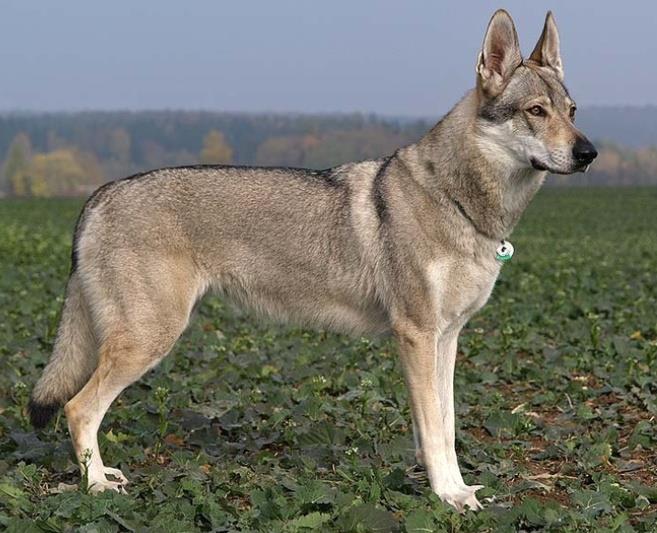
The Czechoslovakian Wolfdog, or Československý vlčák, is a deliberate cross between German Shepherd Dogs and Carpathian wolves, bred for stamina, endurance, and long distances at a low, ground-covering trot. It is athletic, sharply alert, and intensely loyal to a single handler, and for an experienced owner it can be a striking working companion. It is also one of the hardest dogs to legally own in Australia. Wolf-cross breeds like this one cannot be imported into Australia, and where individuals do exist, ownership is restricted and depends on your state or territory law, so check your local authority before you go any further. If a wolfish look is what draws you, a well-bred Siberian Husky or Alaskan Malamute is far easier to keep legally here.
Size (height at withers): Males at least 65 cm, females at least 60 cm1
Weight: Males at least 26 kg, females at least 20 kg1
Coat: Straight, close coat with a strong seasonal undercoat, which can be especially dense in winter1
Colour: Yellowish-grey to silver-grey with a characteristic light mask, dark grey also permissible (with mask)1
Temperament (broad brush): Lively, very active, capable of endurance, reserved and suspicious, strongly loyal to its handler1
Activity level: High, best suited to owners who enjoy daily training and long, purposeful exercise1
Training: Needs early, consistent socialisation and reward-based training, and thrives on structure and clear routines1
Health watch-outs: As a large, deep-chested type it can be at risk of gastric dilatation-volvulus (GDV, or bloat), which is a true emergency6, 7
History and Origin
This breed started as a controlled experiment. In 1955 in Czechoslovakia, German Shepherd Dogs were crossed with Carpathian wolves to test whether the offspring could be raised and trained for working roles.2, 3 The aim was to develop a stable type that combined canine trainability with the wolf's physical toughness and stamina.2, 1
Once the experiment ended, a formal breeding plan was set. The breed was recognised nationally in 1982 and received full FCI recognition in 1999.1
Appearance and Physical Characteristics
The outline is unmistakably wolf-like. This is an above-average sized, rectangular dog built to travel efficiently over long distances, with a blunt wedge-shaped head, pricked ears, and a ground-covering trot where the limbs skim close to the ground.1
The coat is strongly seasonal. In winter the undercoat becomes immense, filling out the silhouette and giving real weather resistance. In summer it usually looks noticeably lighter and closer to the body.1
Temperament and Personality
The breed standard describes a dog that is lively, very active, capable of endurance, and naturally suspicious, with pronounced loyalty to its handler.1 Day to day, that tends to show up as:
- Natural reserve with strangers. This is not usually a dog that treats everyone as a best mate on first meeting.1
- High environmental awareness. They notice movement, patterns, and changes quickly.
- Independence, which can look like stubbornness when training lacks clarity or consistency.
They do best with experienced owners who treat training as a daily practice rather than a short puppy phase. Compared with many Siberian Huskies and Alaskan Malamutes, the Czechoslovakian Wolfdog is often more reserved with strangers and more tightly bonded to one primary handler, with a working-dog responsiveness that still comes packaged with independence.1
Is a Czechoslovakian Wolfdog Right for You?
For most Australian households, honestly, no, and the first reason is legal. Wolf-cross breeds like this cannot be imported into Australia, and ownership where individuals exist is restricted and governed by your state or territory. Confirm the rules with your local authority before you do anything else.
Setting the legal question aside, the demands are real. This is a dog that needs genuine daily exercise, secure containment, and an owner who enjoys training rather than expecting easy compliance. When the match is right, you get a capable, alert companion with quiet intensity and strong loyalty. When it is wrong, the same traits turn into stress, escape behaviour, and frustration for everyone. If you want the northern, wolfish look without the same barriers, a Husky or Malamute is a far more practical choice in Australia.
Training and Exercise
Start early and keep it steady. The point of socialisation with this breed is not to make the dog indiscriminately friendly, it is to build calm, predictable responses across many settings.1
- Prioritise neutrality. Reward relaxed behaviour around unfamiliar people, dogs, traffic, and new environments.
- Keep sessions short and frequent. A few minutes several times a day beats one long session that frays attention.
- Teach practical skills early: loose-lead walking, recall foundations on a long line, calm greetings, and settling on a mat.
- Avoid harsh corrections. This breed responds best to clear structure, good timing, and rewards that matter to the individual dog.
On exercise, a walk around the block rarely touches the sides. Aim for daily movement with purpose, such as long walks, hiking, tracking games, structured running once the dog is physically mature, and training that works the brain alongside the body.1 Scent work, obedience foundations, and problem-solving feeders reduce frustration and help the dog settle more easily at home.
Health and Lifespan
No breed is health-proof, and individuals vary. Work with a veterinarian and, where a dog is legally available, a responsible breeder who health-tests and can show you documentation.
The condition worth understanding in advance is GDV. Gastric dilatation-volvulus is a rapidly progressive, life-threatening emergency where the stomach dilates and can twist, cutting off blood flow and causing shock.8, 7 It is more common in large, deep-chested dogs.6, 8 Seek emergency veterinary care immediately if you see a swollen or tight abdomen, repeated unproductive retching, drooling, restlessness, rapid breathing, weakness, or collapse.7, 8
Talk to your vet about risk reduction, for example multiple smaller meals, slowing fast eaters, and avoiding hard exercise around meal times. For dogs considered high risk, a preventative surgery called prophylactic gastropexy may be discussed as an option.6, 9
A Few Things Worth Knowing
- The breed traces to a 1955 military breeding experiment, not a farm or companion background.2, 3
- The wolf-like reserve is normal and expected, not a training failure.1
- The winter undercoat is dense enough to visibly change the dog's outline between seasons.1
- Import into Australia is not permitted for wolf-cross breeds, and any local ownership is state-dependent.
The Bottom Line
The Czechoslovakian Wolfdog is a capable, athletic, alert dog that suits a home with time, routine, and a taste for outdoor kilometres. In Australia the bigger issue is not whether you could handle one, it is whether you can legally have one, since these wolf-cross breeds cannot be imported and ownership is restricted by state and territory law. If you can meet adult dogs, do. Speak with breeders who are transparent about temperament and health testing. And if the practical answer for your situation is a Husky or Malamute instead, that is a sensible place to land.
References
- Fédération Cynologique Internationale (FCI), Breed Standard No. 332: Czechoslovakian Wolfdog
- Wikipedia, Czechoslovakian Wolfdog (overview and recognition timeline, use alongside primary sources)
- Czechoslovakian Wolfdog (z Peronówki), brief historical summary of the breed
- Cornell University College of Veterinary Medicine, gastric dilatation-volvulus (GDV) or bloat
- American College of Veterinary Surgeons (ACVS), Gastric Dilatation-Volvulus (GDV)
- Cornell University College of Veterinary Medicine, GDV signs and risk factors (clinical overview)
- American College of Veterinary Surgeons (ACVS), prophylactic gastropexy

Dog lover and writer at My Pets Australia, sharing practical breed guides and care advice for Australian pet owners.