Comprehensive Guide to Rainbowfish Care: Tips for a Thriving Aquarium
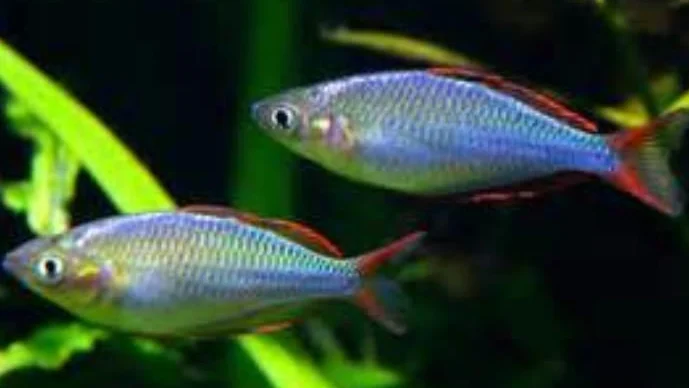
Rainbowfish are fast, colourful shoaling fish native to Australia and New Guinea, and in a well run tank a group of them moving together through open water is one of the better sights in the hobby. Their colour is a payoff, not a starting point: it deepens when they have room to swim, steady water, and a proper group around them. Most species stay small to medium and settle into a peaceful community tank without much fuss. They are hardy, but hardy is not the same as forgiving, and small misses on space, stability, or tank mates add up. This guide covers what they need in an aquarium and the biosecurity habits that matter in Australia.1, 2
Rainbowfish at a glance
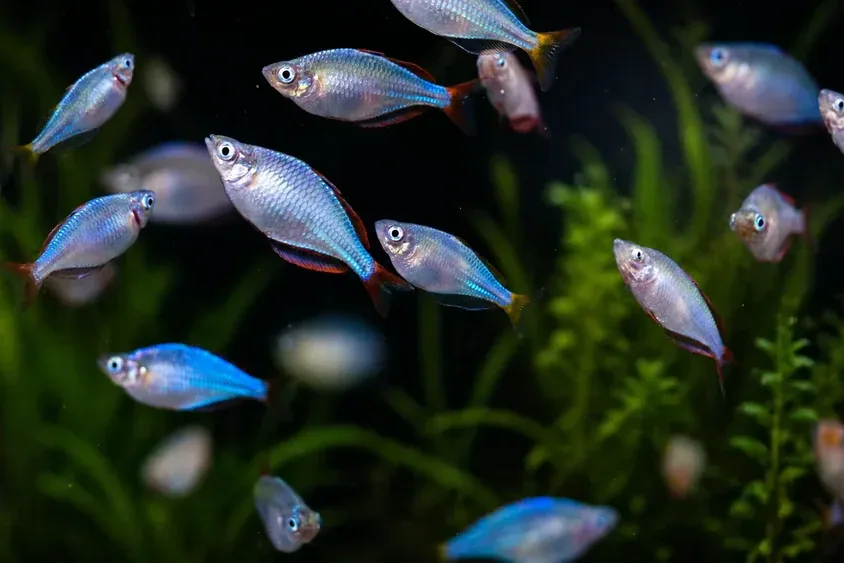
- Adult size: commonly 6 to 12 cm depending on species, with some smaller and some larger4, 5
- Lifespan: often around 4 to 6 years with good care, varying by species and conditions4, 6
- Temperature: broadly tropical, often around 22 to 28 °C depending on species4, 5
- pH and hardness: varies by species. Many common aquarium rainbowfish tolerate roughly neutral to slightly alkaline water, with soft to moderately hard water depending on origin4, 5
- Temperament: generally peaceful, active mid-water fish that do best in groups4, 5
- Breeding style: egg scatterers. Eggs are placed among fine plants or spawning mops, with no parental care6
What rainbowfish are (and where they come from)
"Rainbowfish" usually refers to species in the family Melanotaeniidae, native to Australia and New Guinea, with many species living in clear streams, billabongs, lakes, and swampy edges thick with plants and submerged timber.3 In an aquarium, their best colours tend to show when they have room to move, stable water, and a proper social group. That is the whole theme of keeping them well.
Choosing a species
Care ranges are not identical across the group, so do not apply one set of numbers to every rainbowfish. Two common examples show the spread:
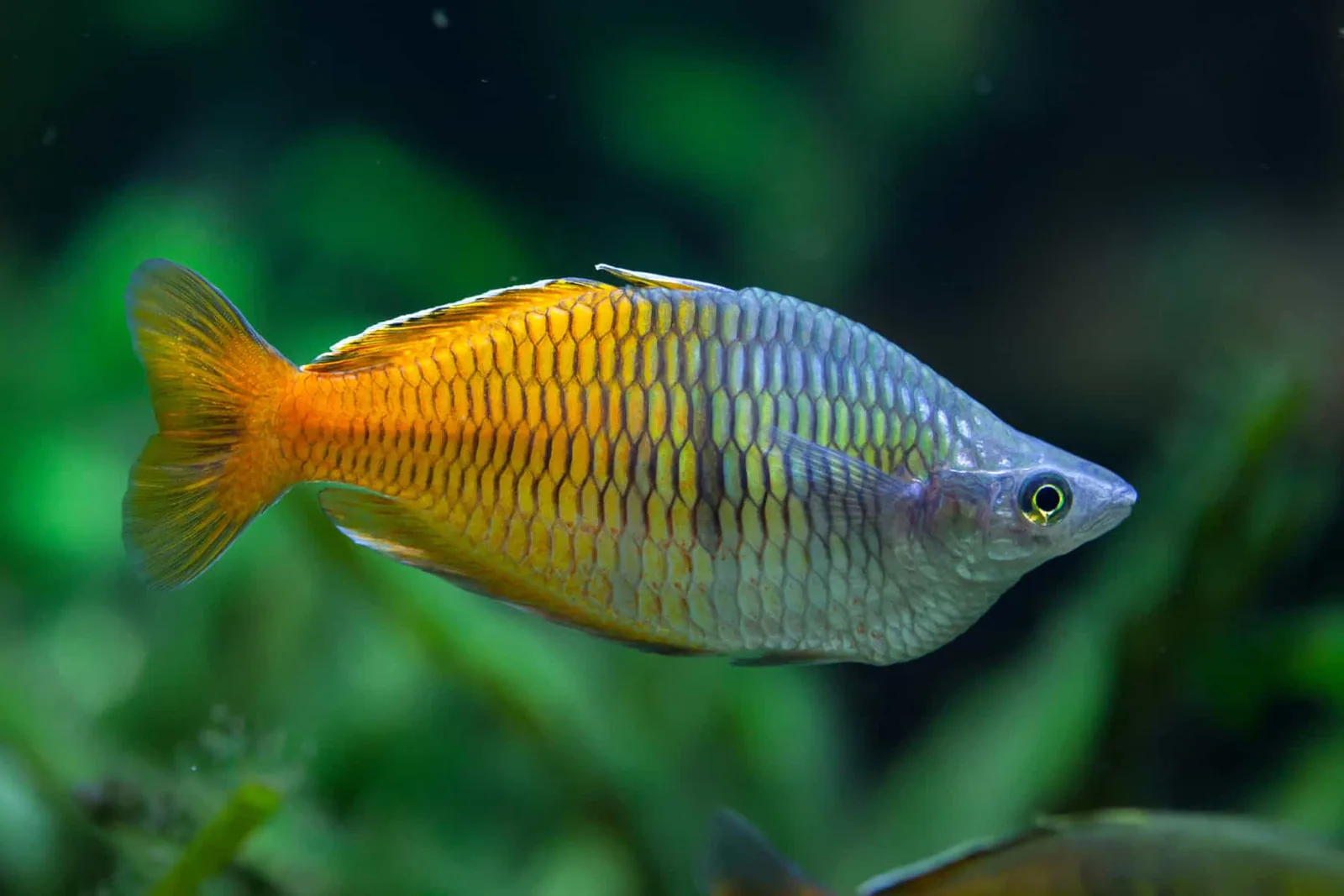
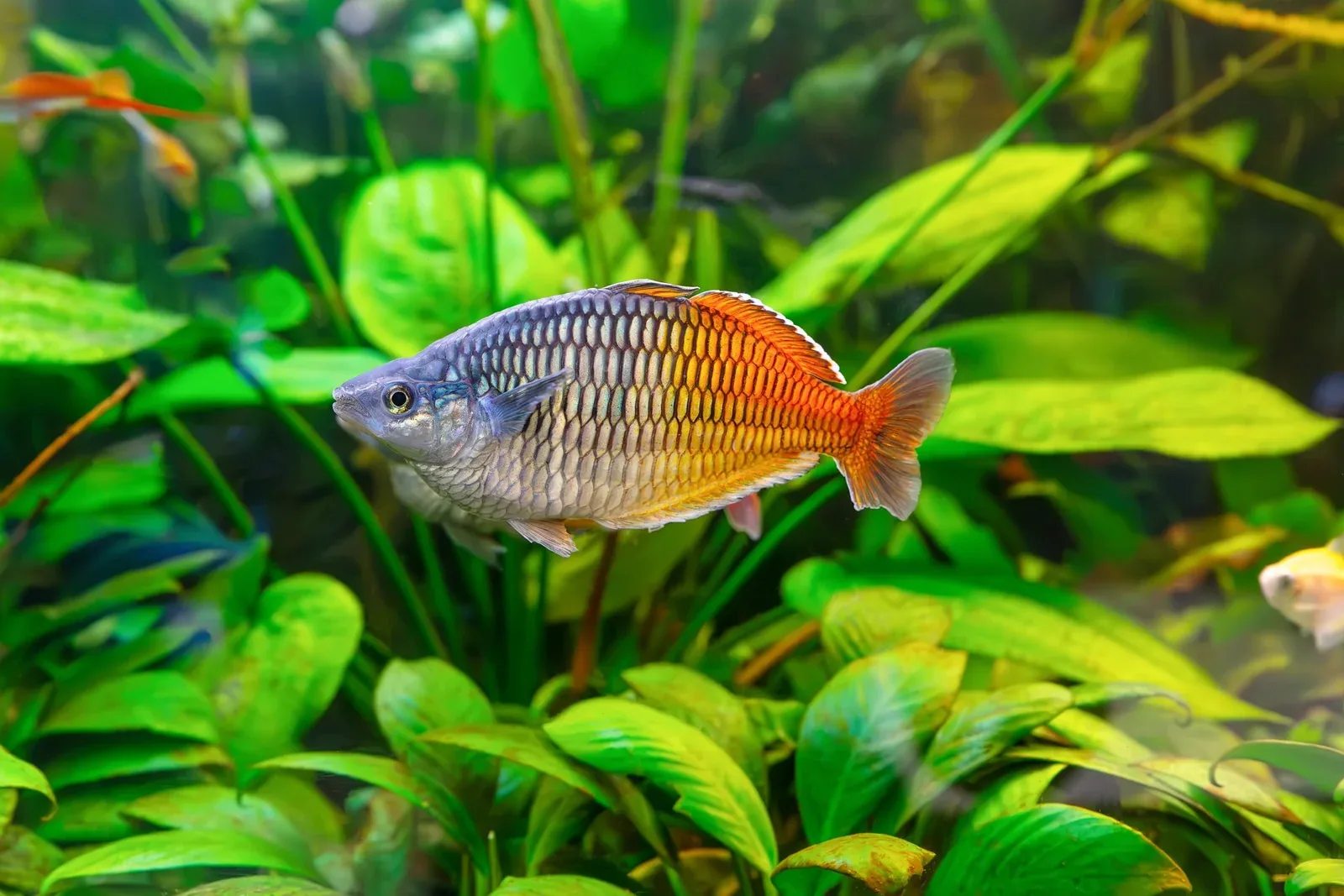
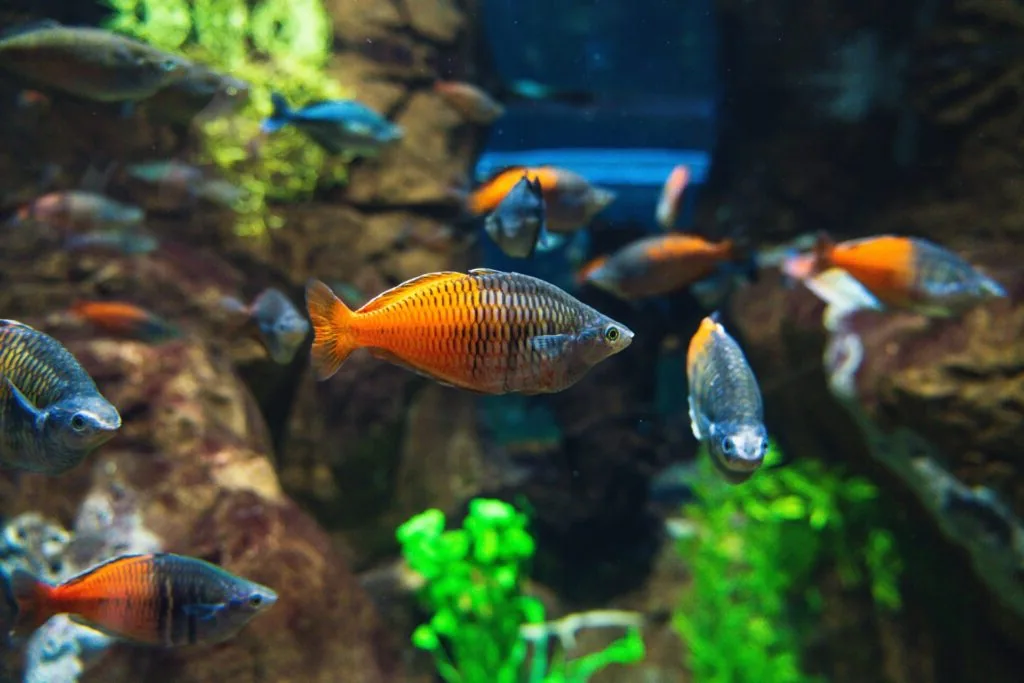
- Boesemani rainbowfish (Melanotaenia boesemani): a larger, very active fish commonly kept in schools, often reaching roughly 10 to 12.5 cm in captivity and appreciating long tanks with stable, moderately hard water.4
- Dwarf neon rainbowfish (Melanotaenia praecox): smaller, often around 6 to 8 cm, and still a schooling fish. Usually kept warmer-tropical, with parameters commonly held around neutral pH and moderate hardness depending on the tank setup.5
If you are mixing species, match them by adult size, speed, and water preferences, not just by "peaceful" on a label.
Aquarium setup: space first, then plants
Rainbowfish are built for open water, so the layout should give them somewhere to run. A tank can be heavily planted, but it works best when planting is arranged like a riverbank: dense growth at the back and sides, with clear lanes through the middle for fast, group swimming.
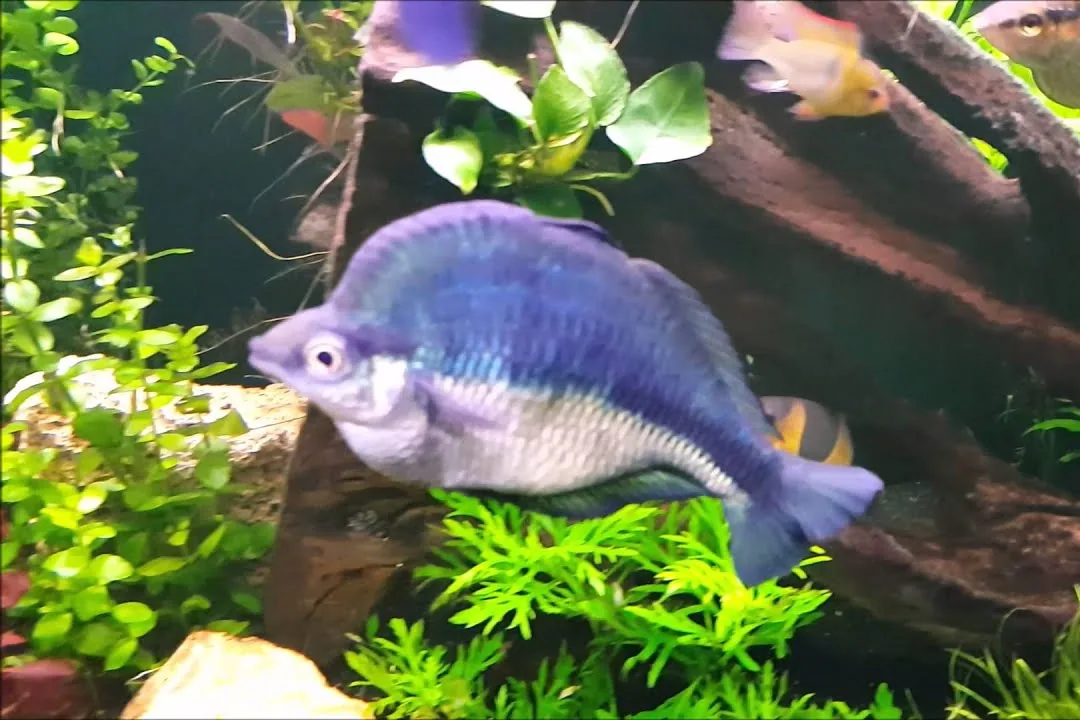
On tank size, a 100 L tank can work for smaller species, but many popular rainbowfish, especially Boesemani, do best in larger, longer aquariums once you keep them as a proper shoal. For Boesemani in particular, care guides commonly recommend a tank around 50 US gallons (about 190 L) or larger for a group, with length valued as much as volume.4
For plants, wood, and flow:
- Plants: use hardy, easy growers such as Java fern, vallisneria-type grasses, or other robust stems to provide visual breaks and refuge without blocking the whole mid-water column.
- Structure: driftwood and rocks give cover and reduce line-of-sight chasing, but leave the centre open.
- Water movement: moderate flow and high oxygen suit many rainbowfish, especially the fast, mid-water species commonly sold in shops.4
Water parameters and stability
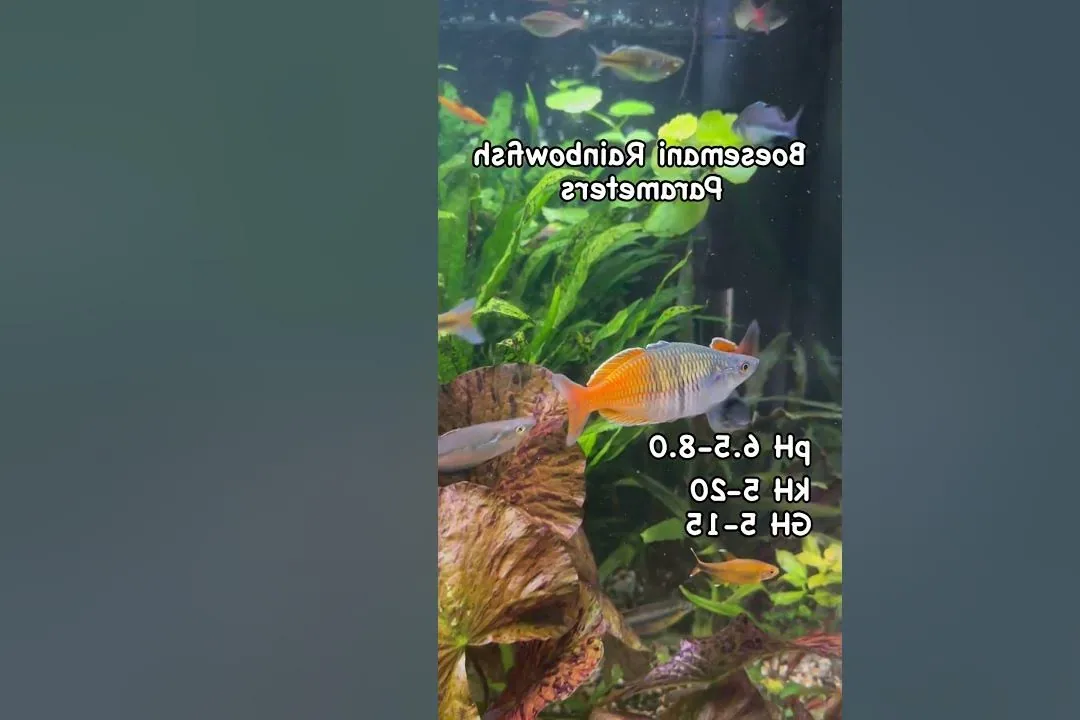
Stability matters more than hitting an exact number. Most rainbowfish kept in home aquariums tolerate a range, but they respond poorly to swings, so choose a target that suits your species and keep it steady. For many commonly kept rainbowfish, a temperature band around 24 to 28 °C and a pH somewhere from the high sixes to low eights is typical in aquarium care guidance, with hardness often in the moderate range depending on species.4, 5
What matters day to day is clean, well filtered water, low waste build-up, and consistency. Sudden changes are when "hardy" fish start to look fragile.
Feeding
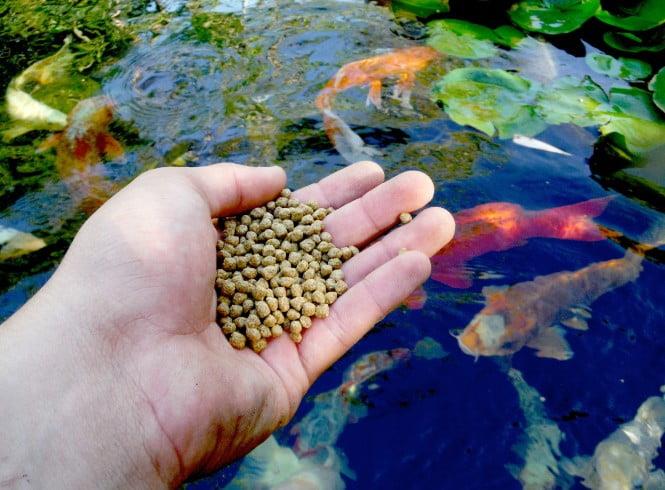
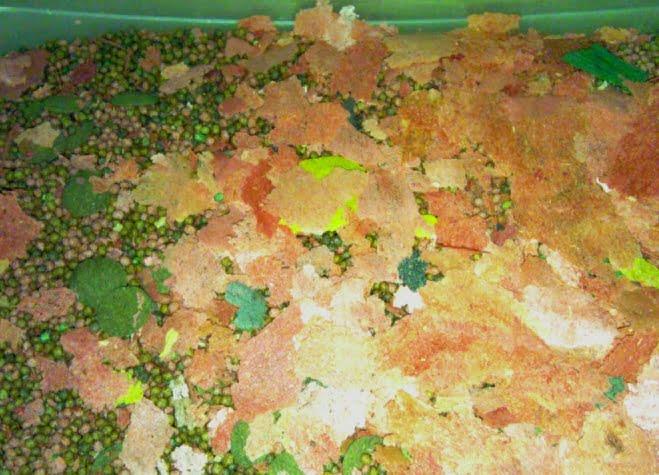
Colour comes from variety, not just flakes. Rainbowfish are omnivores, and in the tank they do well on a quality staple of flakes or small pellets plus regular frozen or live feeds such as brine shrimp and daphnia-sized foods. This supports growth, breeding condition, and the intensity of adult colour.4, 5
On frequency, small controlled feeds are safer than big dumps of food. Feed only what they will finish quickly, then adjust based on body shape and water quality. Overfeeding is one of the easiest ways to sour a rainbowfish tank, especially with heavily stocked community setups.2
Social behaviour and tank mates
Rainbowfish are schooling fish, and the group is not optional. Keeping them in a small cluster can make them skittish, pale, or prone to chasing. In a decent-sized group, social tension spreads out and the fish spend more time moving together through open water. Many aquarium care sources recommend keeping rainbowfish in groups of six or more, especially for species like Boesemani.4, 6
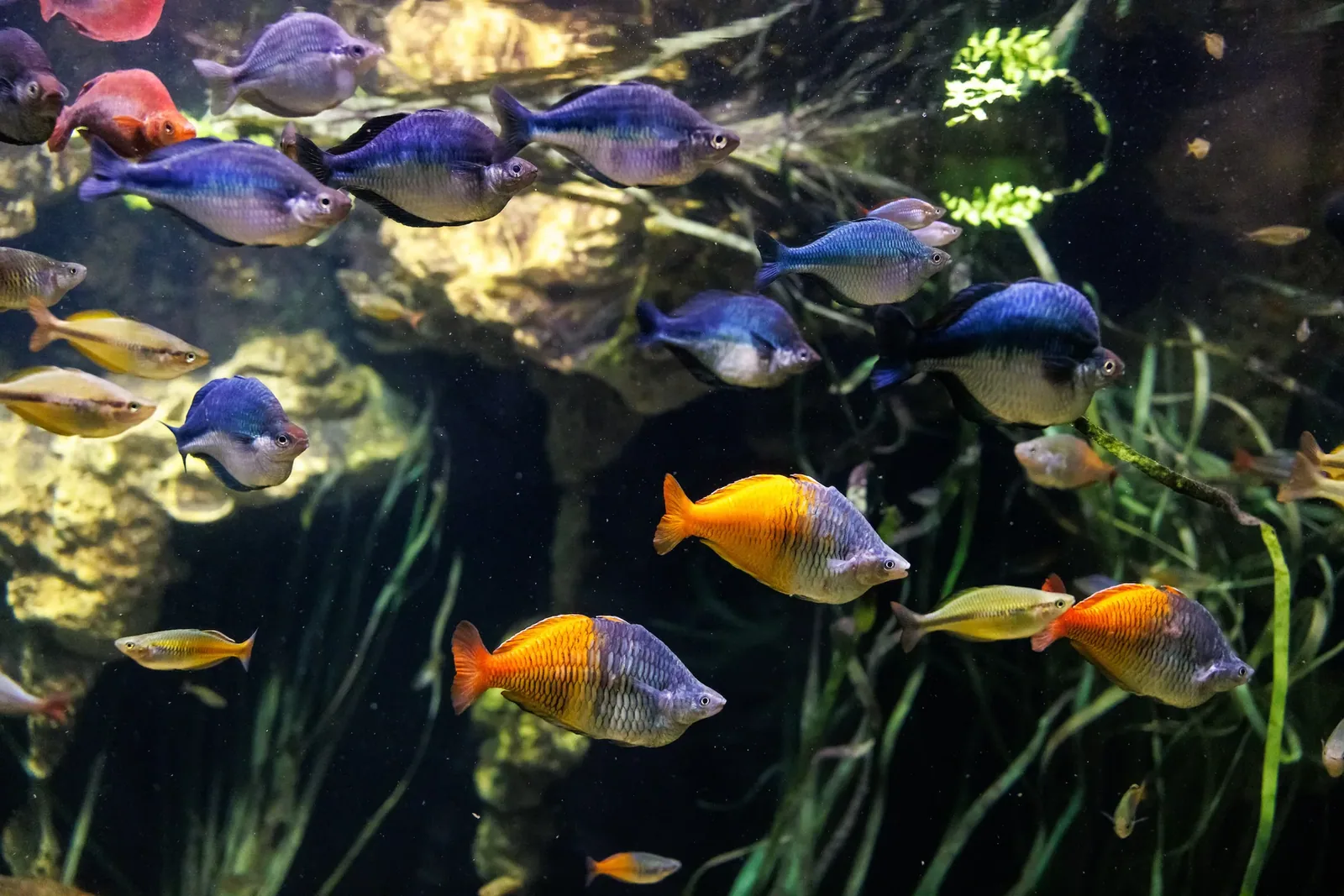
They usually suit peaceful community tanks, but their speed can unsettle slow or timid fish. Choose companions that can handle an active mid-water school without nipping fins or being bullied at feeding time.
Often compatible:
- Similar-sized tetras and rasboras
- Danios, where temperature ranges overlap
- Peaceful bottom dwellers such as Corydoras, where parameters overlap
Avoid or approach with caution:
- Fin-nippers and persistent chasers
- Large, aggressive cichlids
- Very small tank mates that may be outcompeted at feeding time
Health: what to watch for
Rainbowfish often look fine until they don't. Early warnings tend to be behavioural: hanging back from the group, clamped fins, odd hovering, repeated flashing, or a steady fade in colour.1
Australian fisheries and agriculture agencies emphasise that many "disease names" used by hobbyists are symptom labels, and that diagnosis based on appearance alone can be unreliable. If fish are deteriorating quickly, seek veterinary advice rather than guessing treatments into the water.2
Prevention is the boring stuff that actually works:
- Quarantine new fish before adding them to an established tank.2
- Keep stocking sensible so waste stays manageable and fish are not constantly jostling.2
- Prioritise stability in temperature and water chemistry.
- Maintain strong filtration and consistent water changes.
Maintenance routine
A rainbowfish tank runs best on rhythm. Filter media matures, plants settle, and fish learn the shape of the space, but only if you do not let waste build up.
- Water changes: steady partial changes, often around 20 to 30%, help keep water quality stable. Frequency depends on stocking and feeding.
- Testing: check ammonia, nitrite, and nitrate when the tank is new, after stocking changes, or whenever fish behaviour shifts.
- Filter care: rinse mechanical media in removed tank water to avoid wiping out beneficial bacteria.
Breeding rainbowfish
Most commonly kept rainbowfish are egg scatterers. Spawning is often triggered by conditioning with quality foods, stable warm water, and plenty of fine plant material or a yarn spawning mop for the eggs to adhere to.6
Breeding tank basics:
- Setup: a separate tank with gentle filtration (a sponge filter works well) and spawning mops or fine-leaved plants.
- After spawning: adults may eat the eggs, so remove the adults or move the eggs to a rearing tank.6
- Incubation: eggs commonly hatch in about a week to ten days, depending on temperature and species.6
New fry need very small foods at first and consistently clean water. Keep feeding light but frequent, and avoid strong currents that exhaust tiny fish.
Biosecurity in Australia
Do not release fish, plants, or water into the environment. In Australia, releasing aquarium fish, plants, or water into waterways, including stormwater drains, can spread disease and create pest populations. Federal and state agencies advise disposing of unwanted fish responsibly and never releasing aquarium contents to the environment.1, 2
The bottom line
Rainbowfish thrive when the tank feels like open water with edges: space to run, plants to break the view, clean water that does not swing, and a proper group so their natural schooling behaviour has somewhere to go. Get those foundations right and the colour tends to follow, quietly and consistently.
References
- Australian Government Department of Agriculture, Fisheries and Forestry (DAFF), How you can protect Australia's aquatic animal health
- NSW Department of Primary Industries, Caring for your pet fish
- Australian Museum, Rainbowfishes (family Melanotaeniidae)
- EasyClean Aquatics, Boesemani Rainbowfish (Melanotaenia boesemani) profile and care
- Aquatic Arts, Dwarf Neon Praecox Rainbowfish (Melanotaenia praecox) care information
- Imperial Tropicals, Neon Dwarf Rainbowfish (Melanotaenia praecox) notes on breeding and care
- Queensland Government, Legal obligation for invasive freshwater animals
- Northern Territory Government, Aquatic biosecurity advice (aquarium contents disposal and pest prevention)

Dog lover and writer at My Pets Australia, sharing practical breed guides and care advice for Australian pet owners.