Comprehensive Guide to Caring for Cichlids: Tips for a Thriving Aquarium
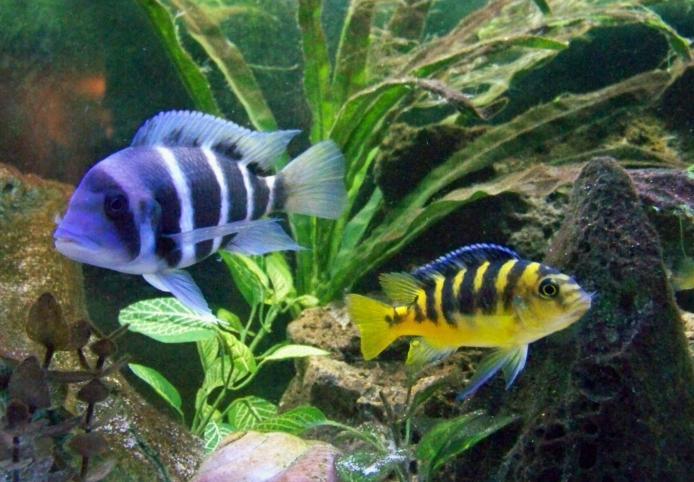
Cichlids are one of the most rewarding groups of fish in the freshwater hobby, prized for bold colour, real personality, and behaviour you can actually watch, from digging and rearranging to defending a chosen patch of rock. They are also a large and varied family, so a peaceful-looking juvenile in the shop can grow into a big, territorial adult with firm opinions about its neighbours. Most people look them up at one of three moments: about to buy, troubleshooting aggression in an established tank, or trying to stop a slow slide in water quality before it turns into illness. The good news is that cichlids are generally hardy. The catch is that their mix of territory, heavy feeding, and strong social behaviour means small setup mistakes tend to show up quickly. This guide covers choosing species, building a habitat that suits their nature, keeping water steady, and feeding in a way that supports colour and health without fouling the tank.
What "cichlid" actually means
"Cichlid" is not one type of fish. It is a large family of mostly freshwater fishes found across tropical America, mainland Africa and Madagascar, and parts of southern Asia.1 The group is famous for its diversity, with body shapes, feeding styles, breeding strategies, and social behaviour that can vary sharply from one species to the next.
In the aquarium trade, the name usually points to a few broad groups:
- African Rift Lake cichlids (especially from Lakes Malawi, Tanganyika, and Victoria): often colourful, fast, and territorial.
- South and Central American cichlids (such as Oscars and many "New World" cichlids): often larger-bodied, boisterous, and messy eaters.
- Dwarf cichlids (for example, many Apistogramma species): smaller fish that still appreciate structure, calm tankmates, and stable water.
Note that some cichlids need permits and their availability varies by state, so check with your state fisheries or biosecurity authority before buying anything unfamiliar.
Choosing species: start with adult size and temperament
Many cichlids are sold young, when they look peaceful and compact. The trouble arrives later, when adult size and adult territorial behaviour emerge. Before you buy, look up the expected adult length, how the species breeds (pairing, harem, mouthbrooding, substrate spawning), and whether it is known for intense aggression during spawning and brood care.1
Setting up the habitat
Water volume is the single best investment you can make. Cichlids do not just need room to swim, they need room to establish distance. More water also dilutes waste, slows parameter swings, and buys you time to notice problems before the fish are affected.
As a reality check, large cichlids like Oscars are widely recommended for tanks around the 280 litre range (about 75 gallon) or larger for a single adult, with bigger tanks needed for multiple adults and tankmates.2, 3 If you are planning a feature fish, choose the tank first, then the fish.
Filtration and water quality
Cichlids tolerate a range of conditions depending on species, but they cope poorly with instability: rapid shifts, chronic ammonia or nitrite issues, or steadily rising nitrate. Strong filtration and consistent maintenance matter more than chasing an exact number on a test kit. A few habits prevent most problems:
- Do not overcrowd. Crowding increases aggression and pollution, even when the fish seem fine at first.4
- Do not overfeed. Uneaten food becomes water quality trouble surprisingly fast.4
- Quarantine new fish (and live foods if used). New arrivals are a common pathway for parasites and disease into a display tank.4
Decor and substrate: build territories, not obstacles
Many cichlids dig, rearrange, and claim sites. A tank that is too bare forces constant face-to-face contact, which keeps low-level stress simmering. A few practical notes:
- Use stable rockwork and caves to break lines of sight, since visual walls reduce chasing.
- Choose sand or fine gravel if your species digs or sifts, and many do.
- Avoid sharp decor that can tear fins during disputes or frantic dashes.
- Secure everything. Large cichlids can shift objects and undermine stacked rocks.
Behaviour and social structure
Territorial behaviour is not a bad attitude, it is a common survival strategy in the wild. Many species establish and defend a patch of habitat, especially around breeding. In a glass box, the same behaviour can become relentless if the tank has no structure or escape routes.
Compatibility: match body size, speed, and resilience
Mixing cichlids, or keeping them with non-cichlids, works best when tankmates are too large to be eaten, confident enough not to be constantly harassed, and suited to the same temperature and water chemistry. Be wary of pairing assertive cichlids with small, slow, long-finned fish. What looks calm during the first week can change dramatically as territories form.
Managing aggression without constant intervention
If aggression is building, avoid the trap of fixing it with constant netting and reshuffling. Start with the environment.
- Add more cover and visual breaks so subdominant fish can disappear from view.
- Rehome or separate chronic bullies, since some individuals never settle.
- Check stocking and feeding, because crowding and hunger both amplify conflict.
Feeding and nutrition
Diet depends heavily on the species. Cichlids range from largely vegetarian to strongly carnivorous, with many opportunistic omnivores in between.1 The safest approach is to start with a high-quality food made for your cichlid group, for example herbivore-focused foods for algae-grazing Rift Lake species, and then add variety.
A simple feeding rhythm works well in most home tanks: feed once daily, or split into two smaller feeds, and offer only what is eaten quickly. Overfeeding is one of the most common causes of cloudy water, algae surges, and chronic fin and skin problems in aquaria.4
Foods to avoid:
- Feeder fish from uncertain sources, which can introduce parasites and pathogens.
- Fatty, inappropriate meats, which are not designed for many fish digestive systems.
- Single-food diets that ignore species needs and lead to long-term deficiencies.
Health and disease prevention
Most aquarium problems trace back to the same roots: stress, poor water quality, overcrowding, and introducing disease with new fish. NSW DPI notes that common problems in home aquaria include ich (white spot), caused by the protozoan parasite Ichthyophthirius multifiliis, along with fin rot and other parasitic infections, and it warns that appearance alone can be misleading without proper diagnosis.4
Ich often shows as small white dots on the body or fins, sometimes preceded by rubbing ("flashing"), increased mucus, and reduced appetite. By the time spots are clearly visible, fish may already be quite unwell.5 The names are easy to confuse: "white spot disease" can also refer to a serious viral disease of prawns and other crustaceans, which is not the same thing as ich in aquarium fish.6
Prevention that actually works:
- Quarantine new fish. It is the simplest way to avoid importing parasites into a stable tank.4
- Keep maintenance steady. Regular partial water changes and filter care prevent the slow creep of nitrate and organics.
- Watch behaviour daily. Early changes such as hiding, clamped fins, and reduced feeding often appear before obvious lesions.
- Ask a vet for uncertain cases. NSW DPI notes that many hobby disease names describe symptoms rather than a single cause, and recommends veterinary advice for diagnosis rather than treating based on appearance alone.4
Breeding in captivity
Cichlids are well known for complex breeding behaviour and parental care, including nest defence and protection of young. In some groups, eggs and fry are carried in the mouth (mouthbrooding) until they hatch and develop further.1
Conditions that support spawning include stable water quality (consistency matters more than perfection), defined breeding sites (flat stones, caves, shells, or sand patches, depending on species), and reduced stress through appropriate stocking, plenty of cover, and minimal sudden changes.
For fry care, the basics are:
- Be ready to separate fry if adults or tankmates prey on them, as behaviour varies by species and individual.
- Feed small foods frequently: specialised fry foods, finely crushed flakes, or appropriately sized live and frozen options.
- Keep water clean with gentle, regular maintenance, since small fish are sensitive to poor water quality.
The bottom line
Despite their reputation, many cichlids are not constant fighters. They are structured fish, shaped by breeding seasons, territories, and the layout of their habitat. Build the tank around those needs, with space, cover, steady water, and sensible feeding, and their colour and behaviour tend to settle into something calmer and more natural to watch.4
References
- Encyclopaedia Britannica, "Cichlid" (family Cichlidae): distribution, diversity, breeding behaviour
- Tropical Fish Hobbyist Magazine, "Astronotus sp." (Oscar): size and general tank requirements
- Modest Fish, Oscar fish care guide: commonly recommended minimum tank sizes
- NSW Department of Primary Industries, Caring for your pet fish (overfeeding, overcrowding, quarantine, common aquarium diseases)
- University of Florida IFAS Extension (EDIS), Ichthyophthirius multifiliis (Ich/white spot) infections in fish: signs and progression
- Australian Government (Outbreak.gov.au), White spot disease (crustaceans) and clarification that it is not ich in fish

Dog lover and writer at My Pets Australia, sharing practical breed guides and care advice for Australian pet owners.