Competitive Trail Riding
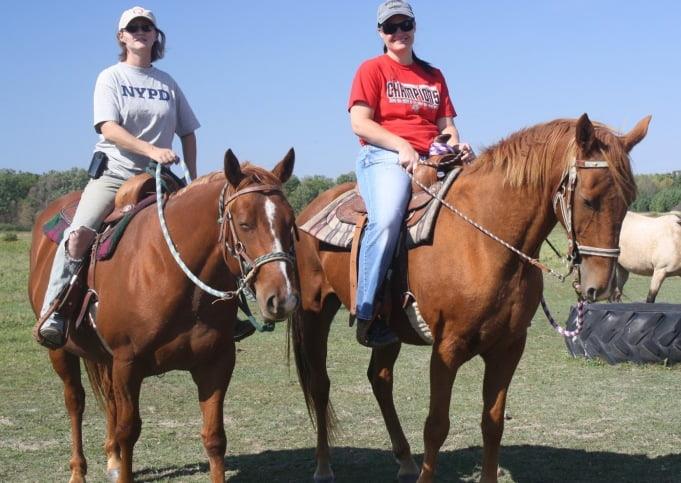
Competitive trail riding is an organised ride over a marked course where you and your horse are judged on more than just crossing the finish line. It rewards a horse that travels calmly over varied ground, holds a steady pace, and recovers well when the work is done. For riders who like distance and landscape over arena figures, it is one of the most satisfying ways to compete. Most people first look into it when they are weighing up their first event, sorting out how it is judged and what is actually expected on the day. Those details matter here, because a good round counts for little if the horse does not recover well.
What competitive trail riding is (and what it isn't)
The anchor of this sport is the horse's condition, not the stopwatch. In its simplest form, competitive trail riding is a marked course where combinations are assessed on how well they get around, and depending on the organising body that can include:
- meeting time parameters (often a minimum and maximum time, not a flat-out race)
- basic horsemanship and control on varied ground
- the horse's condition and recovery at set checks (for example, pulse or heart rate, hydration, gait and soundness)
That last point is what sets the sport apart. Many distance disciplines treat veterinary checks as part of the competition itself, not an optional extra, and horses can be eliminated if they are not considered fit to continue or to be counted as a completion.1, 2
How Australian events are commonly run
Australia does not have one nationwide CTR rulebook that every trail club follows. What you will see instead is a patchwork of affiliated trail-riding clubs, and, separately, well-established distance riding disciplines (notably endurance) with clear welfare and vetting procedures.
Trail-riding organisations such as the Australian Trail Horse Riders Association (ATHRA) focus on safe, responsible recreational trail riding and run activities such as navigation rides and camps, which can sit alongside more formal competitions depending on the club.3
If you are entering a competitive trail ride advertised by a specific club, treat the ride rules as event-specific. Before you pay an entry fee, ask for:
- the distance and expected terrain (including any sustained climbs, rocky sections, creek crossings)
- the time rules (timed, time window, or ride-out slot)
- how horses are assessed (vet checks, pulse checks, gait check or trot-out, best condition scoring)
- mandatory gear (helmet standard, saddlebag requirements, high-vis if roads are involved)
Time, speed and scoring: what "competitive" can mean
Fastest time wins is true of some timed rides, but it is not a reliable description of competitive trail riding as a category. In many trail competition formats the aim is controlled efficiency rather than speed at all costs. Some formats are explicitly not timed in the racing sense, using ride-out windows and judged obstacles instead of a stopwatch finish.4
In veterinary-supervised distance sports, the competition begins at the initial check and ends only after the final assessment, with welfare outcomes affecting eligibility for awards and even completion status.5
Horse welfare and veterinary checks
The horse's welfare comes first, even when the rider is chasing a placing. Equestrian Australia formally endorses the FEI Code of Conduct for the welfare of the horse, which places welfare as paramount and rejects practices that threaten it.6
In endurance riding, a close cousin to many competitive trail ride concepts, horses are commonly assessed on:
- heart rate recovery
- metabolic signs (hydration, mucous membranes, gut sounds, skin recoil)
- injuries, rubs and saddle sores
- gait and soundness (often via a trot-out)
Australian Endurance Riders Association (AERA) educational material reflects this welfare-first approach, including typical heart-rate parameters used at checks (for example, 55 bpm at the first end-of-leg check and 60 bpm thereafter in standard vetting contexts).1, 2
Training that suits the job
The horse you want is one that stays rhythmical on uneven ground and settles quickly at checks. Training is less about going hard and more about building a steady engine and predictable recovery.
Conditioning principles that carry over well
- Long, easy base work: mostly walk and trot, gradually adding time before adding intensity.
- Hill work for strength: steady climbs and careful descents build hindquarter strength and balance.
- Terrain practice: sand, gravel, rock and shallow water, introduced calmly so foot placement becomes ordinary.
- Recovery practice: stop, loosen the girth, offer water, and let the horse stand quietly so pulse and breathing come down.
In longer-distance disciplines, horses work through loops with mandatory inspections and rest periods, and conditioning is built over time rather than rushed in a few weeks.7
Equipment and safety: the non-negotiables
Trail competition gear is rarely fancy. It just needs to be safe, comfortable and reliable for hours, not minutes.
Helmet standards in Australia
If your event is run under Equestrian Australia rules (or mirrors them), your helmet needs to meet an approved safety standard. Equestrian Australia publishes a current list of accepted helmet standards, including AS/NZS 3838 and other recognised international standards.8
Saddle fit and simple comfort
For the horse, pressure points matter more than brand names. A slightly unstable saddle over distance can create rubs that become a welfare problem, and in vet-checked formats that can end your day. Bring what you know works, and test it on long rides before you test it in competition.
On-trail essentials
- water and a way to offer it (a collapsible bucket is often easiest)
- basic first aid (for rider and horse, within your skill level)
- spare gear for what actually fails in the bush (usually a hoof boot strap, rein connector, or baling twine)
- a way to carry rubbish out
Judging and scoring: how to read the results sheet
Many scoring systems follow a familiar logic: reward the combination that travels well, presents well, and looks like it could comfortably do the ride again tomorrow. Where veterinary checks are part of the format, the structure often looks like:
- pre-ride assessment (baseline soundness and general condition)
- mid-ride check or checks (recovery and metabolic signs)
- final check (fitness to be counted as a completion, and sometimes best condition style awards)
In endurance-style vetting, presentation timing and recovery parameters can be built into the rules, so calm, organised handling at checks is part of your competitive skill.1, 2
Practical tips that help on the day
- Know your horse's normal: resting behaviour, drinking habits, how quickly respiration settles.
- Practise standing still: a horse that fidgets burns energy and stays up longer than it needs to.
- Keep the pace honest early: most trouble shows up in the last third, not the first.
- Watch for rubs: a small girth pinch at kilometre 5 becomes a proper wound by kilometre 25.
- Let welfare decide: if your horse is sore, dull, stumbling, or not recovering normally, pull up. There will be other rides.
The Bottom Line
Competitive trail riding is at its best when it is a long, attentive partnership between horse, rider and landscape: steady feet, quiet hands, clear decisions. The details change between clubs, but the pattern stays. Ride within the rules, present a horse that recovers well, and treat completion as the real prize.
References
- Australian Endurance Riders Association (AERA), Guide to Australian Endurance Vetting: Self Assessment
- Australian Endurance Riders Association (AERA), Guide to Australian Endurance Vetting: The Veterinary Examination
- Australian Trail Horse Riders Association (ATHRA), About Us
- American Competitive Trail Horse Association (ACTHA), About ACTHA Rides (CTC format overview)
- Mid-Ohio Trail Riders Association (MOTDRA), General Rules (CTR competition and welfare emphasis)
- Equestrian Australia, FEI Code of Conduct for the welfare of the horse
- Fédération Equestre Internationale (FEI), From 0 to 160km: Training horses for endurance
- Equestrian Australia, Current approved safety standards for helmets

Dog lover and writer at My Pets Australia, sharing practical breed guides and care advice for Australian pet owners.