Collared Aracaris as Pets
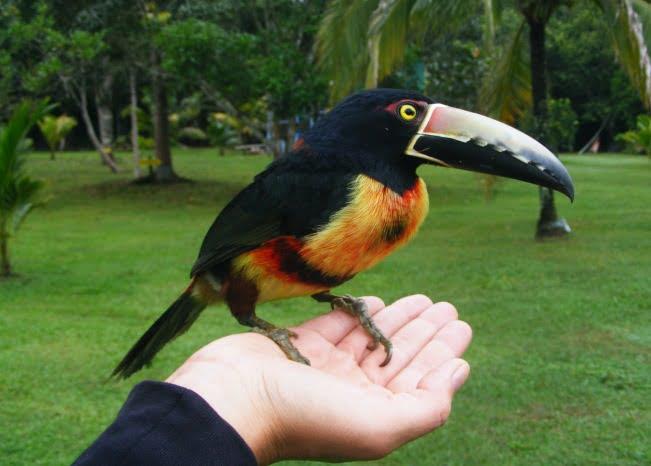
The collared aracari (Pteroglossus torquatus) is a mid-sized toucan: long-billed, high-contrast, and busy from the moment it wakes. In the wild it lives in small, social flocks in the forests of Central America and parts of northern South America, hopping and gliding through the canopy and feeding on fruit for much of the day. Kept well, it is an absorbing, alert bird that stays interesting for years. Before anything else in Australia, sort out the legality: whether you can keep one depends on your state or territory, and importing one is generally off the table because the species sits outside the national live import list.8, 9 Treat this as a heavily restricted, high-input bird, not a casual purchase.
- Adult size: Around 38 to 41 cm long. Collared aracaris are often larger than people expect.1, 2
- Weight: Roughly 175 to 250 g, varying by sex, condition and subspecies.1, 2
- Lifespan: Often quoted as 15 to 20 years in human care, with normal individual variation.1
- Noise level: Loud and far-carrying for their size.2
- Temperament: Social, alert and active. Does best with daily interaction and predictable handling.
- Diet type: Omnivorous, but fruit is the backbone. Insects and other animal matter are a smaller part.2, 3
- Housing: Aviary-style space, strongly preferred over a standard cage for long-term welfare.
- Exercise: Daily out-of-enclosure movement and climbing matter more than flight laps.
- Grooming: Regular bathing or misting is normal. Provide safe water and a warm spot to dry.
- Health watch-outs: Like many softbills, toucans and aracaris can be prone to iron overload (iron storage disease) on the wrong diet. In mixed-bird households, note that PBFD is primarily a parrot disease.4, 5, 6
History and Origin
The collared aracari ranges from southern Mexico through Central America and into parts of northern South America. It moves through forested country in small, social groups, spending much of the day feeding in trees and shifting between perches with quick hops, short flights and glides.2
That ecology does not disappear indoors. It reappears as a need for height, branches, routine and company. These birds track everything around them, and they feel boredom and cramped housing quickly, often in ways that read as naughtiness but are really unmet needs.
Appearance and Physical Characteristics
Collared aracaris are unmistakable: a long bill, dark upperparts, a yellow chest and a red rump. Adults are typically around 38 to 41 cm long and roughly 175 to 250 g, with size varying by sex, condition and subspecies.1, 2
Temperament and Personality
This is a social bird by design. In the wild, small flocks may roost together in tree cavities, sometimes packing several birds into one hollow, and their movement is agile and branch-focused rather than built for long-distance flight.2
In captivity, expect a bird that wants to be near activity, investigate objects and keep track of the daily rhythm. Vocalisations can be frequent and carry further than you would guess for a bird of this weight, which is fine in an aviary and difficult in an apartment with close neighbours.2
Is a Collared Aracari Right for You?
For most households, honestly, this is not a practical bird, and the legal restrictions alone rule it out for many people. Where the setup is right, though, they can be genuinely rewarding.
When they can be a good fit
- Visually striking, active birds that spend much of their time up in the branches, which suits an outdoor aviary life.
- Social and observant when handled calmly and consistently.
- Long-lived compared with many similarly sized birds, so a steady routine can build over years.1
Where people get caught out
- Noise and timing: calls can be loud and regular, especially around feeding and morning activity.2
- Space needs: they cope poorly with cage-only living, and a lack of climbing room often becomes a welfare problem.
- Diet is not a detail: inappropriate feeding, including iron-rich or heavily fortified foods, can raise the risk of iron overload in toucans and related softbills.4, 6
- Vet access: you will want a vet comfortable with softbills and exotics, not just parrots.
Care and Housing
Think small canopy bird, not cage bird. Height matters, branch spacing matters, and the bird needs to move between perches, climb, and choose distance from people when it wants to settle.
Set up the enclosure so the bird can:
- move through multiple perching levels, not just one row of dowels
- choose quieter roosting spots away from the main activity zone
- forage and explore safely, with puzzle feeders and scattered softbill-safe feeding stations
- bathe regularly, using a shallow dish or gentle misting, with a warm drying area
Cleanliness is not cosmetic with toucans. Fruit-heavy diets mean wet droppings and sticky surfaces, so daily spot cleaning and regular deep cleaning helps keep feet, feathers and airways in better shape.
Training here is less about tricks and more about cooperation: stepping onto a perch, accepting gentle restraint, moving calmly into a carrier, and allowing routine inspection. Short sessions, steady cues and a predictable endpoint work better than long, intense interactions. Enrichment tends to be physical and food-based, including foraging that mimics picking and probing, natural branches for climbing and foot health, a rotation of safe objects to investigate, and multiple feeding points to encourage movement.
Diet and Nutrition
In the wild, collared aracaris eat mostly fruit, with insects and small animal prey making up a smaller portion. Captive feeding should reflect that: fruit-forward, varied and controlled, without drifting into a sugary fruit-salad-only routine or high-iron, heavily fortified convenience foods.2, 3
A sensible base diet
- Fruit as the main component, rotated for variety across colours, textures and seasons.
- Some animal protein, often insects, in modest amounts, especially during breeding or high-demand periods.2, 3
- A formulated softbill or toucan diet, where available, can help balance nutrients. Ask an avian vet for a brand suited to toucans and aracaris.
- Fresh water always, changed daily.
Iron overload: the quiet problem to take seriously
Toucans and aracaris are commonly discussed in aviculture alongside iron storage disease, or iron overload. It can be subtle until it is not, with birds appearing fine and then deteriorating quickly. Prevention is largely diet-based: avoid iron-fortified human foods, be cautious with supplements, and do not add vitamin C supplements unless your avian vet has told you to, because vitamin C can increase iron absorption.4, 6
If you are buying a bird, ask what it has been eating and whether any iron status testing has ever been done. If you are inheriting a bird on an unknown diet, book an avian vet visit early rather than waiting to see how it goes.
Health and Lifespan
Line up an avian veterinarian before you need one. Routine health checks matter with softbills because early illness can be quiet: weight drift, subtle lethargy, changes in droppings, or a bird spending longer fluffed and still. In good conditions, collared aracaris often live 15 to 20 years in human care.1
Two health topics come up often in mixed-bird households:
- PBFD (psittacine beak and feather disease): this circovirus primarily affects parrots and is a major concern in parrot keeping. If you keep parrots and are considering an aracari, quarantine and hygiene planning is sensible, but be cautious about blanket claims that aracaris are susceptible in the same way as parrots.5, 7
- Iron storage disease (iron overload): a recognised issue in toucans and related birds, strongly influenced by diet and husbandry.4, 6
Legal Considerations in Australia
Available for sale does not mean simple to keep. In Australia, rules vary by state and territory, and exotic species can also be affected by federal import and wildlife trade controls, so check before you commit rather than after.
- Importing: to bring a bird into Australia you must meet Australian Government biosecurity requirements, and you may also need an environment permit under the EPBC framework depending on the species and its listing status. If the species is not on the live import list, it generally cannot be imported.8
- Keeping birds: state rules differ, especially between native-bird licensing and exotic species. NSW, for example, lists native birds that can be kept without a licence, and anything outside those lists can trigger different requirements. Use your state wildlife authority as the source of truth for your postcode, not social media advice.9
The Bottom Line
A collared aracari in good conditions is a busy, branch-hopping presence, always watching and always sampling the world with its bill. The essentials are plain: generous space, a fruit-forward diet managed with care, strong hygiene, and a vet relationship already in place before something goes wrong.
If you cannot offer an aviary-style setup, tolerate regular noise, or reliably manage the diet, this is usually not the right bird to make work. If you can, and you have cleared the legal requirements for your state, they can be steady and liveable companions, still unmistakably wild in their rhythms but manageable within a well-built routine.
References
- Animal Diversity Web (University of Michigan) · Pteroglossus torquatus (collared aracari)
- BioDB · Collared aracari facts (length, weight, lifespan)
- Los Angeles Zoo · Green aracari (diet overview typical for aracaris)
- ScienceDirect Topics · Iron storage (includes toucan and softbill dietary notes and vitamin C effect on iron absorption)
- Encyclopaedia Britannica · Psittacine beak and feather disease (PBFD) overview
- PetMD · Iron storage disease in birds (risk factors and prevention overview)
- Australian Government DCCEEW · Psittacine circoviral (beak and feather) disease (key threatening process information)
- Australian Government Department of Agriculture · Importing your pet bird (biosecurity and environment permit pathway)
- NSW Environment & Heritage · Birds you don't need a licence to keep (illustrates state-based licensing approach)

Dog lover and writer at My Pets Australia, sharing practical breed guides and care advice for Australian pet owners.