Climbing gourami (Labyrinth fish)
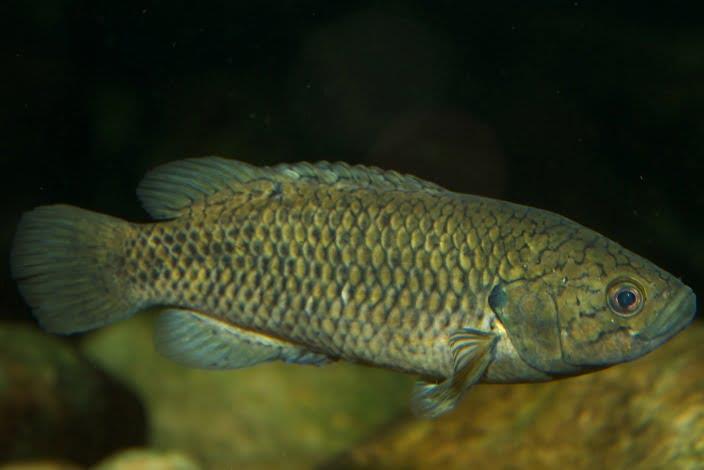
"Climbing gourami" is one of the more genuinely interesting names in the aquarium trade, and it belongs to a labyrinth fish that breathes air and can shuffle short distances over damp ground. The catch is that the name gets pinned to two very different fish, and in Australia one of them is legally off limits in Queensland. The true climbing gourami is the climbing perch (Anabas testudineus), a hardy air-breather that is listed as a restricted noxious fish under Queensland biosecurity law.6, 7 The look-alike sold under the same name is usually the three-spot or blue gourami (Trichopodus trichopterus), an ordinary community fish that stays in the tank. Before you buy anything called a climbing gourami, work out which fish you actually have and check your state rules.
Which fish do you actually have?
Two species get muddled under this one name, and they do not behave the same way in a home tank.
- Climbing perch (Anabas testudineus, family Anabantidae): the true "climbing gourami". A tough air-breather that can move short distances over damp ground.2, 8
- Three-spot or blue gourami (Trichopodus trichopterus, family Osphronemidae): commonly mislabelled as a climbing gourami. A bubble-nesting gourami that behaves like a normal aquarium fish.10
The distinction matters most for breeding. Climbing perch (Anabas) do not build bubble nests or guard their eggs the way many gouramis do, so care advice written for one species can be wrong for the other.1
Natural range and habitat
The climbing perch is native across parts of South and Southeast Asia. It lives in slow water such as ponds, swamps, canals and ditches, the kind of places where oxygen can drop and air-breathing becomes a real advantage.2, 8 Understanding that origin explains most of its behaviour: it wants warm, still, low-flow water and easy access to the surface.
Adult size, lifespan and tank implications
Size is the first thing people get wrong. Older care notes claim up to 30 cm, but reliable summaries list Anabas testudineus at about 25 cm total length, with some variation by population and conditions.3, 8 Plan for the fish you might actually end up with.
- Climbing perch (Anabas testudineus): strong-bodied, reaching around 25 cm. It needs more space and more careful stocking than a typical peaceful community fish.3, 8
- Three-spot gourami (Trichopodus trichopterus): commonly around 15 cm, and widely kept in planted aquariums with gentle flow.10
How labyrinth breathing works
Both fish are labyrinth fish, which means they can take oxygen from the air as well as through their gills. In the tank this looks like steady, unhurried trips to the surface for a gulp of air.2 It does not mean they need no filtration or that you can let the water slide. They tolerate lower-oxygen conditions better than most fish, but stable, clean water still matters.
Water conditions
For the commonly kept gourami that gets mislabelled (Trichopodus trichopterus), reputable references describe a broad workable range: roughly 22 to 28 degrees Celsius and pH around 6.0 to 8.0, with the fish being hardy and adaptable in typical tropical freshwater setups.10 If you genuinely have Anabas testudineus, expect a tough, adaptable fish, but do not treat hardiness as a reason to skip maintenance. Aim for steady tropical temperatures and clean water.
Tank setup
Set the tank up the way the fish lives in the wild: warm, still water, shade, tangles of plants, and a surface it can reach easily.
- Use a tight-fitting lid. Labyrinth fish visit the surface often, and climbing perch are especially notorious for escaping in damp conditions.8
- Keep flow gentle. Both species come from slower waters, and strong current leaves them constantly fighting the tank.10
- Build cover. Driftwood, robust plants and calm corners let the fish settle without constant posturing.
Feeding and diet
Both fish are broadly omnivorous. The three-spot gourami readily takes prepared, frozen and live foods, and may also nibble plants.10 In practical terms:
- Use a quality staple pellet or flake as the base diet.
- Add frozen or live foods such as brine shrimp or bloodworms as regular enrichment.
- Offer vegetable matter occasionally, especially if you notice plant-nibbling.
- Feed modest portions and remove uneaten food to protect water quality.
Temperament and compatibility
Do not assume "climbing gourami" means peaceful. That can be true for three-spot gouramis in the right tank, but it is not a safe blanket rule when the fish might actually be a climbing perch. Three-spot gouramis are widely kept as community fish, though individuals can turn pushy, especially in cramped tanks or during breeding; space, sight breaks and careful tankmate choice all help.10 A climbing perch is better treated as a robust predator and forager than a gentle community fish, particularly as it grows. If you are unsure of the species, stock conservatively until you confirm the identification.
Breeding
This is where the two fish part ways. Male three-spot gouramis build bubble nests and guard the eggs and fry, a behaviour shared by many gouramis. The climbing perch genus Anabas does not tend its eggs in that way, so any breeding advice about bubble nests applies to the gourami, not the true climbing perch.1, 10
Common health issues
Neither fish is a disease magnet, but the same pattern shows up again and again in home tanks: stress, then infection.
- Bacterial fin damage and sores: often tied to poor water quality or bullying.
- External parasites (white spot or Ich): often appears after temperature swings, transport, or new fish introductions.
- Fungal patches: usually follow an injury or ongoing stress rather than appearing out of nowhere.
Quiet preventative work, stable temperature, routine water changes and quarantine for new arrivals, achieves far more than any bottle of cure-all.
Legality in Australia
Never release aquarium fish into local waterways. Even hardy, familiar species can become invasive, and once established they are almost impossible to remove. In Queensland, the climbing perch (Anabas testudineus) is listed as a restricted noxious fish under state biosecurity rules, with strict obligations around keeping, moving and disposal if one is caught.6, 7 If you are anywhere in Australia and think you may have the true climbing perch, check with your state fisheries or biosecurity authority before doing anything with it.
A few common questions
Is a climbing gourami the same as a Siamese fighting fish?
No. Siamese fighting fish are Betta splendens. "Climbing gourami" refers to the climbing perch (Anabas testudineus) and is also misapplied to other gouramis in the trade.
Do climbing gourami really walk on land?
Climbing perch can move short distances over damp ground by wriggling and pushing with their fins, helped along by the edges of the gill covers. It is not a true walk, but it is effective enough to help them shift between water bodies in wet conditions.8
Why is my fish gulping air at the surface?
Labyrinth fish breathe air as part of normal behaviour. Frequent frantic gulping, though, can also signal poor water quality or low dissolved oxygen, so check temperature, ammonia and nitrite, and surface agitation.
What tank size do they need?
It depends on the species. Three-spot gouramis are commonly kept from around 115 L upwards, while climbing perch grow larger-bodied and need substantially more room and a tightly secured lid.10
References
- Climbing gourami (family overview, labyrinth organ and variation in parental care), Wikipedia
- Climbing Perch (Anabas testudineus), U.S. Fish and Wildlife Service
- Anabas testudineus summary (size data), FishBase
- Anabas (genus overview and air-breathing notes), Wikipedia
- Anabas testudineus (distribution overview), Wikipedia
- Your legal obligation for invasive freshwater animals, Queensland Government
- Climbing perch (restricted noxious fish), Business Queensland
- Climbing perch (Anabas testudineus), Encyclopaedia Britannica
- Trichopodus trichopterus (three-spot/blue gourami care and parameters), Tropical Fish Hobbyist Magazine
- Trichopodus trichopterus (breeding as bubblenester, size and hardiness), Tropical Fish Hobbyist Magazine

Dog lover and writer at My Pets Australia, sharing practical breed guides and care advice for Australian pet owners.