Cirneco dell'Etna Dog
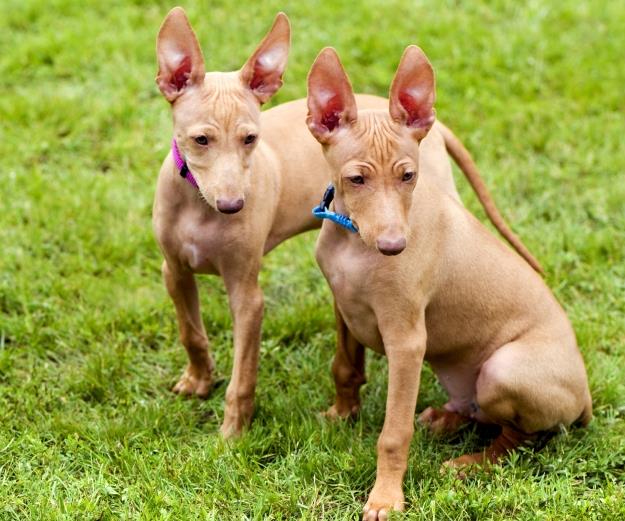
The Cirneco dell'Etna is a lean, ancient Sicilian hunting dog, light on its feet and built for endurance on rough volcanic ground. It is elegant and low-fuss to look at, affectionate with its own people, and genuinely fun to train when the work makes sense to the dog. It is also a rare, high-drive breed, so most people meet one and then have to go looking for the next litter. Get the exercise and management right and you have a bright, athletic companion that thrives on movement and routine. Get it wrong and you have a bored dog that invents its own hobbies. This guide covers the breed's origins, temperament, care, and the realities of living with one in an Australian home, grounded in recognised breed standards and veterinary evidence.1, 2
History and Origin
The Cirneco dell'Etna developed in Sicily, particularly around the terrain of Mount Etna, where it was valued as a rabbit-hunting dog built for heat, rock, and long hours on the move.2 It is a primitive-type hunting breed, classified by the Fédération Cynologique Internationale in Group 5, Section 7, and it comes from Italy.1
You will often see the breed linked to ancient Egyptian hunting dogs and Phoenician trade routes. The breed standard records this as a traditional account, and archaeological depictions in Sicily are commonly cited as evidence of the dog's long presence on the island.2
Official recognition is far more recent. The breed was recognised in Italy in 1939 and definitively accepted by the FCI in 1956.1, 4
Appearance and Physical Characteristics
The Cirneco is a square-outlined dog shaped by function rather than ornament. It should look slender without being fragile, with a body length roughly equal to its height at the withers and a lean, athletic outline.1, 2
Breed standards describe a longish, oval-tending head, almond-shaped eyes, and high-set erect ears. The coat is short and fine, and the overall build is hardy and light.2 This is a medium-sized dog: males stand 46 to 50 cm and females 44 to 48 cm, with a tolerance of plus or minus 2 cm.2 Males weigh 10 to 13 kg and females 8 to 11 kg.2
Temperament and Personality
The breed standard describes the Cirneco as strong-willed, affectionate and alert, very attached to its owner, and fundamentally a hunting dog that relies heavily on scent, with sight and hearing also in play.1 In everyday life, that tends to look like this:
- Quick to notice movement: wildlife, cats, cyclists, anything that flicks across the edge of their vision.
- Independent problem-solvers: not so much stubborn as inclined to make their own choices when the plan is not clear.
- Close with their people: many Cirnechi are affectionate and enjoy being near the household action, provided they can also switch off.
They make good watchdogs in the simple sense that they notice what is happening and will often sound off. They are not, by design, a guarding breed.1
Is a Cirneco dell'Etna Right for You?
The honest answer depends less on your experience and more on your set-up. The Cirneco is not automatically unsuitable for first-time owners. The real dividing line is preparation: time for training, secure fencing you actually trust, and a lifestyle that reliably provides exercise and mental work. If that is in place, many people do well with the breed. If it is not, this is the wrong dog.
Here is the plain trade-off.
What is good about them
- Beautifully athletic: built for movement, endurance, and agility on uneven ground.1
- Short coat, low-fuss grooming: a simple routine, and little doggy smell for many households.
- Bright and trainable: especially when the training feels purposeful and rewarding.
What to be honest about
- Prey drive is real: secure fencing and careful off-lead decisions are non-negotiable for many individuals.1
- Not a couch-potato breed: without daily outlets, boredom shows up as destructiveness or constant busy behaviour.
- Can be independent: training needs patience and consistency, not force.
Because Cirnechi are relatively uncommon in Australia, take the search slowly. Look for breeders who can show health results, explain temperament, and match a puppy to your household rather than your wishlist. Worthwhile questions to ask include:
- Which health tests have been done on the parents (hips, eyes, and any relevant DNA testing), and can you provide the results in writing?
- How do you raise puppies, including handling, noise exposure, early socialisation, and toileting routines?
- What is the typical prey drive like in your lines, and how do owners manage it safely?
- What support do you offer after the puppy goes home?
Training and Exercise
This is a hunting breed with a working brain, so a daily rhythm suits it best: purposeful exercise, time to sniff, and short training sessions that stay upbeat and consistent.1, 2
Expect to provide daily movement plus chances to run safely. Off-lead freedom is best reserved for fully fenced areas or secure dog-sport spaces, because prey drive can override recall in a split second. Good outlets include:
- Brisk walks with long sniffing stretches
- Short sprints in a secure area
- Scent work games such as scatter feeding, find-it, and tracking-style searches
- Agility foundations or lure-style games in controlled settings
Cirnechi respond well to reward-based training that makes sense to them: clear cues, calm repetition, and reinforcement worth chasing, whether that is food, play, or a chance to sniff. Punitive methods often backfire by creating avoidance or switching the dog into do-it-myself mode. Early socialisation matters too, not to change the breed's nature, but to help the dog move through the modern world of traffic, visitors, handling, and other dogs at a respectful distance without becoming overwhelmed.
Health and Lifespan
Cirnechi are usually described as a generally healthy, hardy breed, but healthy does not mean free of problems. Like any dog, they benefit from sensible breeding, routine vet care, and prevention through parasite control, dental care, and weight management.6 Lifespan is often quoted at around 12 to 14 years, though individuals vary as with any breed.5
One inherited condition is rare but worth knowing about. A 2024 peer-reviewed study reported a recessively inherited oculo-neurological syndrome in Cirneco dell'Etna dogs, involving retinal degeneration alongside tremors and episodic neurological signs, linked to a variant in the AMPD2 gene. The authors recommend breeder testing for the proposed variant.6, 7 For owners, the practical takeaway is simple: if you are buying a puppy, ask what health testing has been done in the line, including eye screening and any available DNA testing relevant to the breed, and get copies of the results.
Cirnechi are not widely known for high rates of hip dysplasia compared with larger, heavier breeds, but hip scoring and general orthopaedic soundness still matter, especially in a fast, jumping dog that works on hard ground. Seek breeders who can explain their approach to screening and selection. A lean, active dog can also pick up soft-tissue strains, pad injuries, and toe problems, particularly if it sprints hard on poor surfaces. Keeping the dog at a healthy body condition and building fitness gradually reduces the risk.
Grooming and Care
The Cirneco's coat is refreshingly straightforward: short, fine, and low maintenance. Weekly brushing is generally enough to lift loose hair and dust, and bathing can be occasional rather than routine. Nails, ears, and teeth still need steady attention.
- Brushing: once a week, more during seasonal shedding
- Bathing: as needed
- Nails: check every 2 to 4 weeks, since active dogs still often need trims
- Teeth: aim for regular tooth brushing and follow veterinary dental advice
A Few Things Worth Knowing
- The Cirneco takes its name from Mount Etna, the active Sicilian volcano its ancestors hunted around.2
- It is a scent-led hunter first, with sight and hearing backing that up, which is why nose games settle it so well.1
- Despite the ancient history claims, formal recognition only came in 1939 in Italy and 1956 with the FCI.1, 4
The Bottom Line
The Cirneco dell'Etna is a lean, ancient Sicilian hunting dog: alert, affectionate, and built for volcanic rock and rabbit trails. In a modern Australian home it thrives on secure exercise, reward-based training, and daily chances to use its nose and legs. Choose carefully, ask for health evidence, and plan for a dog that notices everything.1, 2, 6
References
- Fédération Cynologique Internationale (FCI): Cirneco dell'Etna (Standard No. 199)
- Dogs Australia (ANKC): Cirneco dell'Etna breed standard (FCI Standard No. 199)
- Dogs Victoria: Cirneco dell'Etna breed standard (download and summary page)
- Cirneco dell'Etna (overview of history and recognition)
- The Kennel Club (UK): Cirneco dell'Etna breed standard
- Genes (2024): Frameshift Variant in AMPD2 in Cirneco dell'Etna Dogs with Retinopathy and Tremors
- PubMed: Frameshift Variant in AMPD2 in Cirneco dell'Etna Dogs with Retinopathy and Tremors (abstract)
- Cirneco dell'Etna Club of America (CdECA): Breed information and club resources

Dog lover and writer at My Pets Australia, sharing practical breed guides and care advice for Australian pet owners.