Chinook
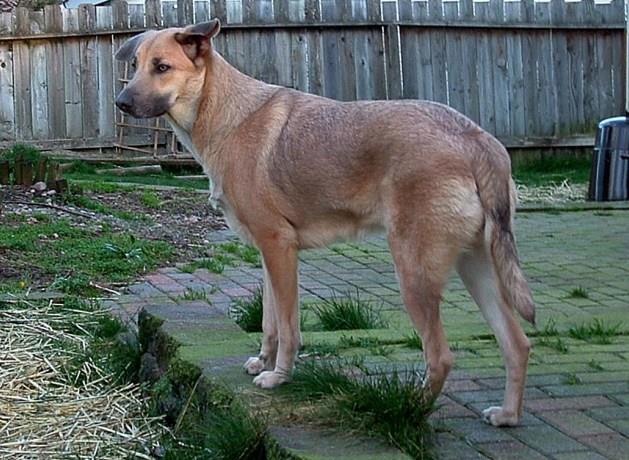
The Chinook is a rare working dog developed in the United States as a sled and draft breed, built for stamina rather than sprinting speed. It is a large, tawny dog with a steady, people-oriented temperament, and it tends to enjoy being close to its household and having a job to do. That combination of size, trainability and calm good sense is the real appeal. It is also an uncommon breed, so a well-bred puppy takes patience to find and asks for consistent exercise and company once it arrives.
One quick correction before the care detail: the Chinook is not a horse breed, and it is a separate subject to the Chinook Indigenous peoples and Chinuk Wawa. This guide is about the dog, with a short note at the end to clear up the name overlap.
History and Origin
The Chinook was developed in New Hampshire in the early 1900s as a purpose-bred sled and draft dog.2, 3 Its heritage is working stock, bred for pulling loads over long days rather than for show.1, 2 The breed remains rare today, which shapes much of the practical advice below.
Appearance and Physical Characteristics
Chinooks are medium to large dogs with an athletic, working build. Males stand about 61 to 66 cm at the shoulder and females about 56 to 61 cm.2, 4 Weight commonly sits around 23 to 41 kg depending on sex and build.1, 4 The coat is a thick double coat, with a straight, coarse outer layer over a dense, downy undercoat, and the colour is tawny, ranging from pale honey to deep reddish-gold.2
Temperament and Personality
A well-bred, well-socialised Chinook is steady, intelligent and people-oriented, and it is usually not sharp or reactive.2, 4 The breed was built for work that rewards good sense around people, and in a home that often shows up as a dog that wants to be near the household and is happiest with regular movement, training and simple jobs. Energy is commonly described as moderate to moderately high.2, 4 The goal is a dog that gets to use its body and its brain, not one run into the ground with high-impact sprinting.
Training and Exercise
Chinooks are generally responsive to training and often enjoy working with people. Keep sessions short, clear and upbeat, and lean on quiet consistency rather than heavy correction, which matters more in a rare breed where temperament can vary between lines.2 Most dogs settle well on a predictable routine that gives them:
- a solid daily walk, often 40 minutes or more as a baseline, and
- a second outlet most days, such as obedience, a sniffy trail walk, pulling sports, scent games, or a backyard session that involves thinking.4
Health and Lifespan
Chinooks are often described as generally healthy, and life expectancy is around 12 to 15 years.4, 5 As with many medium to large working breeds, there are a few conditions worth planning around.
Hip dysplasia is an abnormal development of the hip joint that leads to looseness and, over time, osteoarthritis. It is influenced by both genetics and environment, including growth rate, weight and exercise, and signs can include stiffness after rest, reluctance to jump, hind-limb lameness, or a bunny-hopping gait when running.6, 7 If you are buying a puppy, ask for proof of hip screening for both parents, for example OFA or PennHIP results. Screening does not guarantee perfect hips, but it improves the odds over time when breeders select for better results.6, 8
Eye disease is listed among the breed's major health concerns by the Chinook breed community, so ask breeders what eye screening they do and what they have seen across multiple generations of their lines.8 The community also notes seizure disorders as a significant concern, so ask directly about any history of seizures or episodic movement disorders in both lines, and what the breeder does to avoid repeating those patterns.8
Grooming and Care
The Chinook has a protective double coat built for cold conditions. It is not a wash-and-wear short coat, but it is also not the constant matting coat of some long-haired breeds. Expect seasonal shedding, often twice a year, with lighter shedding in between.2, 5 For most dogs a weekly brush keeps the coat tidy and manages hair in the house, and during heavy sheds you will usually need to brush more often to keep the undercoat moving along.5
Is a Chinook Right for You?
A Chinook can be a strong fit if you want a large, trainable companion with working-dog steadiness, and you can offer routine exercise and plenty of time near the household. It is often not ideal for homes where the dog will be left alone for long stretches most days, or where exercise is sporadic and unpredictable.4 Because the breed is rare, expect to wait for a well-bred puppy, and put your effort into the breeder's health testing, temperament and transparency rather than a quick availability timeline.
A Few Things Worth Knowing
- The name Chinook is also used in the Pacific Northwest of North America for the Indigenous Chinookan peoples.9
- It also refers to Chinuk Wawa, often called Chinook Jargon, a historic trade language that developed around the lower Columbia River and spread through regional trade networks.10
- If you landed here looking for the Chinook people or Chinuk Wawa, the name overlap is common. It is simply a different subject to the dog breed.
The Bottom Line
The Chinook is a steady, intelligent working dog that rewards owners who can give it routine, exercise and company. It is a serious commitment of time, and because the breed is rare you will need patience and a careful eye on the breeder's health screening before a puppy is ever in the picture. For an active household that wants a large, trainable dog and is willing to wait, it can be an excellent match.
References
- American Kennel Club (AKC), Breed Weight Chart (includes Chinook)
- American Kennel Club (AKC), Meet the Rare and Versatile Chinook
- Purina, Chinook dog breed information
- Hill's Pet Nutrition, Chinook breed profile
- PetMD, Chinook dog breed: health and care
- Merck Veterinary Manual (Pet Owner), Hip dysplasia in dogs
- Dogs Australia, CHEDS (Canine Hip and Elbow Dysplasia Scheme)
- Chinook Owners Association, Breed FAQ (health issues and screening)
- Chinook Indian Nation, Who we are
- Encyclopaedia Britannica, Chinook Jargon

Dog lover and writer at My Pets Australia, sharing practical breed guides and care advice for Australian pet owners.