Characins
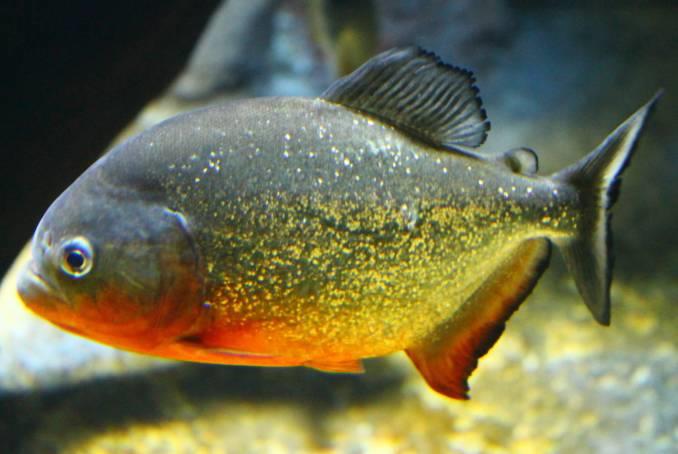
Characin is the catch-all label aquarists reach for when they talk about tetras and their relatives, the small, quick-moving shoaling fishes that fill the middle of a planted community tank. They are mostly freshwater fishes from the Americas and Africa, and the group is huge: it runs from thumb-sized neon tetras up to piranhas. In a well-run tank a proper school of small characins settles into a steady, quiet rhythm, drifting through plants and turning together. Get the water, the group size and the tankmates wrong and that same tank slowly unravels into stress, disease and losses. The notes below cover typical characin care, but always check the needs of your exact species.
What "characin" means (and what it doesn't)
In everyday aquarium talk, characin usually refers to the small schooling fishes sold as tetras, pencilfish, hatchetfish and similar. In scientific terms, people may be pointing to the family Characidae, a major characin family, or, more broadly, to the order Characiformes, which includes several related families.1, 2
For a home tank the label matters less than the species. Some characins stay thumb-sized and drift through plants in a tight school. Others are built for open-water pursuit and can swallow their tankmates.
Quick profile (typical small aquarium characins)
- Adult size: commonly 2 to 6 cm for many tetras, though some characins grow far larger depending on species1, 2
- Body shape: usually slender to deep-bodied, and many species carry a small adipose fin, a soft fin between the dorsal fin and the tail1
- Temperament: many are peaceful shoalers, but some are fin-nippers or predators, depending on the species1
- Water temperature: often around 20 to 26 °C for classic small tetras, species-dependent4
- pH: commonly acidic to neutral, often around pH 5.0 to 7.0 for many Amazonian tetras4
- Diet: varied. Many eat small invertebrates and plant material, and most do well on quality prepared foods plus small live or frozen options1, 4
- Lifespan: often a few years in captivity when kept in stable conditions, species-dependent
Natural range and habitat
Characiform fishes are native mainly to the fresh waters of Central and South America and Africa. They are not naturally native to Australian inland waters, though Australia has its own native freshwater fishes from different groups.1, 2
Across that wide range the habitats vary a great deal, from tannin-stained blackwater creeks under a rainforest canopy to clearer tributaries, floodplains and larger rivers. Many small aquarium tetras come from slow-moving, plant- and root-filled streams where cover is constant and light is dappled.3, 4
Behaviour in the aquarium
Most popular characins are shoaling fishes, and they show it. Kept singly or in very small numbers, they often become withdrawn, pale and more vulnerable to bullying. In a proper group they move as a loose, coordinated band, turning together, pausing together, then slipping back into cover when startled.
- Keep a school: aim for at least six, and often more for small tetras, provided the tank size and filtration can support them.5
- Watch for nipping: some species nip fins when cramped, underfed, or kept in poor group sizes.
- Match tankmates carefully: avoid large predatory fish that see small characins as food.
Water conditions: stability beats perfect numbers
For many small Amazonian characins, including neon tetras, soft water and an acidic-to-neutral pH is a familiar baseline. Temperature usually sits in the low-to-mid 20s °C, and steady conditions matter more than chasing an exact set point.4, 5
A few practical notes tend to help most small characins:
- Gentle flow, high oxygen: many do best with a filter that keeps the water clean without blasting them across the tank.
- Dimmer light and cover: plants, driftwood and leaf litter (where appropriate) create shade and reduce startle stress.
- Clean, consistent water: ammonia and nitrite should read zero, and nitrate should be kept modest with routine maintenance.
Diet and feeding
Wild diets are often built around tiny prey: insect larvae, small crustaceans and other invertebrates, plus varying amounts of plant material depending on the species. In the aquarium most small characins thrive on a quality staple, whether fine flakes or micro-pellets, with regular additions of frozen or live foods such as brine shrimp or daphnia.1, 4
Feed small amounts and watch the group. The calmer fish can be outcompeted by faster tankmates, especially at the surface.
Breeding and life cycle
Many small characins are egg-scatterers, releasing eggs among fine-leaved plants or spawning mops. Adults of some species will eat their own eggs and fry, so successful breeding often uses a separate breeding setup, gentle filtration and very small first foods for the fry.
Timelines vary widely by species, temperature and diet, so treat any one-size-fits-all maturity or lifespan claim with caution.
A common example: the neon tetra
The neon tetra (Paracheirodon innesi) is the classic small characin, a fish from the blackwater and clearwater tributaries of the Amazon system. In aquariums it is commonly kept at about 20 to 26 °C and pH 5.0 to 7.0, with a preference for stable, softer water and a planted tank that offers shade.4
Conservation and responsible keeping
Some characin species are common in the trade. Others have limited ranges and face local pressures such as habitat loss and declining water quality. Where you can, choose captive-bred fish from reputable sources and avoid impulse purchases of species that outgrow a typical home tank.
If you keep fish in Australia, pay attention to import rules and biosecurity. Live fish imports are regulated, and only permitted species can be imported under Australian requirements.6
References
- Encyclopaedia Britannica, "Characin" (overview, traits such as toothed jaws and often an adipose fin, range and diversity)
- Encyclopaedia Britannica, "Characiformes" (distribution in the Americas and Africa, basic classification)
- Encyclopedia.com, "Characiformes (Characins)" (distribution and broad habitat notes)
- FishBase, Paracheirodon innesi (neon tetra) summary (pH range, temperature range, distribution notes)
- Aquariadise, Neon tetra care sheet (schooling guidance and general husbandry notes)
- Australian Government Department of Agriculture, Fisheries and Forestry, Importing live fish to Australia (ornamental fish import conditions and permits)

Dog lover and writer at My Pets Australia, sharing practical breed guides and care advice for Australian pet owners.