Cesky Terrier
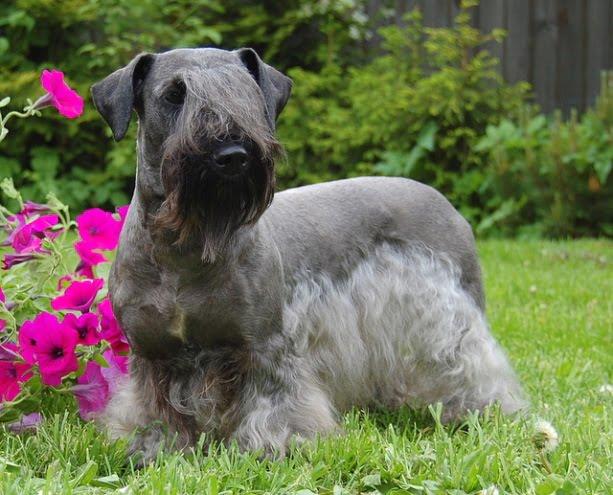
The Cesky Terrier is a small, long-bodied hunting terrier from the former Czechoslovakia, known for a silky, clipped coat and a temperament steadier than most of the terrier family. It sits low to the ground, moves with purpose, and carries the eyebrows and beard that give terriers their character without the harsh, bristly coat. People tend to look one up to check the basics quickly: how big it gets, what the coat really needs, whether it suits unit living, and which health checks matter before committing. Those details shape daily life, from grooming time and exercise to vet costs and how easily the dog settles into a busy household. It is a genuinely companionable breed, and it is also a real grooming commitment.
Cesky Terrier at a glance
- Size: Small, low to the ground, longer than tall1
- Height: 25 to 32 cm at the withers (ideal: dogs around 29 cm, bitches around 27 cm)1
- Weight: 6 to 10 kg (breed-standard range)1
- Coat: Long, fine, slightly wavy, with a silky sheen, typically kept in a clipped trim1
- Colours: Grey-blue or light coffee brown, with permitted lighter markings. Puppies are born darker and lighten with age1, 2
- Typical lifespan: About 12 to 15 years3
History and Origin
The Cesky Terrier, also called the Czech or Bohemian Terrier, was developed in Czechoslovakia by František Horák, beginning in the late 1940s. He crossed Scottish Terriers with Sealyham Terriers, aiming for a small, workable hunting terrier that could move through forest and cover and still live comfortably as a companion.2, 3
Appearance and Physical Characteristics
In the hand, a Cesky feels compact and muscular, with short legs and a rectangular outline. The breed standard describes a slightly rising topline and a coat that is fine and silky with a gentle wave, rather than the harsh, bristly texture common to other terriers.1
The signature look comes from grooming. The body is clipped, while the furnishings on the legs and belly are left longer, and the face hair forms eyebrows and a beard. The transition between clipped and longer coat is meant to be gradual, not sharply carved.1
Temperament and Personality
Ceskys are often described as calmer and more biddable than many terriers, while still alert and keen outdoors. Most form strong attachments to their people and do best when included in everyday life rather than left to entertain themselves for long stretches.4
They can still behave like hunting terriers when something small darts away: quick acceleration, nose down, attention narrowed. Early training and sensible management matter, especially around wildlife and smaller pets.4
Is a Cesky Terrier Right for You?
A Cesky suits a household that can provide daily walks plus a little training or scent-based play, and that is prepared for regular grooming. They are affectionate and adaptable, and their smaller size and calmer nature make them workable in units, provided they get out and stay involved in family life. The honest catch is the coat: it needs consistent brushing and professional clipping, so a low-maintenance dog this is not. If you want a small, watchful companion and do not mind the grooming schedule, the breed fits well.4
Training and Exercise
Ceskys are intelligent and tend to respond well to calm, consistent, reward-based work, particularly when it is started young and kept short and interesting.4
- Exercise: A daily walk, plus play and sniffing time. Their brain tires before their body does.5
- Training focus: Recall foundations, loose-lead walking, and polite greetings.
- Common terrier tendency: Chasing. Use a lead in unfenced areas until recall is reliable.4
Grooming and Care
The Cesky coat is not maintained by hand-stripping like many terriers. It is usually clipped and tidied with scissors, with brushing to prevent tangles in the longer areas on the legs, belly, and face.1, 4
- Brushing: Several times a week, focusing on the longer furnishings where knots form.
- Clipping: Regular grooms to keep the coat practical. Many pet owners book every 6 to 10 weeks.4
- Ears and nails: Check ears routinely and keep nails comfortably short, as with any small breed.
Health and Lifespan
Most Ceskys are sturdy little dogs, with a typical lifespan around 12 to 15 years.3
The breed is reported to have a movement disorder sometimes called "Scottie cramp", seen in related breeds, and responsible breeders commonly consider screening for orthopaedic and eye issues as part of a broader health plan for breeding dogs.3
Hip dysplasia can occur in any breed. It involves looseness in the hip joint during growth that can lead to pain and progressive arthritis later in life. Genetics play a major role, and growth rate and weight can influence how severely it shows up.6
Choosing a Cesky Terrier: Breeder or Rescue
If you are buying from a breeder
Look for someone who breeds with transparency: clear pedigrees, health testing appropriate to the breed, dogs raised in clean home conditions, and a willingness to discuss grooming and temperament honestly. A good breeder will also ask you questions, because the match matters.7
If you are adopting
Rescue can be an excellent path, especially if you would prefer an adult dog with a known temperament. The RSPCA recommends taking time to consider your household, asking about behaviour and medical history, and working with staff to find a suitable match.8, 9
The Bottom Line
The Cesky Terrier is a small, muscular, silky-coated terrier built for purposeful movement rather than ornament. With daily exercise, steady training, and a grooming routine that suits its clipped coat, it settles into family life well, especially in homes that enjoy a dog with a watchful presence and a strong nose for what is happening just beyond the fence line.1, 4
References
- The Kennel Club (UK), Cesky Terrier breed standard
- Wikipedia, Cesky Terrier (overview and history summary)
- PetMD, Cesky Terrier (lifespan, care, health notes, background)
- American Kennel Club, Facts about the Cesky Terrier (coat, exercise, temperament notes)
- WebMD, What to know about Cesky Terriers (exercise and care overview)
- American College of Veterinary Surgeons, Canine hip dysplasia (overview)
- RSPCA Australia, Adopting a dog or puppy (choosing and matching guidance)
- RSPCA Australia, Adoptapet (adoption considerations and process)
- RSPCA Pet Insurance, How to adopt a pet from the RSPCA (checklist)

Dog lover and writer at My Pets Australia, sharing practical breed guides and care advice for Australian pet owners.