Canadian Horse
The Canadian Horse is a compact, hardy breed with a reputation as a sensible all-rounder: a mount that carries an adult comfortably, stays sound on ordinary feed, and turns its hoof to riding, driving, or light farm work without fuss. It is recognised in Canada as the national horse under federal law, and it carries an unusually specific origin story that runs back to 1665. What sets it apart from most breeds is scale, because numbers are genuinely low. That makes it a rare-breed purchase, where paperwork, breeding decisions, and an honest read of the horse in front of you all matter more than usual. For a rider who wants a steady, versatile horse and does the homework, it is a rewarding choice.
Size: 14 to 16 hands (about 142 to 163 cm)1
Weight: roughly 450 to 635 kg1
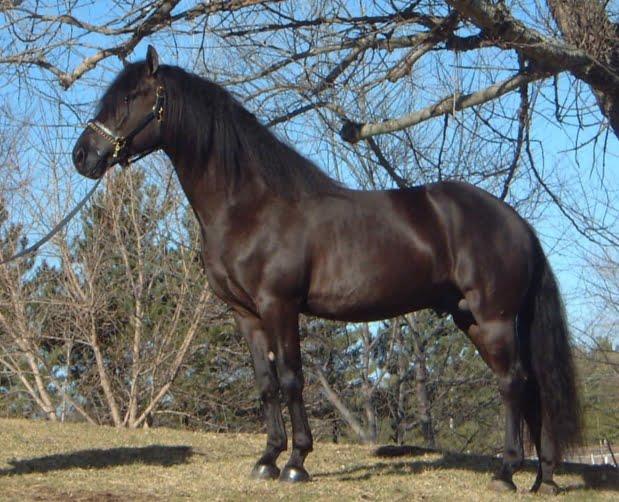
Coat colour: most commonly black; also bay/brown and chestnut; other colours occur but are less common1
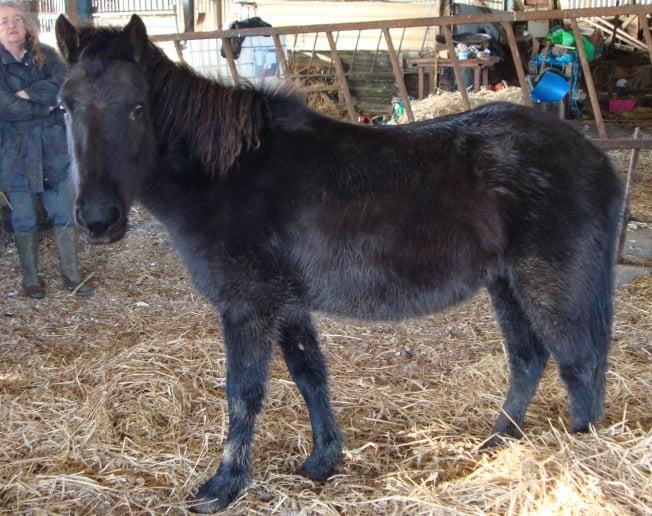
Distinctive features: compact, muscular build; short head with broad forehead; small ears; abundant mane and tail; strong, resilient feet1
Temperament (typical): intelligent, adaptable, generally steady and willing when trained well2
Lifespan: often into the mid to late 20s with good care, as with many horse breeds
Uses: pleasure riding, combined driving, ranch/stock work, and light draught tasks2
Diet: pasture and hay as the base; add concentrate only if workload or body condition requires it (an easy-keeper tendency is common)2
Health notes: no single signature disease, but easy keepers can drift into obesity without enough work and appropriate feeding2
Rarity: widely regarded as a rare, at-risk breed; global estimates are often around the thousands, not tens of thousands3, 4, 5
History and Origin
This is an old working type, not a modern designer cross. The breed's foundation is tied to New France in the 17th century, and Canada's National Horse of Canada Act explicitly notes horses sent from the King of France's stables to the colony in 1665, along with later efforts to re-establish and preserve the breed from 1885 onwards.6
That cold-climate working history is worth knowing when you read sales claims. The breed survived narrow numbers and changing fashions, so talk of purity, rare colours, or supposed links to other breeds deserves a careful look rather than a leap of faith.
Appearance and Physical Characteristics
Canadian Horses are typically medium-sized, strong for their height, and notably well-muscled. The official standard describes a short, harmonious head with a broad forehead, small ears, abundant mane and tail, and solid feet, with height generally 14 to 16 hands (about 142 to 163 cm) and weight commonly 450 to 635 kg.1
The type reflects the job. Under the breed standard the horse is built to work: a strong back and loins, good depth through the body, an arched neck that does not get in the way of pulling, and feet expected to hold up under real mileage.1
Temperament and Personality
Most Canadian Horses go about their work in an economical, purposeful way, more get-it-done than flashy. Temperament varies by individual, training, and handling, but breed organisations commonly describe the Canadian as intelligent, adaptable, and generally suitable for a wide range of riders and drivers when started and managed sensibly.2 It is a breed that tends to reward steady handling.
Is a Canadian Horse Right for You?
If you want a versatile horse and are comfortable with the demands of a rare breed, it is a strong candidate. Its reputation is built on doing several jobs well. Modern breed guidance most often points to:
- pleasure riding across English and Western disciplines
- combined driving and general harness work
- light draught and farm-style tasks where steadiness and traction matter
Keep the light work point honest. This is not a heavy draught breed, but a compact horse that can pull and carry efficiently for its size.2 The other half of the decision is the rare-breed reality. Buying one means dealing with registries, paperwork, and a limited pool of animals, which is a bigger commitment than picking a common breed off a sales list.
In Australia, horse ownership is legal, but importing any horse involves strict quarantine and biosecurity requirements, so a locally bred or already-imported animal will usually be the realistic path.
Training and Exercise
The Canadian responds well to sensible, consistent work, and its versatility means it can be brought on for riding, driving, or light farm tasks without needing to specialise early. Because it is an easy keeper, regular work does double duty: it builds a useful horse and it keeps weight in check. A horse in steady work on appropriate feed is far less likely to drift into the obesity problems that catch out under-exercised easy keepers.2
Health and Lifespan
There is no single signature disease attached to the Canadian Horse, and with good care many live into their mid to late 20s, as with many horse breeds. The main health watch-point is weight. An easy keeper on rich feed can become overweight surprisingly quickly, so feeding and workload need to be matched honestly to the individual horse.2
Diet and Nutrition
Pasture and good hay form the base of the diet. Concentrate feed should be added only if workload or body condition genuinely calls for it, because the breed's easy-keeper tendency means many horses hold condition on modest rations.2 The practical rule is to feed the horse in front of you, not a generic ration table.
A Few Things Worth Knowing
- Conservation status is real, not marketing. Conservation groups and registries describe the breed as critically endangered or at risk, with commonly quoted population estimates around 6,000, alongside warnings that effective numbers may be lower due to unreported deaths and missing or untransferred paperwork.3 Independent conservation organisations also list the Canadian as Critical on their priority lists.4, 5
- Registration is how the breed stays a breed. For a rare breed, registration is not just bureaucracy. Conservation bodies note that uncompleted or untransferred registrations effectively remove horses from the breeding population on paper, even if the animals are alive and well.3 If you are buying, breeding, or importing, verify identity as you would with any studbook breed: registry details, microchip or brand where applicable, and a clear paper trail.
- You can watch the type in person. Canadian Horses turn up at larger Canadian equestrian events and agricultural fairs, including The Royal Agricultural Winter Fair in Toronto, held annually in November.7 Breed classes and general competition rings are useful places to see how the horses move and stand up to atmosphere.
- Welfare runs through general channels. There is no breed-specific health crisis, but rare breeds can still end up in trouble through neglect, poor keeping, or simple mismatch. Welfare work tends to be handled through general equine rescue alongside breed-focused heritage and preservation groups.3
The Bottom Line
The Canadian Horse is a practical animal: compact strength, sensible movement, and a temperament that often rewards steady handling. It also lives in a smaller world than many popular breeds, where records and breeding choices carry extra weight. Done thoughtfully, ownership supports both a capable riding and driving horse and the continuation of a genuine piece of North American horse history.6
References
- Société des éleveurs de chevaux canadiens, Standard and characteristics
- Canadian Horse Heritage & Preservation Society, About the breed
- Canadian Horse Heritage & Preservation Society, FAQ (population and conservation notes)
- The Livestock Conservancy, Conservation Priority List (Horses: Canadian)
- Heritage Livestock Canada, Conservation List (2024 to 2025)
- Government of Canada, National Horse of Canada Act (assented to 30 April 2002)
- The Royal Agricultural Winter Fair, Official website
- The Royal Agricultural Winter Fair, Royal Horse Show
- Heritage Livestock Canada, Registration and breed associations

Dog lover and writer at My Pets Australia, sharing practical breed guides and care advice for Australian pet owners.