Brittany Spaniel
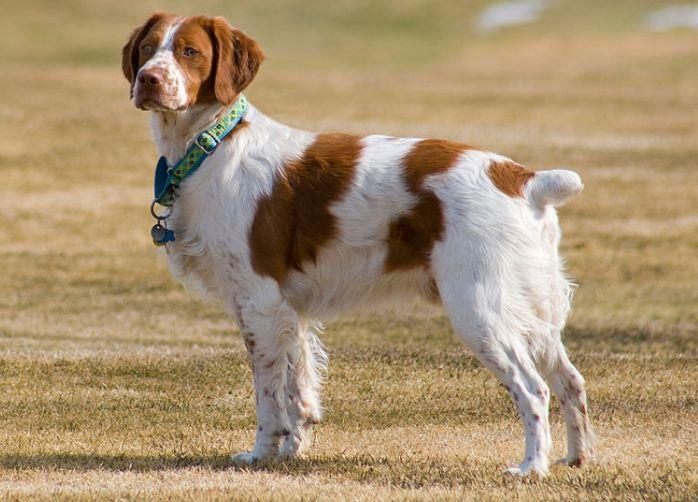
The Brittany is a compact, athletic bird dog from France, quick on the ground, keen to learn, and closely bonded to its people. Bred to point and retrieve, it carries that working drive into everyday life as a bright, sociable companion that scans, sniffs, and moves with purpose. It is also a genuinely high-energy dog, and a slow lap around the block will not touch the sides. Given daily work for both body and brain, a Brittany settles into a steady rhythm: alert outdoors, relaxed indoors. Fall short on the outlet and the same dog gets restless and loud.
Appearance and Physical Characteristics
A well-made Brittany looks built to cover ground all day without fuss: compact through the body, long enough in the leg to move briskly, and light on its feet rather than heavy-boned. Breed standards describe an athletic outline with height roughly similar to body length, giving that square working-dog balance.3 Most stand about 47 to 51 cm at the shoulder, with bitches often slightly smaller, and many adults weigh around 14 to 18 kg.1, 2, 3, 4
The coat is practical: dense and fairly fine, flat to slightly wavy, with enough substance for scrub and weather but not so much that it drags in burrs. You will usually see feathering on the backs of the legs and on the ears, with the rest lying fairly flat.1, 2 Colours are commonly orange and white or liver and white, with black and white and tricolour permitted in some standards depending on the registry.1, 2
Temperament and Personality
Most Brittanys are friendly, people-oriented, and tuned in to the household. They learn quickly, notice patterns, and thrive on gentle, consistent handling.4 In the field the breed is known for pointing and retrieving; in suburbia that often shows up as a dog that moves with purpose unless you teach it an off switch.
With children the main variable is usually not friendliness but exuberance. A young Brittany can be boisterous, especially if under-exercised, so calm introductions, supervision, and training for polite greetings matter more than good intentions.
Is a Brittany Right for You?
This is a working dog in a medium frame, and it needs a home that suits that. If you enjoy walking, training, weekend adventures, and a bit of structure, a Brittany can be an unusually satisfying companion: quick, capable, and quietly devoted. If your days are quiet and low-activity, honestly, this is the wrong breed.4 A working body left with nowhere to put its energy becomes restless and loud, not out of spite, but for lack of an outlet.
People usually land on a Brittany for one of two reasons: weighing up a high-energy gundog as a family companion, or trying to work out whether the Brittany they have met or seen advertised is the real thing. Size, exercise needs, and health screening all matter, because a mismatch tends to show up later as frustration, anxiety behaviours, or avoidable vet bills.
Training and Exercise
Brittanys are typically high-energy dogs, and useful exercise, movement with a job attached, tends to produce a calmer dog at home. Aim for a brisk physical outlet plus brain work every day.
- Physical outlet: brisk walking, running once mature, structured fetch, hiking, and swimming where safe.
- Brain work: scent games, basic obedience, retrieving drills, puzzle feeders, and short training sessions spread through the day.
- Social exposure: regular, well-managed contact with people, dogs, and everyday environments to keep confidence steady.
If a Brittany starts inventing its own entertainment, counter-surfing, barking at movement, or shredding, treat it as information. It usually means the day is too quiet, too repetitive, or too confusing.
The breed is generally quick to learn, especially with reward-based training and clear routines. Keep sessions short, end while the dog is still keen, and practise recall in low-distraction areas before expecting reliability around birds, rabbits, or a windy beach. Early focus areas that pay off for most households:
- recall, with long-line practice
- settle on a mat and quiet time
- loose-lead walking, so exercise does not turn into wrestling
- gentle handling for ears, feet, and grooming
Health and Lifespan
No breed is problem-free. Brittanys are often robust and typically live around 12 to 14 years, though individuals vary, and they can still be affected by inherited conditions and the everyday issues that come with active dogs.4
Hip dysplasia is a developmental condition of the hip joint seen across many breeds. The risk is influenced by genetics and environment, which is why reputable breeders screen breeding dogs and why sensible growth, weight management, and appropriate exercise in puppyhood matter.5
Ear infections are worth watching, because drop ears can trap warmth and moisture, particularly after swimming or in humid weather. Check ears regularly, keep them dry, and ask your vet before using any cleaner if there is redness, odour, discharge, or persistent head shaking.
Some lines may have eye conditions, so it is reasonable to ask what health testing has been done and to request written proof. A good breeder will talk plainly about what they screen for, what they have seen in their lines, and what they do with that information.
Grooming and Care
A Brittany's coat is usually straightforward. A weekly brush to lift loose hair and check for grass seeds is often enough, with more frequent brushing during shedding periods. After bush walks, run your hands through the feathering and between the toes, because seeds and burrs hide where the skin is thin.
Keep nails trimmed so the dog can move cleanly, and treat dental care as part of the routine rather than an occasional fix. Evidence-based dental products listed by the Veterinary Oral Health Council (VOHC) can help, but brushing is still the most direct way to reduce plaque build-up if you can manage it.6
Choosing a Brittany: Breeder, Rescue, and the Checks That Matter
However you find your dog, avoid quick sales and vague answers. In Australia, puppy farming and online pet scams are well-recognised problems, and the simplest protection is insisting on seeing the puppy or dog in person, in the place it was raised, and asking to meet the mother where possible.7, 8
- Meet the dog: do not buy sight unseen, and be wary of sellers who want to meet halfway.7, 8
- Ask for written health information: hip scores and orthopaedic screening, eye testing if done, and any DNA tests relevant to the breed or the breeder's lines.
- Look at the environment: clean, calm, and well-managed matters more than fancy.
- Expect questions back: a responsible breeder or rescue will care where the dog ends up.
- Consider adoption: many suitable dogs, including purebreds, come through shelters and breed rescues, so it is worth checking first.9
The Bottom Line
The Brittany is quick, capable, and quietly devoted, and in an active household it is an excellent companion. It is also a serious commitment to daily exercise and training. Match the dog to a home that can offer that outlet, buy or adopt carefully, and stay on top of ears, hips, and dental care, and you will have a dog that lives well in human spaces for a good many years.
References
- Dogs Victoria (ANKC): Brittany breed standard
- The Kennel Club (UK): Brittany breed standard
- The American Brittany Club: Brittany breed standard (size and proportions)
- Royal Canin Australia: Brittany Spaniel breed information
- Orthopedic Foundation for Animals (OFA): Hip dysplasia overview
- Veterinary Oral Health Council (VOHC): Accepted Products
- RSPCA Knowledgebase: How to avoid supporting puppy farms
- RSPCA Knowledgebase: Red flags when looking for a dog or cat online
- ABC News (Australia): How to tell if a puppy is from a reputable breeder

Dog lover and writer at My Pets Australia, sharing practical breed guides and care advice for Australian pet owners.