Breton Horse
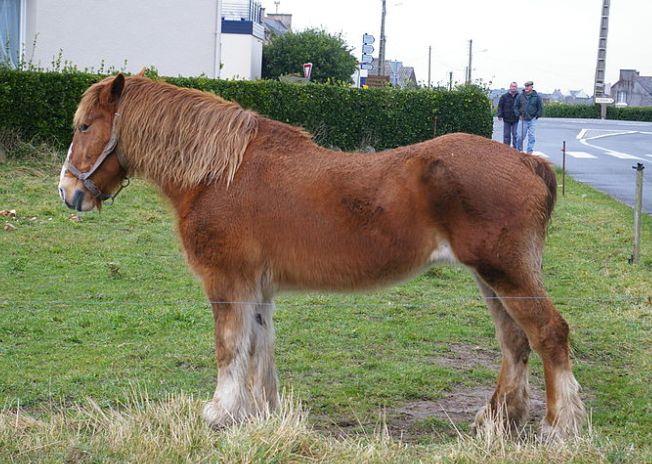
The Breton is a stocky, powerful draught horse from Brittany in north-west France, prized for strength, active paces, and a steady, workable temperament that makes it a genuine pleasure to handle. It comes in two main types: the lighter, more agile Postier and the heavier, more compact Trait. Chestnut is the classic colour, and most stand a fairly manageable 1.55 to 1.65 m at the withers, which is compact for a draught breed. If you want a horse that leans willingly into harness work and takes daily handling in its stride, the Breton earns its reputation. It is also a serious commitment: a big, strong animal that needs proper feet, forage, and routine to stay well.
History and Origin
Breton-type horses have existed in Brittany for a very long time, with selective breeding and cross-breeding shaping the modern draught horse.1, 6, 7 The lighter Postier type was influenced by trotting and harness bloodlines, with Norfolk Trotter and Hackney influence commonly cited, while heavier draught influence shaped the Trait type.1, 6, 7 One date is often misstated online: the Breton stud book is generally given as beginning in 1909, with some organisational complexity around types in the early 1900s.1, 6
Appearance and Physical Characteristics
Most Bretons present as solid, deep-bodied horses with strong bone, short-to-medium limbs, and powerful hindquarters. Heads are usually broad and fairly square, with a straight-to-slightly convex profile depending on line and type.1, 3 Height commonly runs around 1.55 to 1.65 m at the withers, and weight often falls roughly between 700 and 1,000 kg, both varying by type and stud-book line.2, 3 Chestnut is the most common colour, with other colours accepted under breed rules.2 The coat is typically dense enough for outdoor living in cool, wet weather, but that is no substitute for shelter, sensible rugging decisions, and good parasite control, especially for hard-working horses.5, 8
Postier Breton
The Postier is the more active harness type: lighter-framed, longer-lined, with a trot that suits driving, tourism work, and competition-style turnout. It was historically associated with pulling mail coaches, which is where the name comes from.1, 2
Trait Breton
The Trait is the heavier, more compact type, selected for strength and steady pulling in farm and forestry tasks. It tends to carry more mass through the shoulder and hindquarters, with a broad chest and the classic double croup often described in breed standards.2, 3
Temperament and Personality
Bretons are generally steady and workable, bred for traction and day-in, day-out handling.3 They are commonly described as docile and willing, which is a large part of the breed's appeal, but they are still big, powerful animals and deserve to be treated as such.3 A Breton in the mould of the breed is a horse that leans into the collar and shows up to work, rather than a giant, slow-moving heavy in the style of the very largest draught breeds.1, 2
Is a Breton Right for You?
Draught horses are fine to keep in Australia, so legality is not the issue here. Suitability is. The Breton is still used for draught work, particularly driving, farm and forestry tasks, and leisure or tourism harness work.1, 2, 3 Under saddle, a Breton can suit calm trail riding or general adult riding where a steady, strong horse is valued, though conformation and training matter far more than the breed label.3 If your goal is serious show jumping or eventing, this is the wrong horse: the breed's core design is traction, not high-level jumping, and you would usually be looking at different breeding priorities.1, 3 One practical note for Australian buyers. You may see claims that the Breton is increasingly popular here, but registry and import data are not published in a way that supports a confident trend. Bretons exist in Australia but are far less common than some other draught breeds, and availability usually depends on local breeders and import history rather than broad national demand.
Training and Exercise
Because Bretons are large and strong, the safest approach is calm, consistent handling with clear boundaries. Reward the right response, and do not rush the foundations: leading, standing, yielding to pressure, and harness or saddle acceptance.3, 5 Consistent exercise also does double duty as weight management, which matters a great deal for a breed that holds condition easily.5
Health and Lifespan
With good care, many horses reach their mid-to-late 20s, though individuals vary widely with workload, feet, dentistry, and health history.4, 5 One myth is worth clearing up: some sources list respiratory problems as a breed tendency, but there is no good breed-specific evidence that Bretons are uniquely prone to respiratory disease. Respiratory risk is far more about management, such as dusty hay, poor ventilation, mould, and stable conditions, than about breed.8 What matters consistently for any heavy horse is the basics, because bodyweight amplifies the consequences of neglect.
- Lameness and hoof care: keep trimming and shoeing regular, manage weight, and watch for uneven wear and low-grade soreness before it becomes a pattern.5
- Colic: reduce sudden diet changes, maintain clean water access, and prioritise consistent forage and routine. Colic can affect any horse, including draught breeds.9
- Dental issues: arrange routine dental checks, since poor chewing leads to weight loss, feed wastage, and can contribute to digestive trouble.10
Diet and Nutrition
Like all horses, Bretons are grazing herbivores designed for a forage-first diet. Most of the ration should be pasture or hay, with concentrates such as grain or manufactured feeds used only when needed for condition or workload.5 Draught breeds can be efficient keepers, which is useful in winter work but can tip into weight gain in easier conditions, adding strain on feet and joints. Regular body-condition scoring, measured feeds, and consistent exercise are the quiet tools that prevent loud problems later.5
A Few Things Worth Knowing
- In France, mainstream references note that many Bretons have been bred within meat-production systems in the modern era, which has influenced selection pressures in some lines, especially for the heavier type.1, 2, 3
- Rocinante, Don Quixote's horse, is fictional and not identified as a Breton.1
- Claims about Charlemagne's horse being a Breton are not supported by reliable breed history. Where Bretons do appear historically is in real working roles: agriculture, transport, and military logistics.1
The Bottom Line
The Breton is a compact, muscular French draught horse with active paces and a steady, willing nature that makes it well suited to driving, farm and forestry work, and general adult riding. It is legal to keep in Australia, but uncommon, so availability comes down to local breeders and import history. Choose one for what it was built to do, feed it forage-first, keep the feet, teeth, and weight in check, and it will repay the effort for a couple of decades.
References
- Wikipedia: Breton horse (overview, history, types, colours; includes stud-book date)
- Association Nationale du Cheval de Trait Breton (ANCTB): Le standard du Cheval Breton
- Energie Cheval (France): Breton Draft (uses, recognition date, general profile; cites IFCE and breed organisation)
- RSPCA: Caring for older horses (general longevity and senior-horse considerations)
- RSPCA: Horse care advice (feeding, weight, routine health basics)
- Wikipedia (FR): Breton (cheval) (stud-book history details and early organisation)
- Japan Bloodhorse Breeders' Association (JBBA): Ban'ei racing overview (context for imported heavy breeds in Japan)
- MSD Veterinary Manual: Overview of lung and airway disorders of horses (management-related risk)
- MSD Veterinary Manual: Colic in horses (risk and prevention basics)
- MSD Veterinary Manual: Dental problems in horses (importance of routine dental care)

Dog lover and writer at My Pets Australia, sharing practical breed guides and care advice for Australian pet owners.