Botia
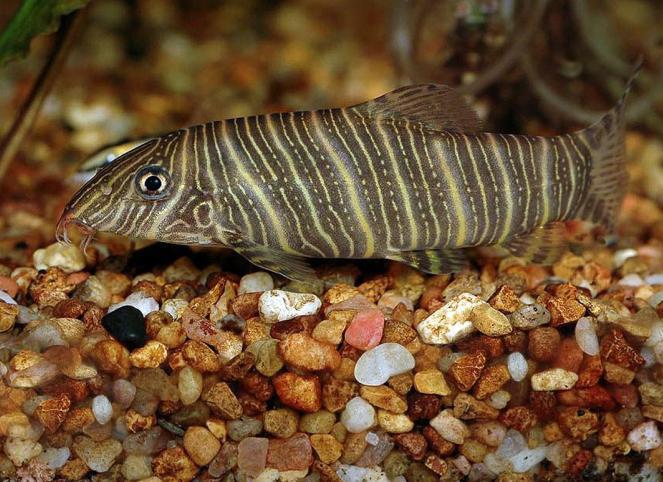
Botia loaches are active, sociable bottom-dwellers from the rivers of South and Southeast Asia, kept for their busy foraging, bold markings, and habit of coming to life around dusk. The catch is that "botia" is a loose label in the aquarium trade. Some true Botia species stay mid-sized, while other fish sold under the name, including the well-known clown loach, grow much larger. The care is similar in spirit for all of them: warm, clean, well-oxygenated water, a soft substrate, and a group of their own kind. What changes is size, temperament, and how much tank you actually need, so the scientific name on the fish tells you far more than the common name on the shop label.
What "botia" usually means
Botia is a genus of freshwater loaches (family Botiidae) from South and Southeast Asia.1 In everyday aquarium talk the word stretches to cover several related river loaches that look and behave similarly, including the clown loach (Chromobotia macracanthus).2 That looseness matters, because the common claims you see ("25 cm", "peaceful", "20-gallon tank") can be true for one "botia" and wildly wrong for another.
Quick reality check before you buy
- Ask for the scientific name. "Clown loach", "tiger botia", "dario botia", and "yo-yo loach" are not interchangeable fish.
- Plan for adult size, not shop size. Some botiids top out around 13 to 15 cm, while clown loaches are recorded to 30.5 cm total length.1, 2
- Assume it wants company. Most botiid loaches are social and behave better in groups, with enough space and hiding spots to take the heat out of squabbles.2
Natural habitat and what to copy
Wild botiid loaches live in freshwater systems across South and Southeast Asia. Depending on the species that can mean flowing creeks with rocky bottoms, larger river channels, or seasonally flooded areas.1, 2 The pattern is consistent: bottom-oriented fish, built for foraging along the substrate and slipping into cover.
In a home aquarium the closest match is a tank with strong filtration, high dissolved oxygen, steady warm temperatures, and structure such as wood, smooth rock piles, and caves, broken up by open lanes for fast, sudden bursts of swimming.
Size and lifespan
Older care sheets list "up to 25 cm" and "up to 10 years" as if they apply to every Botia. In practice both depend on the exact fish.
- True Botia example: Botia lohachata (often sold as a yo-yo loach) is listed with a maximum length of about 15.4 cm total length on FishBase.1
- Clown loach, commonly lumped in as "botia": FishBase lists a maximum length of 30.5 cm total length for Chromobotia macracanthus.2
Lifespan is just as variable and is strongly affected by water quality, tank size, and long-term stress. Treat "10 years" as a rough mid-point, not a guarantee.
Behaviour and social life
These loaches are active bottom-dwellers that spend daylight hours tucked into cover and get bolder around dusk, especially in a settled tank. In groups they show complex social behaviour: short chases, jostling, and a loose hierarchy that tends to calm down when there are enough individuals and enough space.3 Kept on their own, many botiid loaches become withdrawn or, in some cases, more reactive and nippy. A proper group spreads attention and makes their behaviour read less like aggression and more like busy, restless foraging.
Compatibility: peaceful, boisterous, or pushy?
Temperament is species-dependent. Some are largely community-safe, others are boisterous and can intimidate smaller fish. Even the "peaceful" ones can be too much for slow, long-finned tank mates, and cramped tanks amplify every sharp edge of behaviour.3 As a rule of thumb, pair them with robust, similarly sized fish that tolerate warm water and current. Avoid delicate long fins and very small, timid species if your loaches are large, fast, or known fin-nippers.
Diet and feeding
Botiid loaches are omnivores. In the wild and in captivity they take a mix of animal foods (worms, crustaceans, small invertebrates) and plant material, so they do best on variety rather than one staple.2
- Good base: quality sinking pellets or wafers.
- Protein variety: frozen or live foods such as brine shrimp, daphnia, and bloodworms, as part of a rotation rather than the whole diet.
- Plant matter: small amounts of blanched veg can help round out the diet.
Feed small portions and watch the substrate. These fish are enthusiastic eaters, but leftover food quickly turns into ammonia and trouble in the water column.
Tank requirements
The old "20 gallons" minimum is too broad to trust. Some smaller botiids may cope in modest tanks, but many "botia" sold in shops are energetic schooling loaches that need length and floor area more than height.
Water conditions
Most botiid loaches come from warm tropical freshwater. FishBase lists a broad tolerance for the clown loach: pH 5.0 to 8.0, hardness 5 to 12 dH, and 25 to 30 °C.2 Many aquarium guides keep them a little more narrowly for stability, roughly mid-20s °C, soft to medium hardness, and neutral to slightly acidic water. The detail that matters most is not chasing a perfect pH number, it is clean, stable, oxygen-rich water with strong filtration and regular maintenance.
Substrate and decor
Choose sand or smooth, fine gravel. These fish spend their lives probing and sifting, and sharp gravel or jagged decor can damage barbels and skin. Build several hiding places such as tubes, caves, and wood tangles so subordinate fish can disappear without being trapped.
Tank size and group size
Size the tank to the species and to the adult fish, not the juvenile in the bag. A medium botiid kept in a proper group needs floor space, and large species like clown loaches need a genuinely big aquarium over the long term. FishBase notes clown loaches are best kept in groups of five or more and gives a minimum aquarium length of 150 cm for the species.2
Breeding at home
Older care sheets claim Botia "lay eggs in caves or crevices" and describe routine breeding. For many botiid loaches, successful home breeding is uncommon and methods vary by species. FishBase lists Botia lohachata as oviparous (egg-laying), but that does not mean it will breed readily in a standard community tank.1 If breeding is your goal, start with an exact species ID and species-specific guidance. Otherwise, assume you are keeping a long-term display fish, not running a breeding project.
Health and the "white spot" name trap
Loaches are often sensitive to poor water quality and stress, and they are widely regarded as prone to outbreaks of Ichthyophthirius multifiliis (ich, or white spot) when newly purchased or when conditions slip.
White spot in fish versus white spot disease in prawns
In Australia, "white spot disease" is also the name of a serious viral disease of prawns and other decapod crustaceans (WSSV). It is not the same thing as ich in aquarium fish.4 The shared name causes endless confusion, especially when people are searching in a hurry. The prawn disease is covered in the national AQUAVETPLAN manual.7
Ich: prevention first
Ich is commonly introduced with new fish or shared equipment. A quarantine period for new arrivals is strongly recommended, and equipment should not be shared between systems unless it is disinfected.5
Ich: treatment basics
The visible white spots are only part of the parasite's life cycle. Treatments work best when repeated over time to catch the free-swimming stages, not just the spots you can see.5 Provide vigorous aeration during treatment and follow the product directions closely. In the United States, the FDA has publicly noted Faunamor as a legally available treatment indexed for ich in ornamental finfish (April 8, 2025).6 Availability and legal status vary by country, so check what applies where you live before medicating.
The bottom line
Botia loaches are rewarding, characterful fish once you get past the name. Identify the exact species before you buy, plan for the adult size, keep them in a group with clean warm water and plenty of cover, and most of the common problems never start. A clown loach sold as a small "botia" is a fish that can reach 30 cm and needs a large tank for years, so match the animal to the space you actually have.
References
- FishBase, Botia lohachata (species summary)
- FishBase, Chromobotia macracanthus (clown loach) (species summary)
- Aquatic Arts, Serpent Loach/Botia (care notes on grouping, parameters, diet)
- Outbreak.gov.au, White spot disease (WSSV) and note distinguishing it from aquarium fish "white spot"
- University of Florida IFAS Extension, Ichthyophthirius multifiliis (White Spot) infections in fish
- U.S. FDA, announcement on legally available treatment for ich in ornamental pet fish (April 8, 2025)
- Australian Government Department of Agriculture, Fisheries and Forestry, AQUAVETPLAN white spot disease of prawns (WSSV) manual
- FishBase, Botia lohachata (alternate FishBase summary access)

Dog lover and writer at My Pets Australia, sharing practical breed guides and care advice for Australian pet owners.