Blue Ground Dove
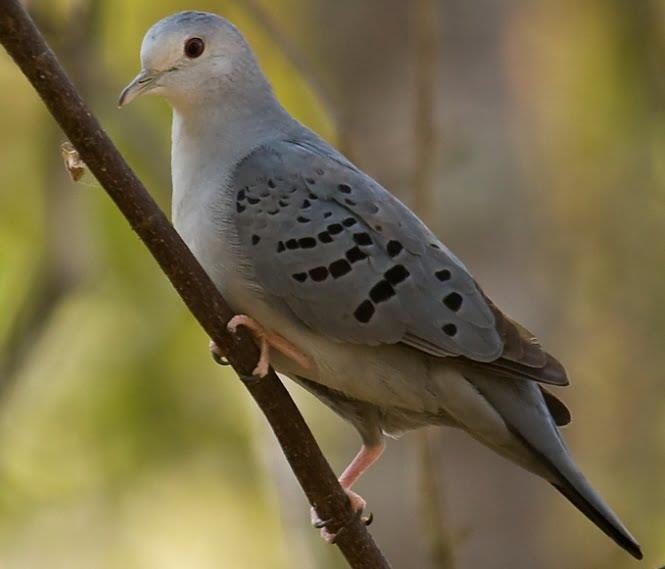
The Blue Ground-Dove (Claravis pretiosa) is a small, neatly built dove of the Americas, and it is a genuinely pretty bird: males are a soft blue-grey with bold dark spotting across the wings, while females wear an earthier brown. Most people meet it as a quiet shape slipping through forest edges and clearings, feeding on the ground before ducking back into cover. It is not an Australian species, and it is not a bird you keep as a pet, so this is an identification and natural-history guide rather than a care sheet. If you have seen a small blue or brown dove in Australia, this almost certainly is not it. The notes below cover what the bird actually looks like, where it lives, and how to tell it apart from the many other small doves it gets confused with.
Quick Facts
Common name: Blue Ground-Dove
Scientific name: Claravis pretiosa
Family: Columbidae (pigeons and doves)
Size: About 20 cm long, roughly 65 to 72 g (varies by sex and condition)1
Conservation status: Least Concern (global)2, 3
Appearance and Field Marks
The Blue Ground-Dove is a small, slender dove with a long, pointed tail and a low profile when it feeds. The sexes look strikingly different. Males are mostly blue-grey, with blackish flight feathers and a distinctive pattern of dark spotting on the wings. Females are warmer brown overall, still marked with darker wing spots, and can look like a different bird entirely at a quick glance.1
- Male: blue-grey body, blackish flight feathers, bold dark spotting across the wings.1
- Female: brown head and breast with paler underparts, wing spotting still obvious, overall more earthy than the male.1
- Shape: small dove with a relatively long tail, often seen walking and feeding on the ground in semi-open cover.1
Habitat
This species favours semi-open places with cover close by: forest edges, open woodland, clearings, roadside vegetation and similar habitat mosaics, often in more humid landscapes. It is usually described as a ground-feeding dove, but it also uses low trees and shrubs for resting and nesting.1
Range and Distribution
The Blue Ground-Dove is a New World species, so it does not occur anywhere in Australia. Its range runs from south-eastern Mexico through Central America into South America, reaching as far as northern Argentina, and it also occurs on Trinidad.1, 4
If you are searching from Australia, a "blue ground dove" report is usually one of three things: a misheard name, a misidentification, or a reference to a different ground-dove species entirely. The scientific name is the quickest way to pin down which bird a source is describing.
Diet and Foraging
Like many small doves, the Blue Ground-Dove feeds mostly on seeds taken from the ground. It also takes small insects, and it swallows grit to help grind food in the gizzard.1, 5
Behaviour
Most sightings are of single birds or pairs, moving quietly along the ground under light cover and pausing to feed before slipping back into vegetation. The general impression is of a bird that prefers to stay unobtrusive, even in fairly open country.1
Breeding and Nesting
The nest is a light, flimsy platform of twigs, usually placed above the ground in a tree or shrub, often recorded from about 1 to 11 m high. Clutch size is typically two white eggs.1
Threats and Conservation Status
Globally the Blue Ground-Dove is listed as Least Concern. That does not mean it is untouched by change, and local declines can still happen where habitat is cleared or heavily altered, but it is not currently assessed as globally threatened.2, 3
Similar Species and Common Mix-Ups
Confusion usually comes from the general ground-dove look: small-bodied doves that feed low, flush quickly, and show only subtle differences in wing pattern and tail shape. In the Americas, females can be mistaken for other small brown ground-doves. In other parts of the world the mix-up is more basic, with similar common names being applied to completely different species.
If you are checking a sighting, focus on the combination of male blue-grey plumage, strong wing spotting, and the species being recorded within its New World range.1, 4
References
- Wikipedia, "Blue ground dove" (summary of identification, range, habitat and breeding, cites BirdLife International)
- IUCN Red List of Threatened Species, search entry for Claravis pretiosa (conservation status)
- Birds of the World (Cornell Lab), Blue Ground Dove (Claravis pretiosa) species account (status and taxonomy overview)
- U.S. Fish & Wildlife Service, Blue Ground Dove (Claravis pretiosa) species profile
- Birda, Blue Ground Dove (diet notes: seeds, small insects, grit)

Dog lover and writer at My Pets Australia, sharing practical breed guides and care advice for Australian pet owners.