Beauceron
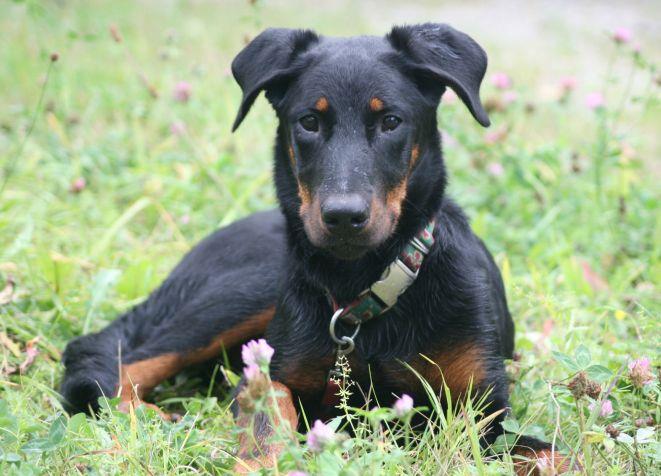
The Beauceron (also called the Berger de Beauce or Bas Rouge) is a French sheepdog and guard dog: large, athletic, quick to learn, and known for a very particular hallmark, double dewclaws on the hind legs. In the right home, with steady routines and real work to do, it becomes a capable, watchful companion that bonds closely with its people. It is also a serious commitment. Get the exercise, training, and structure right and you have a steady partner; skip them and you get a powerful adolescent who invents their own job. This guide covers what the breed is actually like to live with, grounded in recognised breed standards and veterinary guidance.1, 2, 3
Beauceron at a glance
- Origin: France1, 2
- FCI group: Group 1 (Sheepdogs and Cattledogs), with working trial1
- Size (height at withers): Males 65 to 70 cm; females 61 to 68 cm4, 1
- Coat: Short on the head; short, thick, coarse on the body (about 3 to 4 cm)4
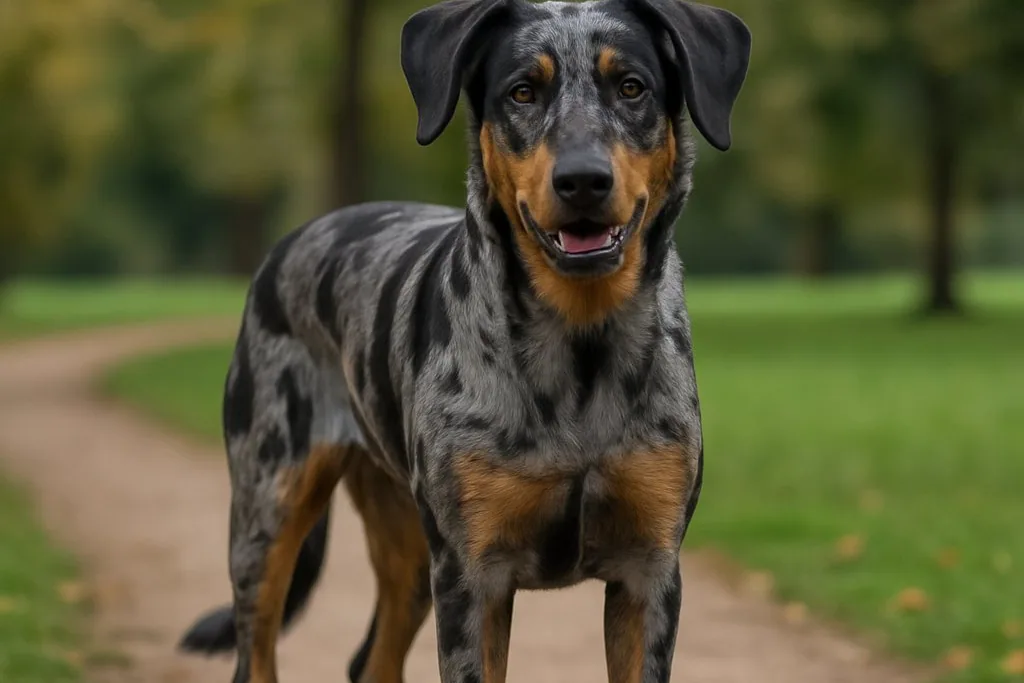
- Colours: Black and tan ("Bas Rouge") or harlequin (grey and black with tan markings)4, 5
- Distinctive feature: Double dewclaws on the hind legs are part of the breed standard4, 6
- Typical lifespan: Often cited around 10 to 12 years, varying with genetics, care, and luck7
History and Origin
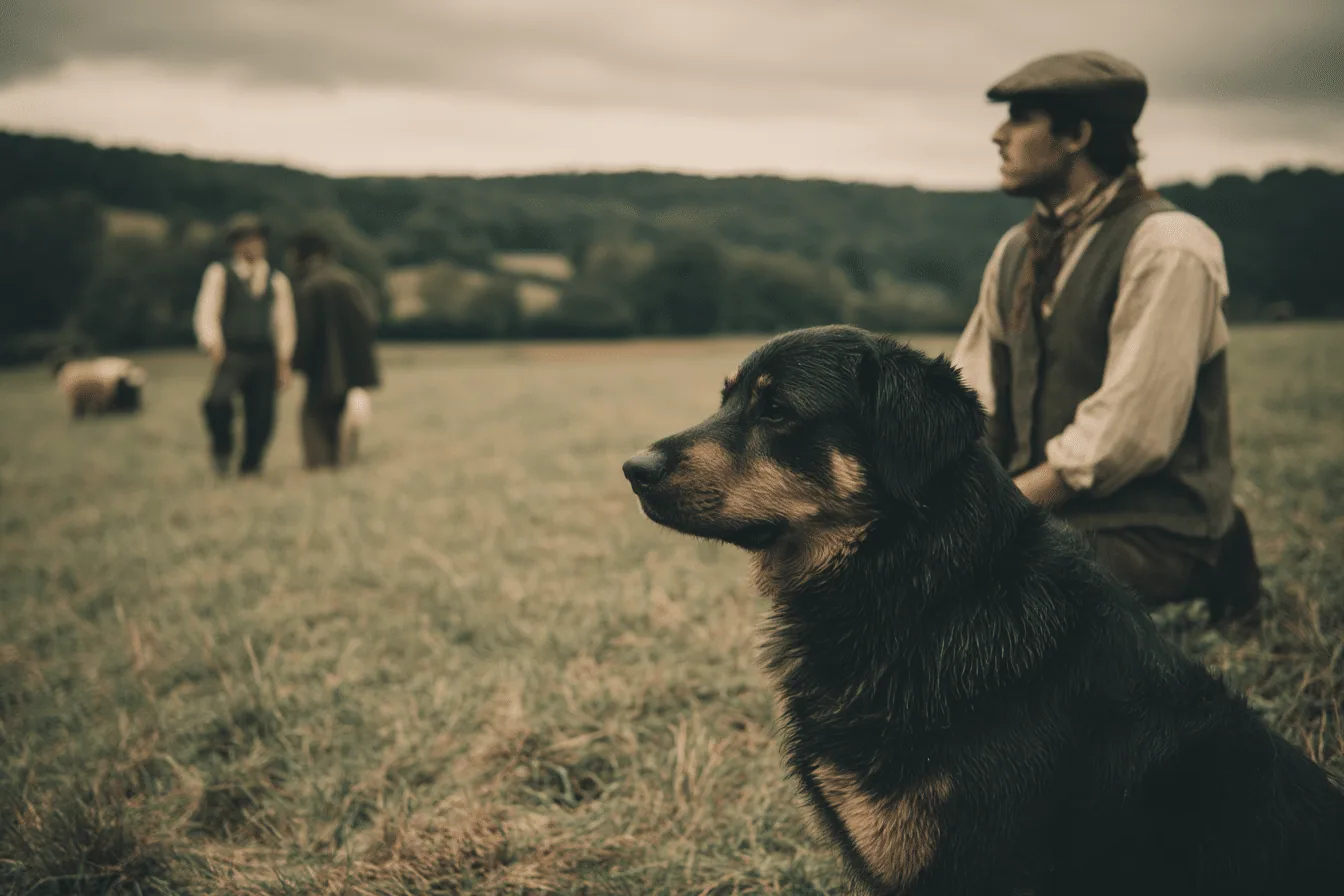
The Beauceron is an old French working breed, developed for moving and guarding livestock across open country. Modern breed standards still define it as a sheepdog and guard dog, and the overall shape reflects that purpose: endurance, efficient movement, and a body built for long, steady work rather than short bursts.1, 6
Appearance and Physical Characteristics
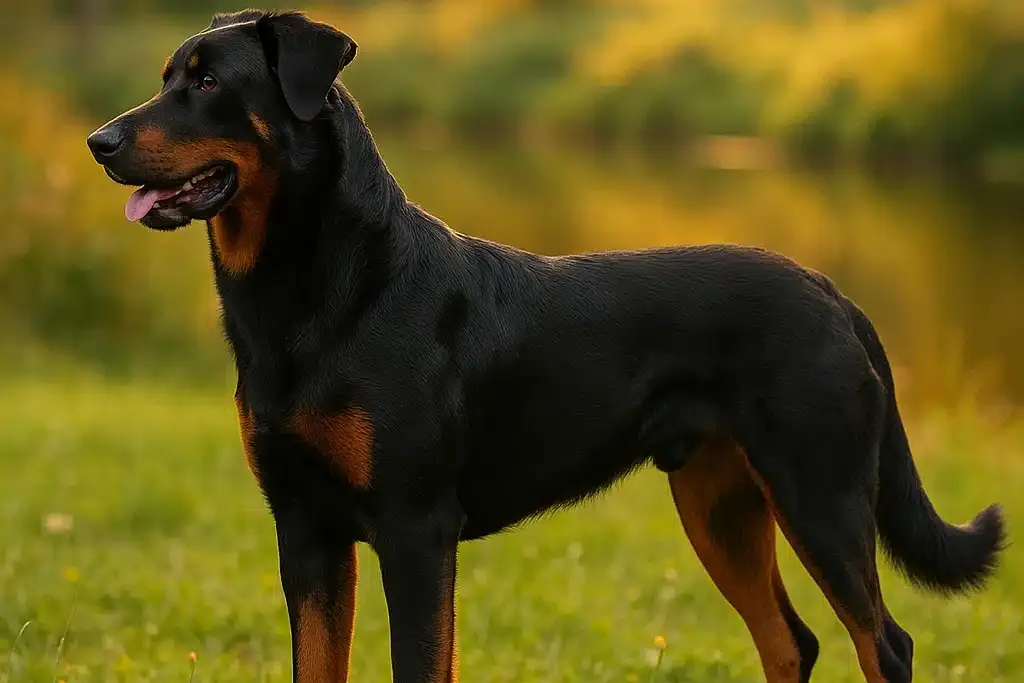
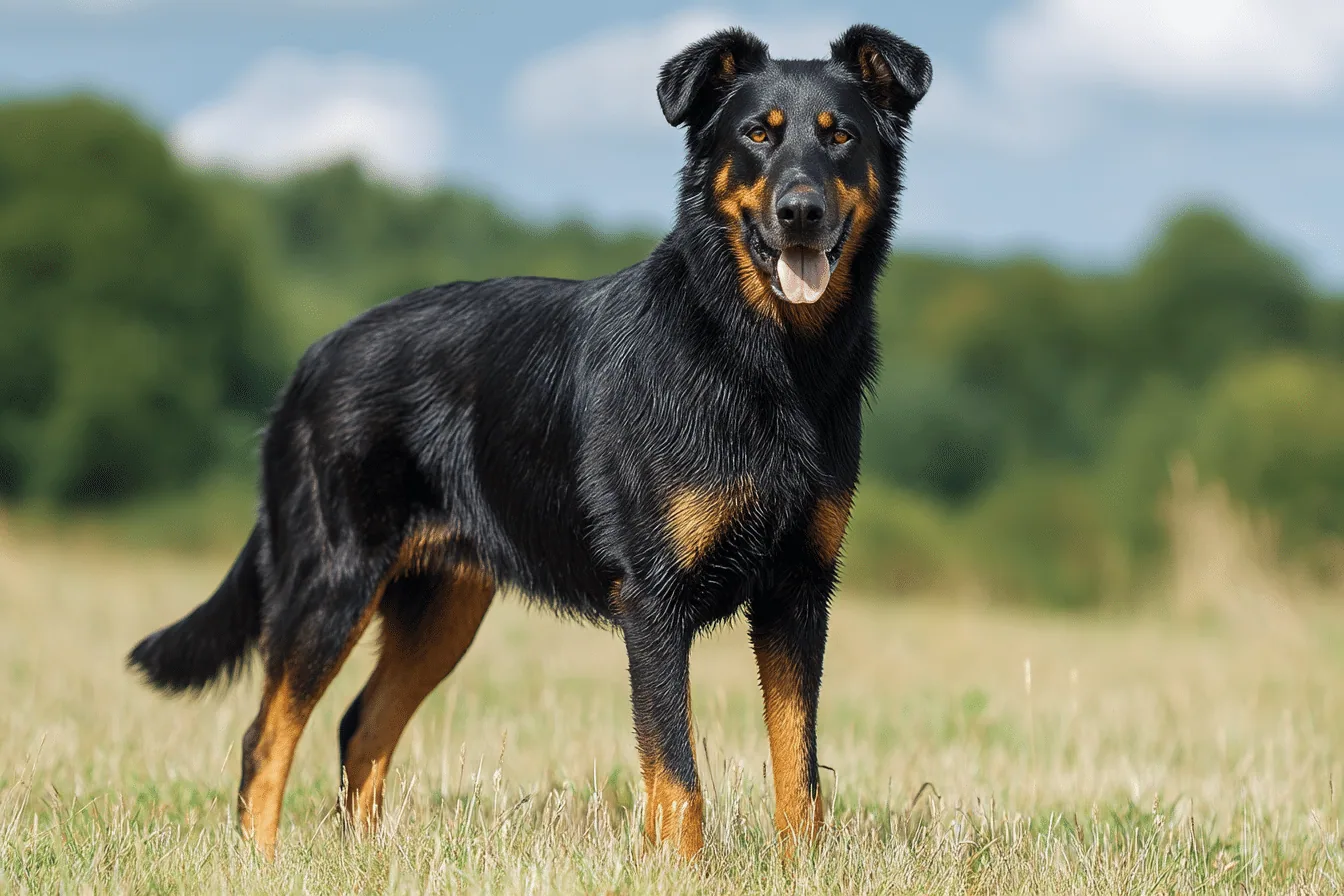
A Beauceron is large, strongly muscled, and athletic without looking heavy. In profile the outline is clean and practical: a short, firm coat; a long tail carried low with a slight hook at the end; and a head that reads as rustic and alert rather than refined.4, 8
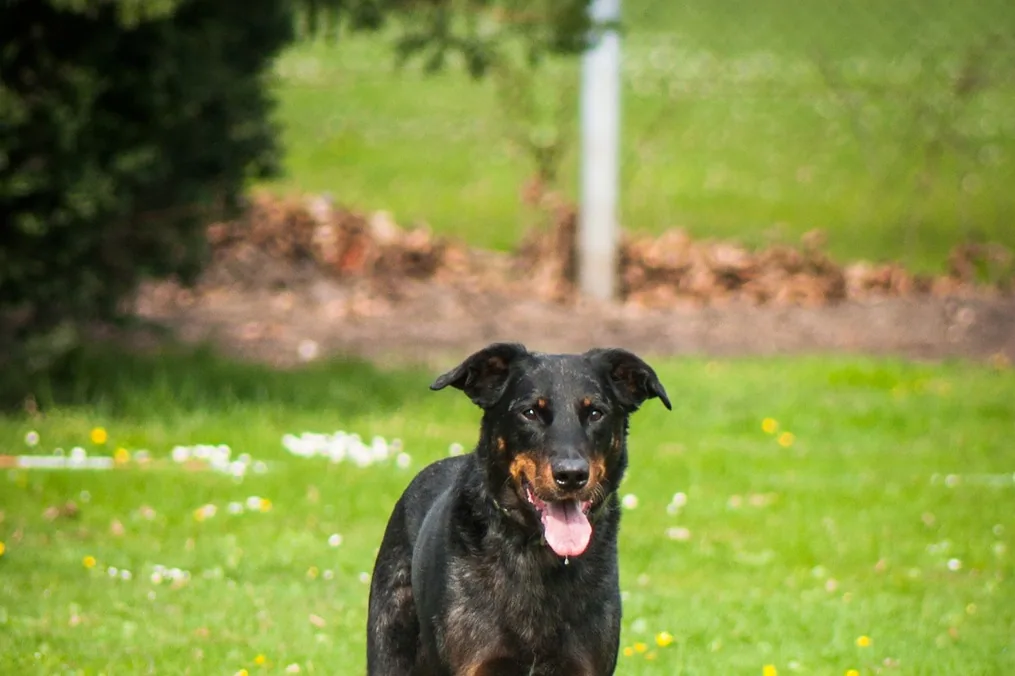
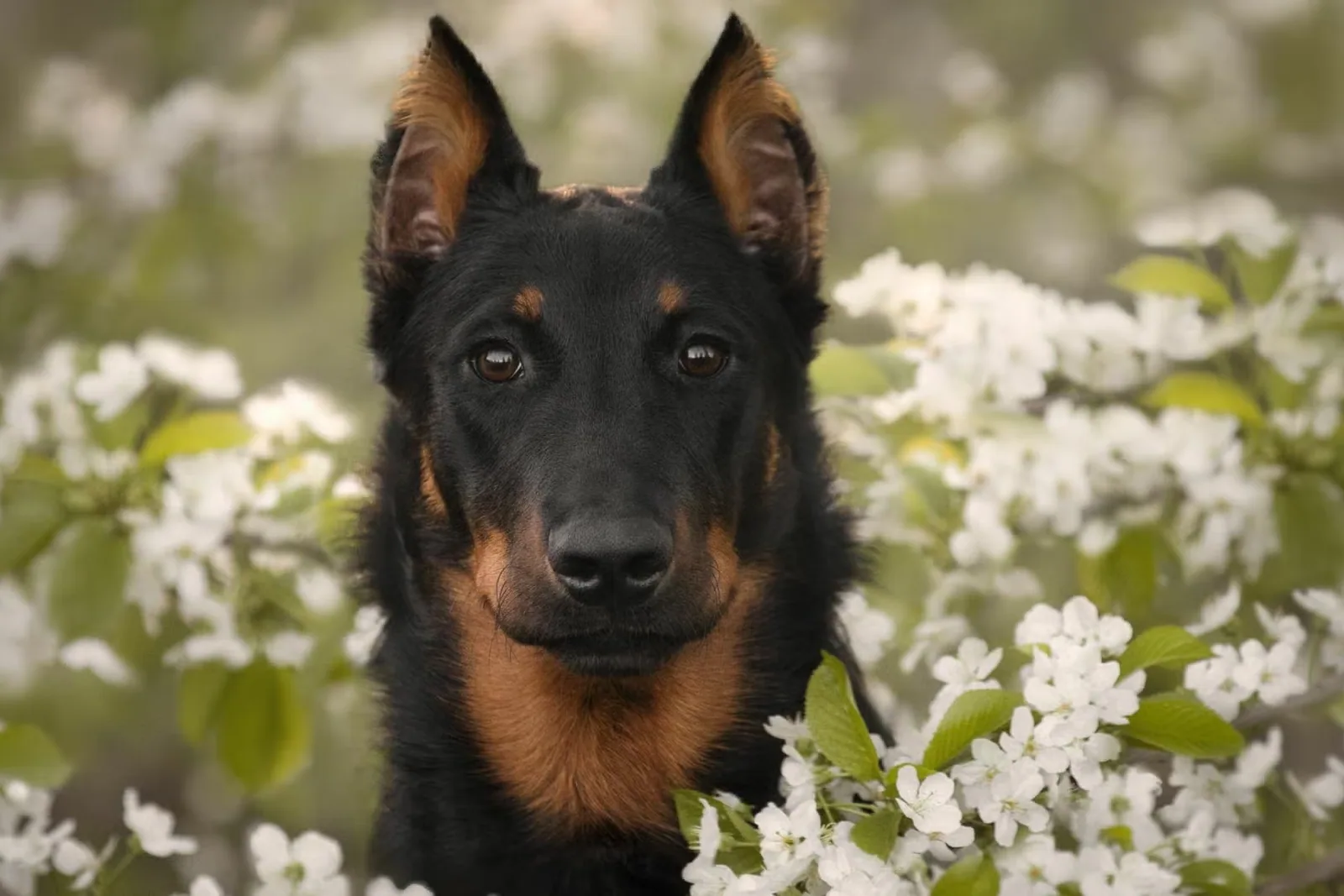
One detail matters most when you are identifying the breed. The hind legs should carry double dewclaws, and in breed standards the absence of these dewclaws is treated as a serious fault, disqualifying in some standards.4, 5
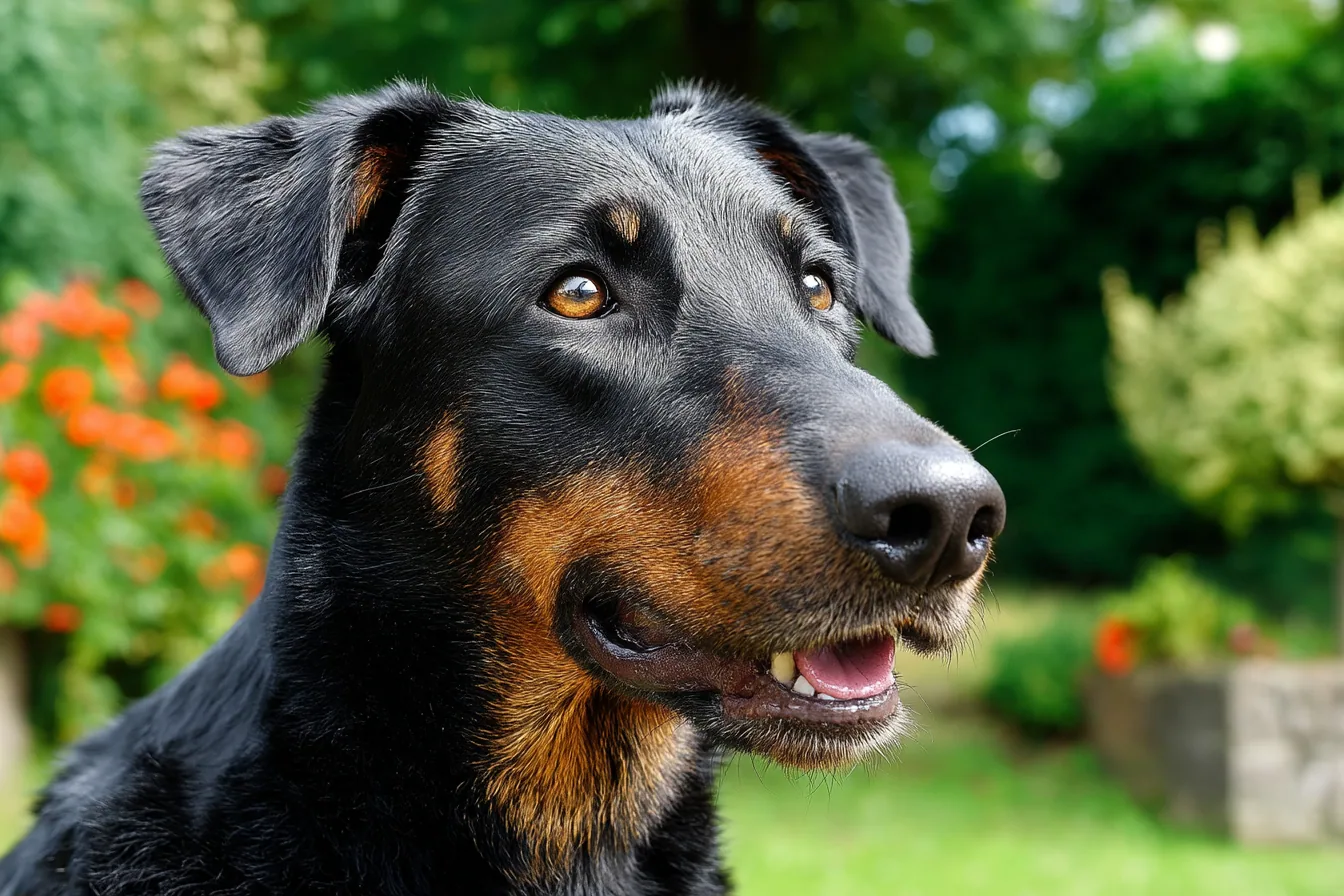
The coat is short on the head and short, thick, and coarse on the body. Colour is either black and tan ("Bas Rouge") or harlequin, a mix of black and grey with tan markings. A small white spot on the chest may be tolerated in some standards, but other colours are not accepted by the major kennel clubs.4, 8
Temperament and Personality
Well-bred Beaucerons are typically steady, intelligent, and vigilant. They notice changes in their environment and tend to take their own responsibilities seriously. They often bond closely with their household and can be protective, especially when they have had clear guidance and thoughtful socialisation from an early age.6, 9
This is not a breed that thrives on being left to entertain itself. Without enough structured exercise, training, and time alongside their people, many become restless and pushy. The behaviour can look like stubbornness, but it is usually a working brain looking for a job.9
Is a Beauceron Right for You?
A Beauceron can live well in a family home, but the match needs to be deliberate. For a household that likes structure, plenty of daily activity, and training as a routine rather than a phase, it is a rewarding dog. For someone after a low-maintenance pet, honestly, no. Their size, strength, and herding instincts all pull toward work, and that work has to come from you.
With children, supervision matters, especially with toddlers, because an adolescent Beauceron can bowl into space without malice and still cause injury. With other pets, early introductions and consistent management usually make the difference, since the breed's natural drive can tip into chasing if it has not been shaped early.
Training and Exercise
The Beauceron was built for daily work, so most individuals need more than a casual stroll. Aim for a mix of physical outlets and mental tasks, and expect the dog's needs to peak through adolescence.
- Daily movement: brisk walks, running beside you once mature, structured play, and room to move safely.
- Brain work: obedience, scent games, tracking foundations, retrieving with rules, or well-run dog sports.
- Training style: calm, consistent, reward-based methods suit the breed's sensitivity and intelligence. Harsh handling tends to create conflict, not reliability.
- Socialisation: early, ongoing, controlled exposure to people, dogs, places, and handling helps the dog grow into its size without becoming reactive.
Health and Lifespan
No breed is problem-free, and large, deep-chested working dogs come with predictable risks. Beaucerons are often cited as living around 10 to 12 years.7 The most important step is choosing a breeder who can show health testing and a long-term commitment to the dogs they produce.
Hip dysplasia
Hip dysplasia occurs in many breeds and can range from mild looseness to painful arthritis. Screening and thoughtful breeding decisions help reduce the risk, but they do not guarantee outcomes for an individual dog.6
Gastric dilatation-volvulus (GDV, "bloat")
GDV is an emergency where the stomach distends and may twist. It is more common in large, deep-chested dogs and can become life-threatening very quickly. If you own a Beauceron, learn the early signs (unproductive retching, a distended abdomen, sudden agitation, collapse) and have an emergency plan in place.10
Heart disease (including dilated cardiomyopathy)
Breed clubs commonly flag dilated cardiomyopathy (DCM) as a condition to take seriously in Beaucerons. Your vet may recommend heart screening, especially where there is a family history.6
Grooming and Care
Despite their size, Beaucerons are usually straightforward to maintain. The coat is short and functional, designed to shed dirt and weather.
- Brushing: once a week is often enough, with more during seasonal shedding.
- Bathing: only as needed, since over-bathing can dry the skin.
- Nails and dewclaws: keep nails trimmed and check the hind dewclaws regularly. Two per leg means more to monitor for overgrowth and snagging.
- Teeth and ears: routine tooth brushing and basic ear checks help prevent common problems.
A Few Things Worth Knowing
- Working heritage runs deep. Breed standards still define the Beauceron as a sheepdog and guard dog, and that shows in daily life: watchful, responsive, and ready to act. The breed turns up in herding, protection sports, and other structured outlets where clear rules and close handler partnership are part of the job.1, 6
- Take service-work claims with caution. Claims that the breed is "increasingly used" by Australian police or military units are hard to verify and often repeated without evidence. Individual Beaucerons may work in demanding roles, but the safer assumption is that they are capable of that work when bred and trained for it, not that specific agencies routinely use them.
- Check the paperwork when buying in Australia. Meet the dog where it lives, ask for health and identification paperwork, and avoid sellers who will not let you see the animal in a normal home setting. In NSW, advertisements should include a Breeder Identification Number (BIN) or Rehoming Organisation Number (RON) that you can check.3
The Bottom Line
The Beauceron is a clear-eyed working dog: large, quick to learn, and often quietly intense. With steady routines, real exercise, and training that continues past puppyhood, it becomes a capable companion with a calm, watchful presence. In the wrong setting, the same traits turn into friction, noise, and constant negotiation. Go in knowing which version you are signing up for.
References
- Fédération Cynologique Internationale (FCI), Berger de Beauce (No. 44) breed listing
- Dogs Australia, Beauceron (Berger de Beauce) breed standard (FCI standard reference)
- NSW Department of Primary Industries, Buying or adopting a dog (responsible breeder checks)
- The Kennel Club (UK), Beauceron breed standard (size, coat, colour)
- Dogs Global, FCI Beauceron standard summary (size, colours, dewclaws)
- American Beauceron Club, About the breed (health topics including hips, DCM, bloat)
- The Spruce Pets, Beauceron breed overview (general characteristics and lifespan)
- American Beauceron Club, Breed standard (description and key features)
- American Kennel Club (AKC), Beauceron breed information
- Cornell University College of Veterinary Medicine, Gastric dilatation-volvulus (GDV/bloat)

Dog lover and writer at My Pets Australia, sharing practical breed guides and care advice for Australian pet owners.