Australian Brumby
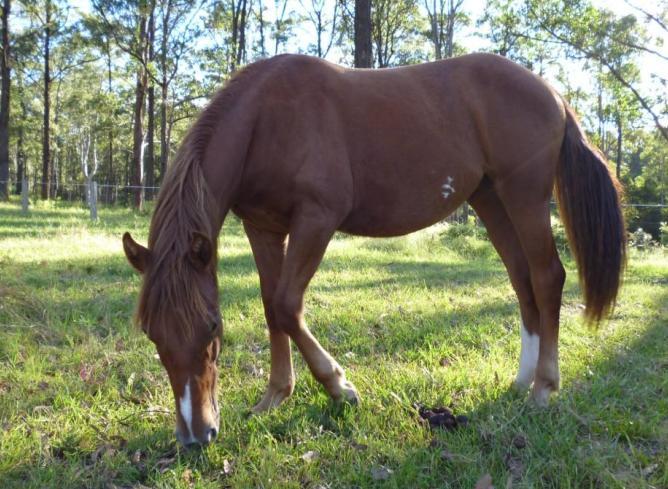
The Brumby is Australia's free-roaming feral horse, descended from domestic stock that escaped or was released after European settlement. It holds a strong place in Australian storytelling, especially in mountain and bush settings, and watching a mob move through alpine country is genuinely memorable. Brumbies are hardy and adaptable, and they turn up across many parts of the country rather than just the outback. They are also at the centre of a long-running argument, because the same horse is treasured as living heritage in one conversation and managed as an invasive pest in the next.1, 2
Quick Facts
- What a Brumby is: A free-roaming feral horse in Australia, not a native species.1
- Size and weight: Varies widely, because Brumbies are not a single standardised breed. Height is measured in hands at the withers (the shoulder).1
- Coat and colour: Highly variable, reflecting their mixed ancestry.1
- Habitat: Found in many parts of Australia, including national parks. They are not limited to the outback.1
- Conservation status: Not listed as a threatened species. In several regions they are managed as a pest because of their environmental impacts.2
Where Brumbies Came From
Brumbies descend from domestic horses brought to Australia after European settlement. Over time, escaped, lost, or deliberately released horses formed free-roaming populations that adapted to local conditions. Different landscapes produced different types of horse rather than one uniform breed.1
What Brumbies Are Like Up Close
In the wild, Brumbies live in social groups and spend most of the day moving and grazing, tracking water and fresh feed across large areas. Their hard hooves and their habit of following the easiest lines through country, along creek flats, bog edges, and soft ground, are part of what makes them both resilient and, in some habitats, damaging.1
Because Brumbies come from mixed domestic stock, temperament and trainability vary a great deal between individuals. Any claim that they are always independent or always willing to please is better treated as a possibility than a guarantee.
Brumbies and Australian Culture
Brumbies carry a powerful cultural image in Australian storytelling, especially in mountain and bush settings. That symbolism sits alongside a more administrative reality, because many populations are now managed explicitly to reduce damage to national parks and catchments.2
Why Brumby Numbers Are Controversial
The heart of the debate is straightforward. In certain ecosystems, especially alpine and subalpine wetlands, large hoofed animals can cause outsized change. Trampling and grazing can break up fragile peat soils, erode streambanks, and reduce water quality, and the damage can be slow to reverse even after horse numbers fall.3, 4, 5
In Kosciuszko National Park, NSW, government reporting has repeatedly linked wild horses with impacts on soils, waterways, and threatened species habitat, and set a legal population target as part of management planning.2, 3
A Real Example: Kosciuszko National Park Targets and Counts
In Kosciuszko National Park, the management plan set a target of reducing wild horses to 3,000 by 30 June 2027.3
NSW National Parks and Wildlife Service surveys have reported wide-ranging estimates over time. A November 2022 survey estimated 18,814 horses, with a 95% confidence interval of 14,501 to 23,535.6 Later reporting on the 2024 count described a much lower range of 1,579 to 5,717 in the park's retention zones, reflecting substantial removals and the difficulty of counting animals accurately across rugged terrain.7
How Brumbies Are Managed
Management tools vary by location and policy, but they commonly include:
- Trapping and rehoming, where suitable horses and homes are available.
- Mustering, bringing horses out for rehoming or other outcomes.
- Ground shooting under regulated protocols.
- Aerial shooting in specific programs, argued by governments as a way to reduce numbers faster in remote terrain, with stated welfare auditing and veterinary oversight requirements.3, 8
In NSW, aerial shooting was added to the Kosciuszko plan in October 2023 as an approved control method, alongside trapping, rehoming, and ground shooting.3
Rescue and Rehoming
Brumby advocacy and rescue groups are most visible when removals intensify. Rehoming can be a meaningful pathway for some horses, particularly younger animals that adapt to domestic handling. It does not scale easily to the size of some wild populations, and it depends on resources, training capacity, and long-term horse welfare after adoption.
Viewing Brumbies Responsibly
Seeing Brumbies in the landscape can be memorable, particularly in Australia's alpine parks. If you visit areas where horses are present, keep the same distance you would from any large wild animal, avoid feeding them, and stay on tracks around wetlands and creek flats, places that are already under pressure from hooves and human feet alike.2
The Bottom Line
The Brumby is not a native wildlife species, but it is a real and long-established part of modern Australian landscapes. In tougher country it can look perfectly at home, head down in winter grass, moving in a loose line towards water, yet the places it prefers are often the places least able to absorb that weight. Good management tends to be the quiet kind: careful counting, clear targets, and methods matched to the terrain, carried out with strict welfare standards and public accountability.2, 6, 8
References
- Encyclopaedia Britannica: Brumby
- NSW Environment & Heritage: Managing wild horse impacts in Kosciuszko National Park
- NSW Government media release (27 October 2023): Aerial shooting to reduce wild horse population in Kosciuszko National Park
- RMIT University (2023): Study on feral horses and peatland carbon emissions (Kosciuszko National Park)
- Australian Alps National Parks: Thesis on impacts of feral horses in sub-alpine and montane environments
- NSW Government: Proposed amendment to Kosciuszko wild horse management (includes 2022 survey estimate and confidence interval)
- ABC News (20 May 2025): 2024 Kosciuszko wild horse survey range and management update
- NSW Environment & Heritage: Amending the Kosciuszko wild horse plan (aerial shooting safeguards and rationale)

Dog lover and writer at My Pets Australia, sharing practical breed guides and care advice for Australian pet owners.