Ariel Toucan
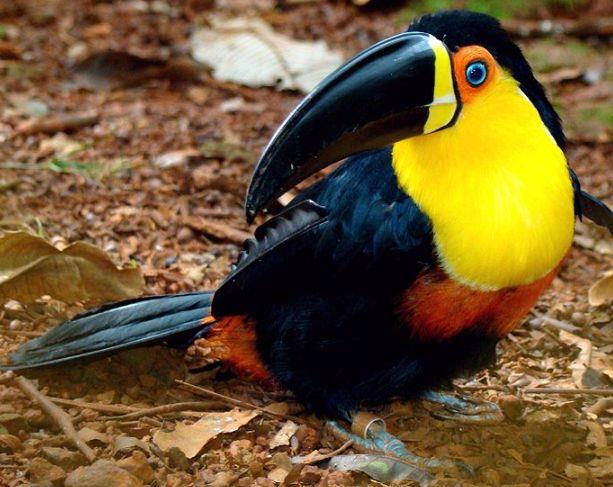
The Ariel toucan, usually listed as Ramphastos ariel, is a striking Brazilian toucan with a dark body, warm-toned underparts, and the big, bright bill the whole family is famous for. Most people search the name to work out one thing: is it a real species, or just a nickname someone has attached to another toucan? That question is worth asking, because online summaries often blend several different birds together, and a few even mix in unrelated topics, which leads to bad assumptions about size, diet, and legal status. This guide focuses on Ramphastos ariel and flags clearly where the information is general to toucans or to closely related Ramphastos species. One thing to settle up front for Australian readers: this is a bird to understand and admire, not a realistic pet here.
Keeping Toucans in Australia
Toucans are exotic, non-native birds, and they are not part of established Australian aviculture. Bringing one in would run into strict federal import controls plus state and territory wildlife rules, so whether a toucan can be kept at all depends on that layer of law rather than on simple availability. If you are looking into any exotic bird, ownership depends on state law, and you should check with your state or territory wildlife authority before going further. If you want a bird you can genuinely keep, look at the many parrots and finches that are legal and well suited to Australian homes.
Quick Facts at a Glance
- Scientific name: Ramphastos ariel1
- Where it occurs: Mainly Brazil, with some sources also reporting eastern Bolivia3, 4
- What it eats: Mostly fruit, plus insects and small vertebrates taken opportunistically6
- Nesting: Tree cavities, typically 2 to 4 eggs in many Ramphastos toucans, though species details vary2, 7
- Conservation status: Reported as threatened in some sources. Check the current IUCN listing for Ramphastos ariel if you need a definitive status for policy or trade decisions4, 8
What Is an Ariel Toucan?
The Ariel toucan is commonly listed as Ramphastos ariel, a member of the toucan family, Ramphastidae. In older or informal contexts, the name "Ariel" is sometimes used loosely in aviculture for a smaller, dark-bodied Ramphastos toucan with a striking bill and bright facial skin. That loose usage is one reason measurements and status claims drift between sources.1
Appearance and Size
Descriptions of Ramphastos ariel emphasise a mostly dark, often purplish-black body, warm-toned underparts, and bare skin around the eye that can look vividly coloured in good light. Some sources also describe a brilliant blue eye and red orbital skin, which can be a key field mark in captivity photos and close views.1, 4
Be cautious with exact measurements. One older draft listed 29 to 33 cm and 130 to 230 g, but at least one detailed species profile for "Ariel" gives a larger, heavier bird, around 38 cm (15 inches) long and roughly 350 to 400 g. Different toucan species can look similar at a glance, and "Ariel" is not used consistently across all references, so size is one of the first things to double-check when identifying a bird from a photo or a listing.1
Where It Lives
Rather than ranging broadly across Central and South America, Ramphastos ariel is most often described as occurring in Brazil, including disjunct populations in parts of the country. Some sources also report a presence into eastern Bolivia, but Brazil is the centre of gravity in most distribution summaries.3, 4
Like many toucans, it is associated with forested habitats and is frequently linked with fruiting trees. Toucans spend much of their time in the canopy and upper levels of forest, moving between feeding trees and nesting hollows.6
Diet and Feeding
Toucans are best thought of as fruit specialists that do not refuse animal protein when it is easy to take. Across the family, fruit forms the bulk of the diet, with insects and small vertebrates taken opportunistically, and some species also take eggs or nestlings on occasion.6
In aviculture, "Ariel" toucans are described as needing fresh fruit daily, with protein provided carefully, often as insects or formulated low-iron diets. Captive toucans can be prone to iron-storage disease if fed inappropriate foods, so diet is not a casual detail.1
Breeding and Life Cycle
Toucans generally nest in cavities, using natural hollows or old woodpecker holes rather than building an open nest. Many Ramphastos toucans lay a small clutch of white eggs, and both adults typically share incubation and chick care. Reported clutch sizes of 2 to 4 are common across the group. Incubation in some Ramphastos species runs roughly 16 to 19 days, with fledging often around 40 to 50 days after hatching.2, 7
Exact timing, including breeding months, incubation length, and fledging age, can vary by species and location. If you are trying to confirm a breeding claim for Ramphastos ariel specifically, use a specialist database or a peer-reviewed species account rather than a general toucan summary.
Threats and Conservation
Forest loss is the broad pressure that follows toucans through much of their range. Remove the large trees and you remove both the fruit supply and the nesting hollows. Where hunting or trapping occurs, the impact can be sharper in fragmented habitats, because birds have fewer safe corridors and fewer mature cavity trees to return to.4
Some older text claimed "Least Concern", but at least some sources list Ramphastos ariel as threatened. If you need a definitive conservation status for compliance, education materials, or trade decisions, verify the current listing directly with the IUCN Red List entry for the species name you are using, and check synonyms if necessary.4, 8
On international trade controls, not all toucans are treated the same under CITES. Several Ramphastos toucans are listed in CITES Appendix II, which can affect import and export rules. Always check the specific species name on the official CITES database rather than assuming a whole family is covered.9, 10
Cultural Significance
Toucans as a group are widely recognised symbols of Neotropical forests, appearing in art, tourism branding, and popular media well beyond their natural range. That visibility is partly the bill, large and bright and unmistakable, and partly the way the birds move through the canopy in small, noisy groups. Because "Ariel" is not consistently documented as a cultural name, this stays general to toucans rather than to the species alone.6
A Few Things Worth Knowing
- Is "Ariel toucan" a real species name? It is used as a common name for Ramphastos ariel in some sources, but usage is not as consistent as it is for well-known species like the keel-billed toucan, so it is worth confirming the scientific name whenever accuracy matters.1
- How big is an Ariel toucan? Published figures vary. One "Ariel" profile describes a bird around 38 cm (15 inches) long and roughly 350 to 400 g, which conflicts with smaller measurements sometimes repeated online. Treat size and bill pattern together as your main checks.1
- Do Ariel toucans eat meat? They are primarily fruit-eaters, but toucans are opportunistic and may take insects and small vertebrates, which is typical across the family.6
- Do they lay eggs in tree cavities? Yes. Cavity nesting is standard for toucans, and clutch sizes of 2 to 4 eggs are commonly reported across Ramphastos species.2, 7
The Bottom Line
The Ariel toucan is a real and distinctive Brazilian bird, but the name travels loosely, so size, range, and status all reward a second check against a reliable source. For anyone in Australia, the practical takeaway is simpler still: this is a species to learn about and support in the wild, not one to plan a home aviary around. Confirm the scientific name, use specialist databases for anything that needs precision, and check your state or territory wildlife authority before pursuing any exotic bird.
References
- National Finch & Softbill Society (NFSS), Ariel (Ramphastos ariel) species profile
- NFSS, notes on eggs, incubation and fledging in Ramphastids (Ariel profile section)
- Wikipedia (Spanish), Ramphastos ariel (distribution and habitat summary)
- Pierre Wildlife, Ramphastos ariel (identification, range and conservation summary)
- Wikipedia, Ramphastos (genus overview and taxonomy context)
- Wikipedia, Toucan (diet and general behaviour overview)
- Wikipedia, Red-breasted toucan (Ramphastos dicolorus) breeding biology details (incubation and fledging ranges)
- Wikipedia, IUCN Red List endangered species (Animalia) (lists Ramphastos ariel among endangered Ramphastidae)
- CITES, Appendices (official listings by taxon)
- CITES, Ramphastos sulfuratus taxonomy record (example of official species-level Appendix II listing)

Dog lover and writer at My Pets Australia, sharing practical breed guides and care advice for Australian pet owners.