Arappaloosa Horse
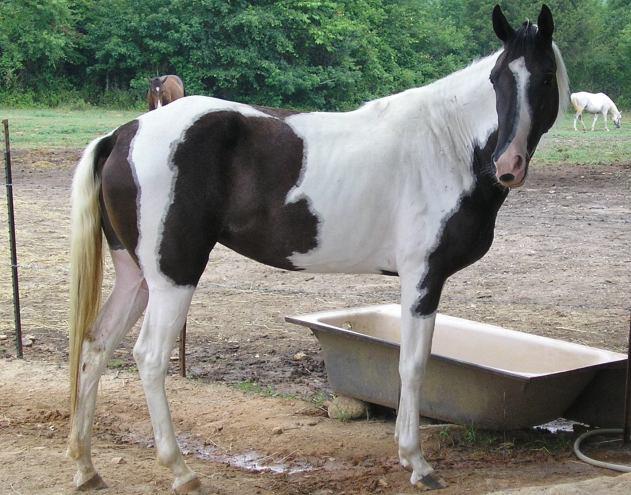
The Appaloosa is the spotted horse most people picture when they think of a patterned coat, an American breed developed by the Nez Perce people and known today for its versatility across almost every riding discipline. The coat is the headline, but the breed is really defined by a set of core traits that turn up even on horses that look nearly plain: mottled skin, striped hooves and a visible white sclera. Appaloosas have a long reputation as steady, athletic and genuinely useful horses, at home on a trail, in a pony club or in a competition arena. They also come with one health issue worth understanding before you buy, because the genetics behind the spots are linked to particular eye risks. This guide covers what the breed is, how to recognise one, and how to care for it sensibly in Australia.
History and Origin
The name "Appaloosa" traces back to the Palouse country of the north-western United States, where spotted horses became strongly associated with the region.4 The Nez Perce people are widely credited with selectively breeding and developing these horses, valuing soundness, stamina and usefulness over ornament.1
Modern Appaloosas are registered through the Appaloosa Horse Club (ApHC), founded in 1938, and the breed is now well established beyond the United States, including here in Australia.4
Appearance and Physical Characteristics
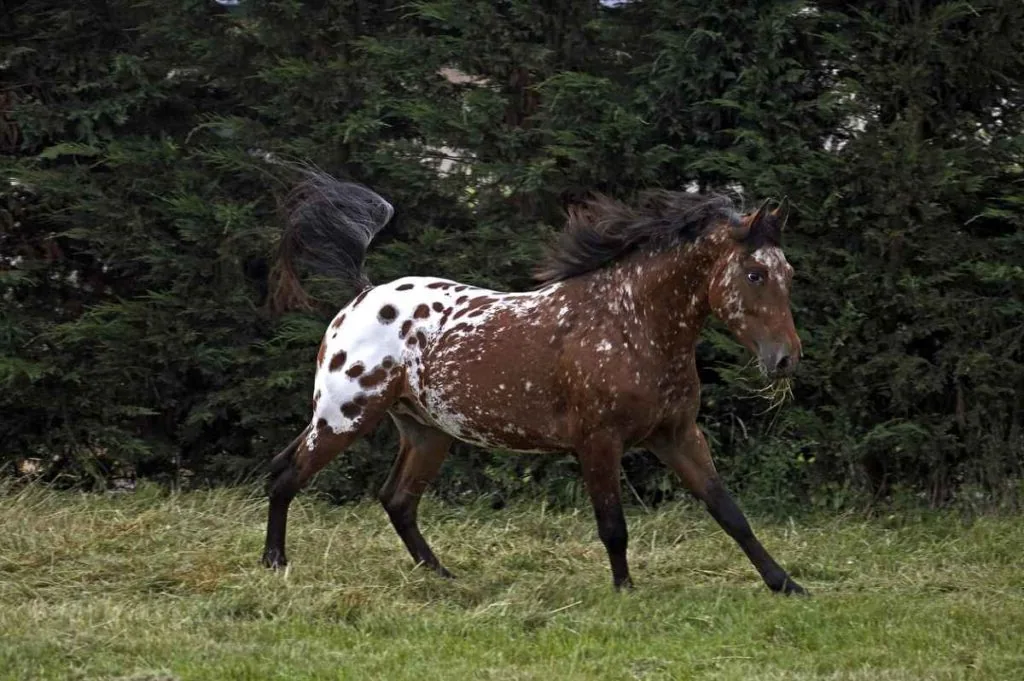
Appaloosas commonly stand around 14.2 to 16 hands, though individuals vary.1 Not every Appaloosa looks loudly spotted at first glance. Some are born fairly plain and develop more obvious patterning with age, while others stay solid-coloured but still carry the breed's characteristic markers.2, 4
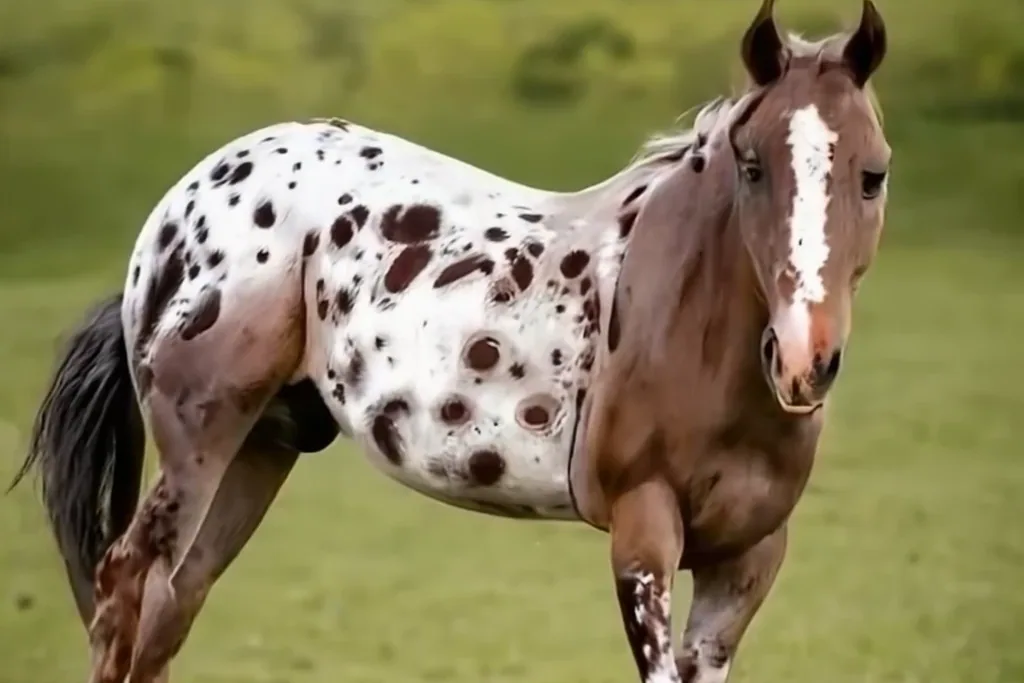
The ApHC describes three core characteristics, seen alongside (or sometimes instead of) a visible coat pattern:2, 3
- Mottled skin: speckled pigmentation, often around the muzzle, eyes, under the tail and around the genital area.2, 5
- Striped hooves: distinct vertical light and dark striping, typically on solid-coloured legs. Striping caused by white leg markings can look similar and does not prove Appaloosa breeding.2, 5
- White sclera: a visible white ring around the iris when the eye is in a normal, relaxed position.2, 3
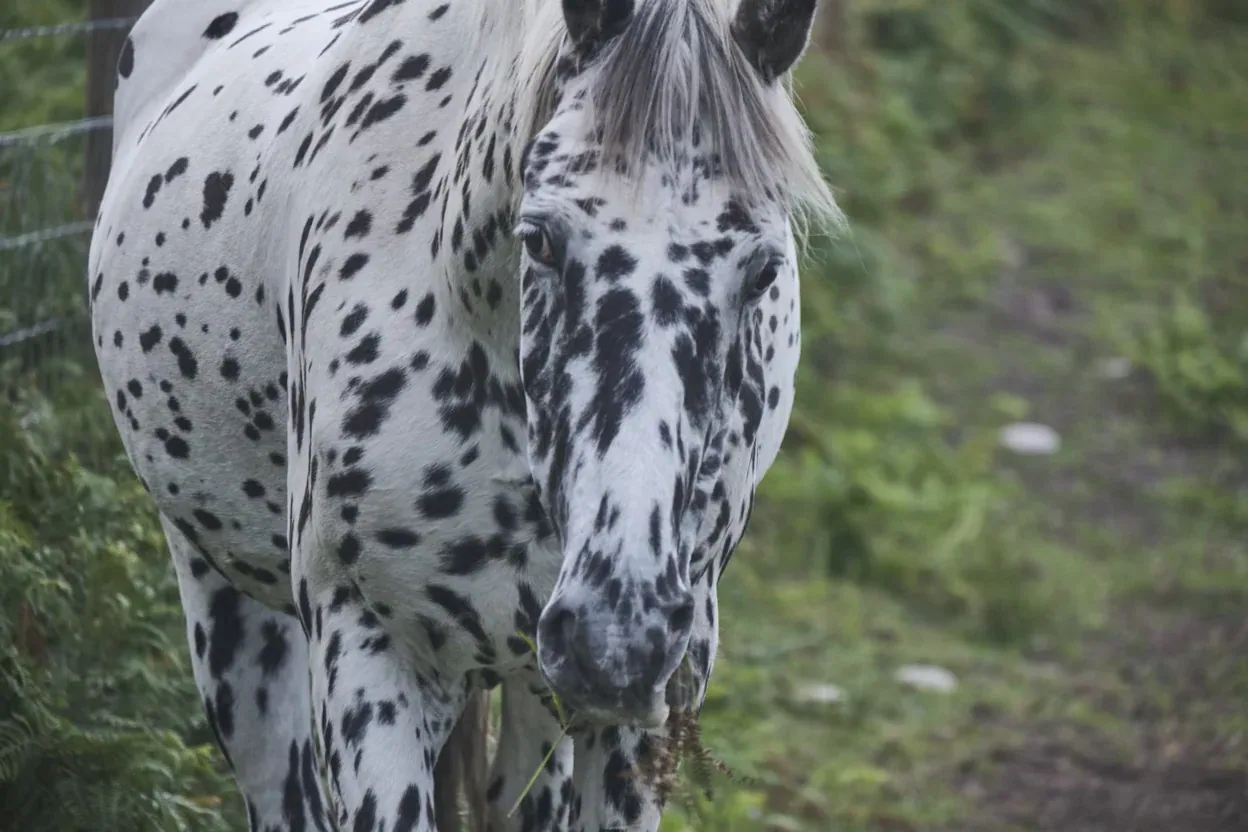
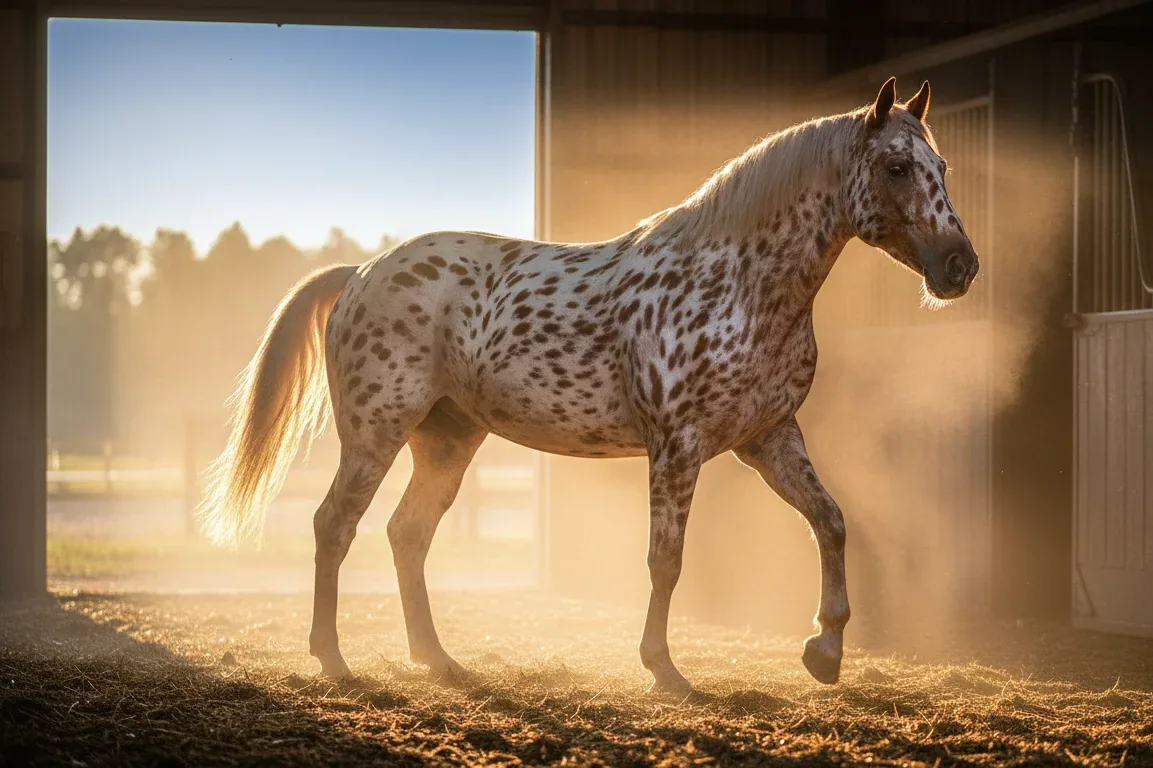
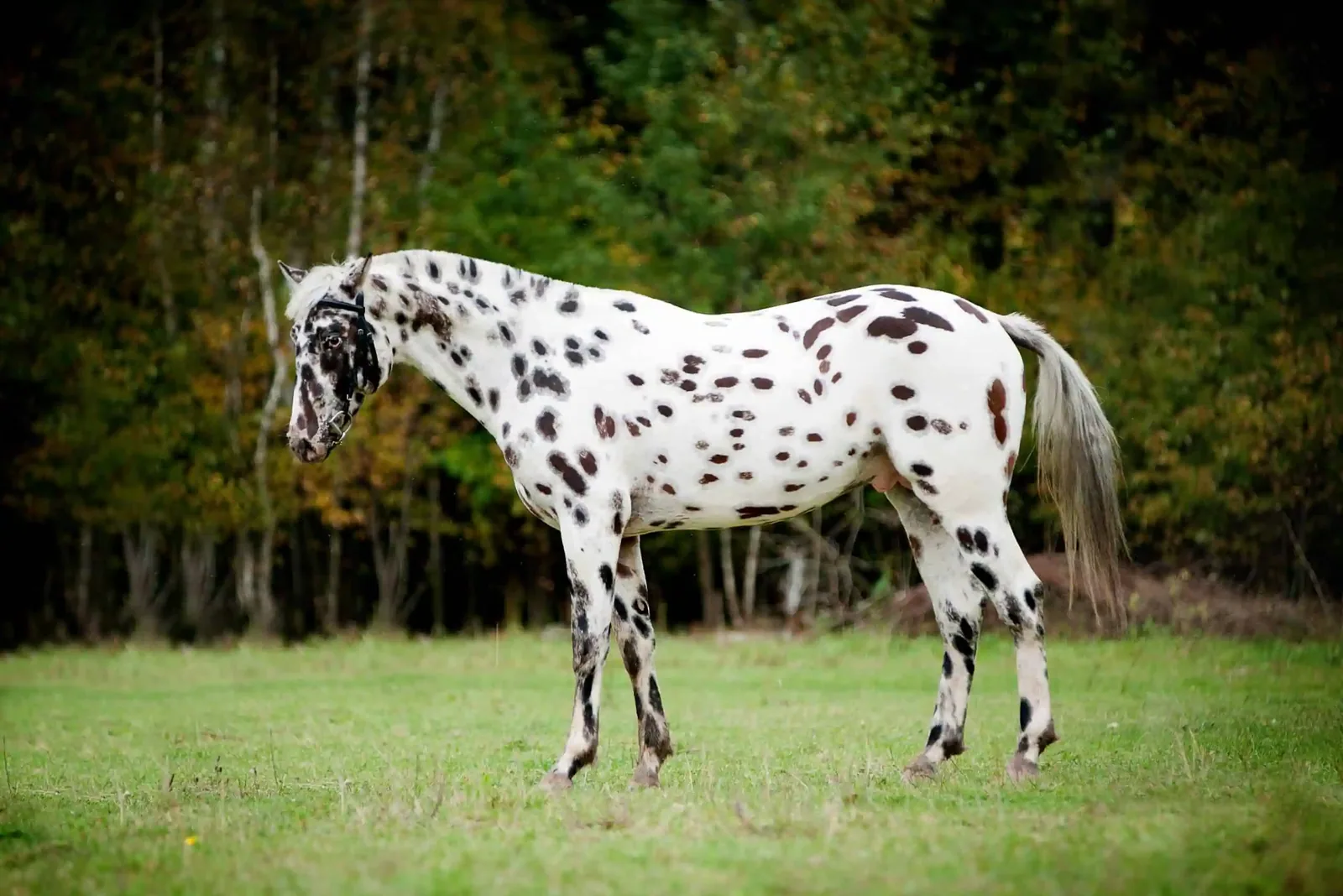
The spotting itself sits on top of the horse's base colour, such as bay, chestnut or black. Patterns range from a few spots over the hips to extensive white with distinct spotting, and the look can shift as the horse matures.4, 5 In Australia, breed resources describe the pattern types you will hear in everyday horse talk, such as leopard, blanket, snowflake and roaning, alongside the core traits like mottling and hoof striping.5
Temperament and Personality
Appaloosas are known more for versatility than for one narrow type. Temperament is shaped by handling, training and bloodlines, but the breed has a long reputation for being broadly useful: steady enough for family riding, athletic enough for competition, and adaptable across different disciplines.4
Is an Appaloosa Right for You?
An Appaloosa can suit a wide range of riders, which is much of its appeal, but a horse of any breed is a serious commitment of time, money and daily care. The specific thing to weigh with this breed is the eye health picture covered below, because it means eye checks and vet attention need to be part of the plan from day one. If you can commit to that and to the ordinary work of keeping a horse, an Appaloosa is a sound, flexible choice for trail riding, pony club, station work or the competition arena.
When you are looking at a particular horse, a short checklist helps:
- Confirm identity: registration papers where available, or a clear explanation of breeding history.
- Look for core traits: mottling, striped hooves on solid legs, and visible white sclera.2, 3
- Do an eye check in good light: any squinting, tearing, cloudiness or sensitivity warrants a vet opinion before purchase.6
- Ask about night vision: particularly in very fewspot or extensively white-patterned horses, and consider genetic testing if breeding is part of your plan.7, 8
- Get a pre-purchase exam: especially if you are buying for competition or long-term soundness.
Training and Exercise
Because Appaloosas turn up in many different body types and training traditions, you will see them almost everywhere horses work. The ApHC notes the breed's presence across a wide spread of disciplines, including trail and stock work, dressage, jumping, western events, cattle work, racing and endurance.4 Like any horse, an Appaloosa needs consistent handling, regular work suited to its job and condition, and turnout time. Its athleticism and steady reputation make it a practical all-rounder rather than a specialist.
Health and Lifespan
With good care, Appaloosas often live as long as other horses, with many reaching well into their twenties or beyond. The breed's main health flag is its eyes, and it is worth understanding properly.
Equine recurrent uveitis (ERU)
ERU is a leading cause of blindness in horses, and Appaloosas are particularly susceptible. Veterinary sources report that Appaloosas are around eight times more likely to develop ERU than other breeds, and they can be more likely to have disease in both eyes.6 ERU can look like intermittent eye pain or inflammation (tearing, squinting, cloudiness, light sensitivity), but it can also smoulder at a low level and quietly accumulate damage over time. If you suspect a problem, treat it as urgent, because early veterinary care helps preserve vision.6
Congenital stationary night blindness (CSNB)
Some horses with two copies of the leopard complex spotting variant (often described as homozygous for LP) can have congenital stationary night blindness, meaning difficulty seeing in low light that is present from an early age. A genetic basis involving the TRPM1 gene has been identified, and DNA testing is available through specialist laboratories.7, 8
Beyond the eyes, keep the basics unglamorous and consistent: dental checks, vaccinations as advised by your vet, parasite management based on local risk, and regular farriery. For a spotted horse, add one extra habit and watch the eyes closely.
Grooming and Care
Those striped hooves are made of the same keratin as any other hoof. They do not automatically mean strong or weak, so let trimming cycles, hoof balance and overall health guide your farriery.2, 5 Mottled skin is normal for the breed, but lightly pigmented areas can be more sensitive to sun, so shade and sensible rugging help in harsh Australian conditions.5
Diet and Nutrition
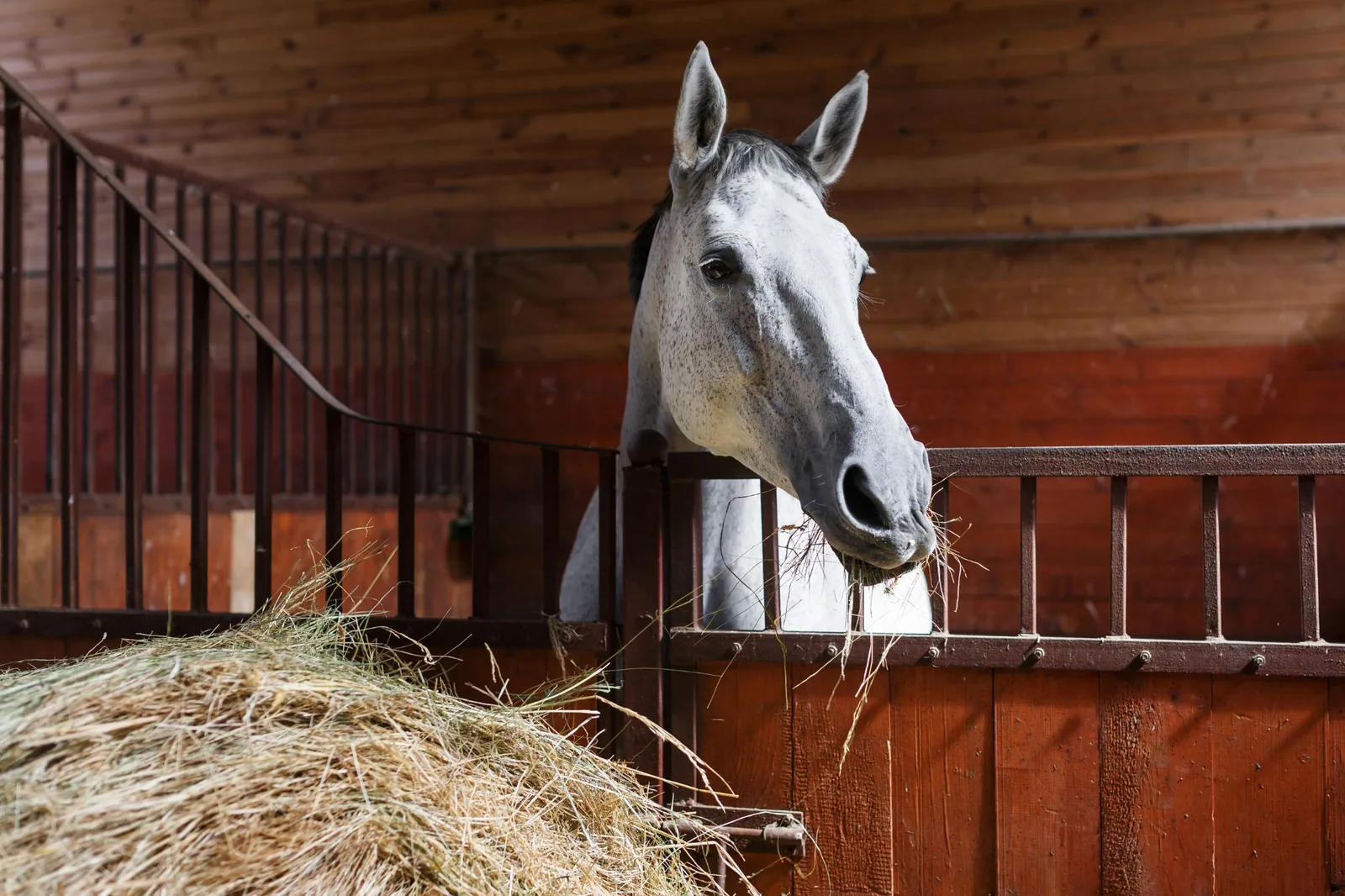
Feed the horse in front of you, not the label. Most Appaloosas do well on the same foundations as other horses: good-quality forage first (pasture and hay), with hard feed used only to meet workload and body condition needs.
A Few Things Worth Knowing
- Some Appaloosas are born plain and only develop obvious spotting as they mature, so a young solid-coloured horse can still carry the breed's core traits.2, 4
- You may see the name "AraAppaloosa" (also written Araloosa or Arappaloosa). This is typically used for a cross that combines Arabian and Appaloosa breeding, aiming for Arabian type with Appaloosa patterning.9
- If a horse is advertised under one of those labels, ask what registry (if any) is involved and what the horse is actually recorded as. Names in ads can be informal, but paperwork is clearer.
The Bottom Line
The Appaloosa is a versatile, level-headed horse whose spotted coat is only part of the story, backed by mottled skin, striped hooves and a white sclera that mark the breed even when the pattern is quiet. It suits a wide range of riders and jobs. The one thing to take seriously is the eyes: understand ERU and, in heavily patterned horses, night blindness, build regular eye checks into your routine, and get a proper pre-purchase exam before you buy.
References
- Appaloosa (overview, history and breed background), Wikipedia
- Registration tips: Appaloosa characteristics (mottled skin, striped hooves, white sclera), Appaloosa Horse Club (ApHC)
- Appaloosa characteristics (mottled skin, white sclera, striped hooves), Appaloosa Horse Club UK
- ApHC facts (origin of the name, versatility, registry background), Appaloosa Horse Club (ApHC)
- Colours and characteristics (mottled skin, hoof striping and pattern notes), Australian Appaloosa Association
- Equine recurrent uveitis (ERU), UC Davis School of Veterinary Medicine
- Congenital stationary night blindness (CSNB), UC Davis School of Veterinary Medicine
- Leopard complex spotting (LP), CSNB and uveitis risk, testing information, UC Davis Veterinary Genetics Laboratory
- AraAppaloosa / Araloosa (Arabian by Appaloosa cross), Wikipedia

Dog lover and writer at My Pets Australia, sharing practical breed guides and care advice for Australian pet owners.