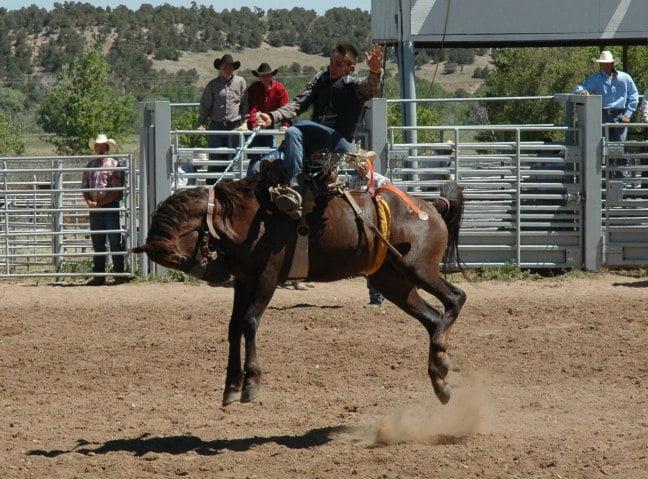
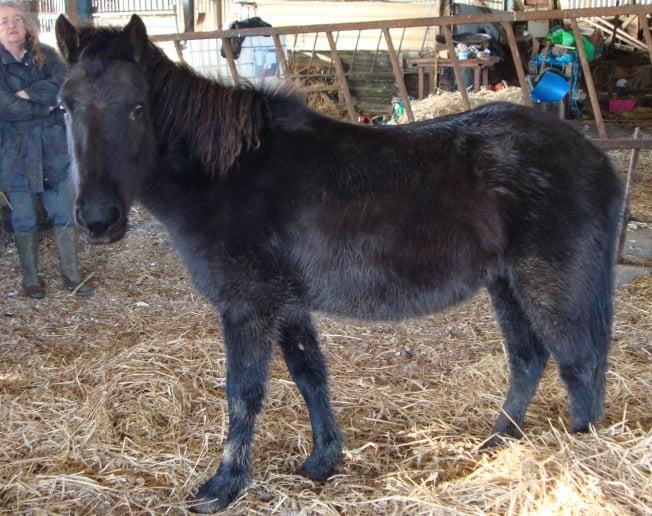
American Mustang
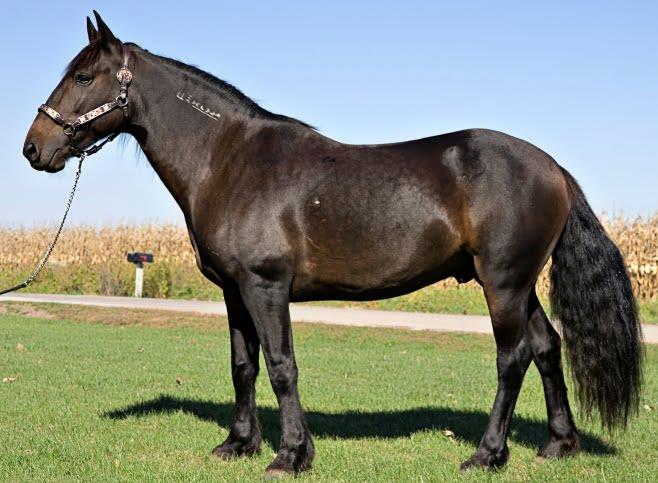
The American Mustang is the free-roaming horse of the western United States, known for its toughness, hard feet, and a knack for covering rough country on modest feed. It carries real cultural weight, protected by federal law and treated as a living symbol of the American West. It is not a distinct breed in the usual sense, and it is not a native wild species. The plainest description is a feral horse: the descendant of domestic horses that escaped or were released over centuries. Most people search the name to sort out exactly that, so this guide covers what a Mustang is and how these horses are managed today.1, 2, 3
Quick Facts
- Origin (as free-roaming horses): United States, mainly the western states, descended from domestic horses introduced after European colonisation1
- Typical height: about 13 to 15 hands (roughly 132 to 152 cm), with variation by herd and ancestry1
- Typical weight: often around 320 to 454 kg (700 to 1,000 lb), varying with condition and type1
- Colours: a wide range, including solid colours and pintos1
- Coat: short, growing longer and thicker over winter in colder regions, like most horses
- Common uses (domesticated Mustangs): trail riding, ranch work, endurance and pleasure riding, depending on the individual and training1
- Life expectancy: broadly similar to other horses, often into the 20s with good care, varying by environment and management
What a Mustang Is (and Isn't)
In everyday speech, "Mustang" usually means a free-roaming horse in the American West. In legal terms, US federal law defines "wild" horses, including Mustangs, as unbranded, unclaimed, free-roaming horses found on public lands in the United States.1
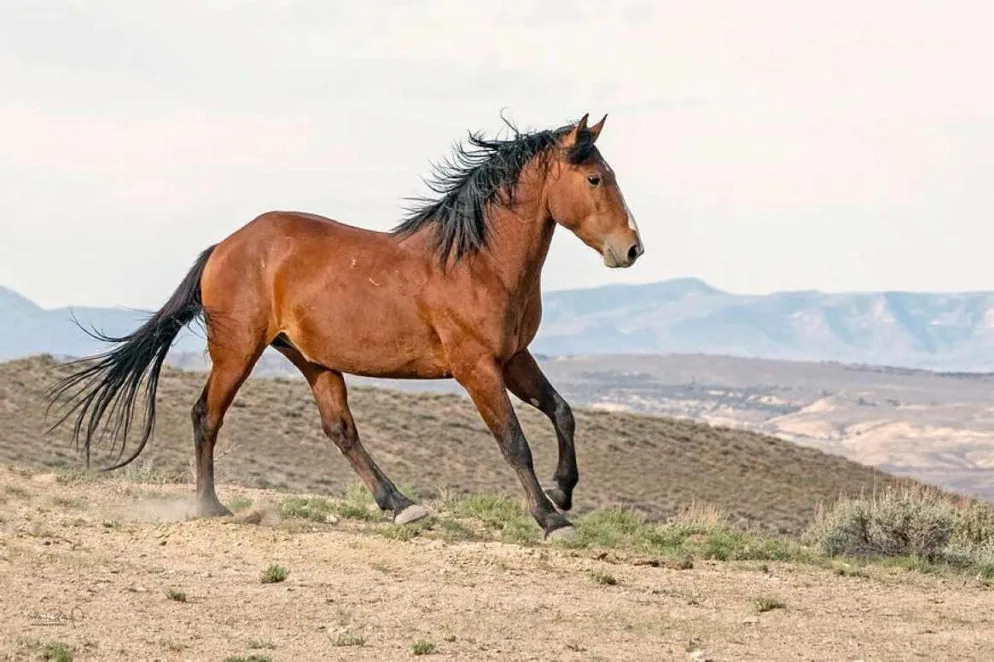
Biologically they are best described as feral: descendants of domestic horses that have adapted to living free-ranging. The Bureau of Land Management (BLM) notes that most living today descend from horses that escaped or were released by Spanish explorers and later settlers, ranchers, miners, the US Cavalry, and others, over centuries.1
They are not a native wild species, and they are not really a breed either. Ancestry and type vary widely from herd to herd. One last point of confusion: "Mustang" is also a Ford car. This page is about the horse.
History and Origin
Mustangs trace back to domestic horses brought to the Americas from the 1500s onwards. Over time some horses escaped or were turned loose, forming free-roaming populations that persisted across parts of the West.1
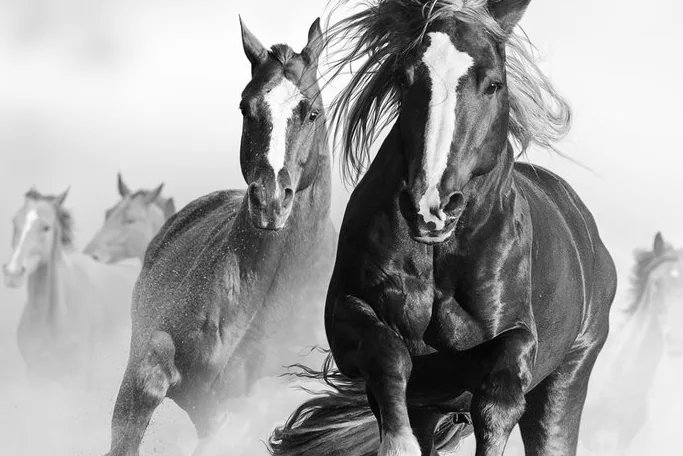
The key modern date is 1971. Under the Wild Free-Roaming Horses and Burros Act, the US government directed federal agencies to protect and manage these animals on designated public lands, aiming for a "thriving natural ecological balance".2
Appearance and Temperament
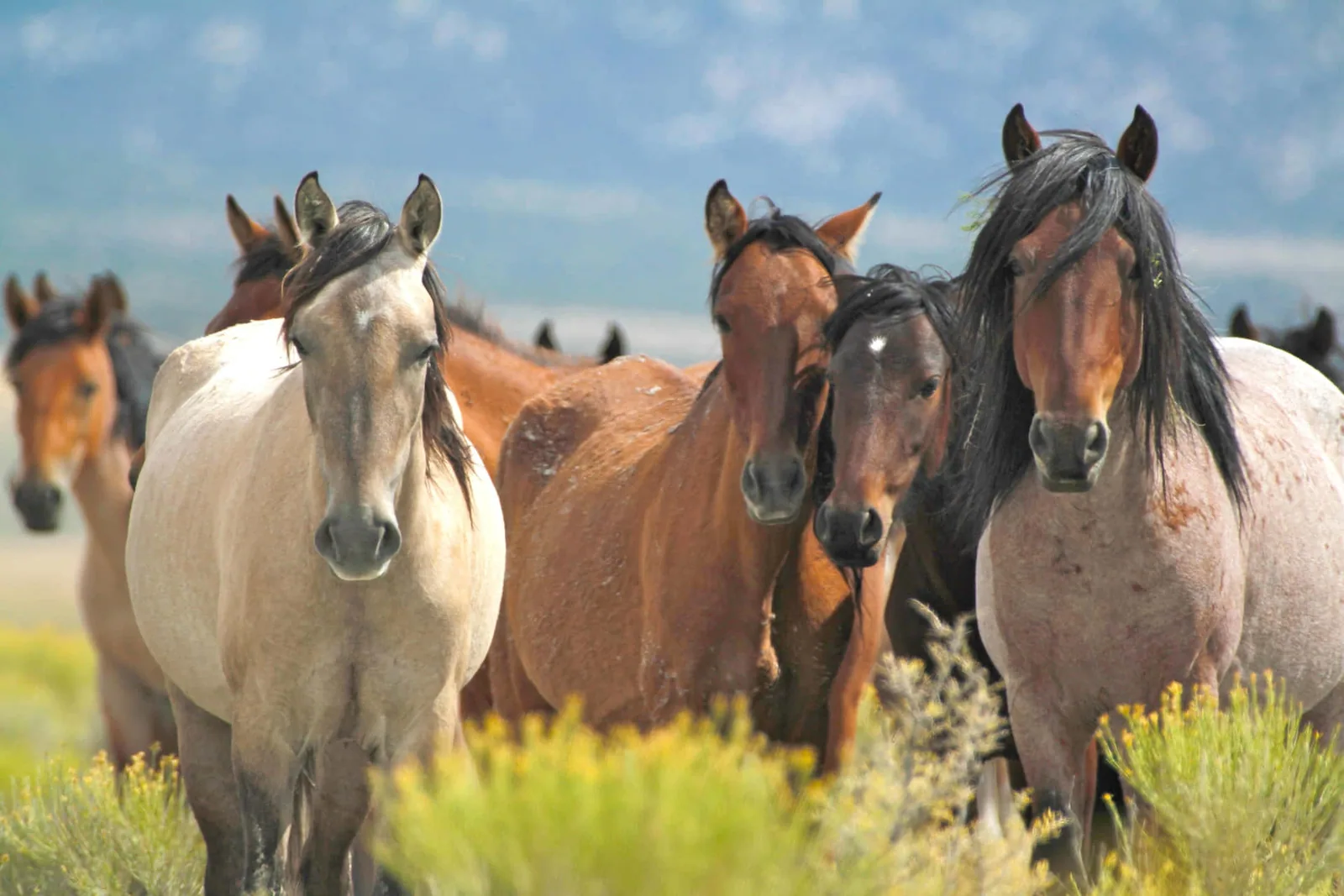
Because Mustangs come from many bloodlines and live in different environments, they do not share a single uniform look. What many herds do share is a practical build: compact bodies, strong legs, tough feet, and a way of moving suited to broken country and long distances. BLM summaries describe typical free-roaming wild horses as roughly 13 to 15 hands (about 132 to 152 cm) and 320 to 454 kg (700 to 1,000 lb), in a wide range of coat colours.1
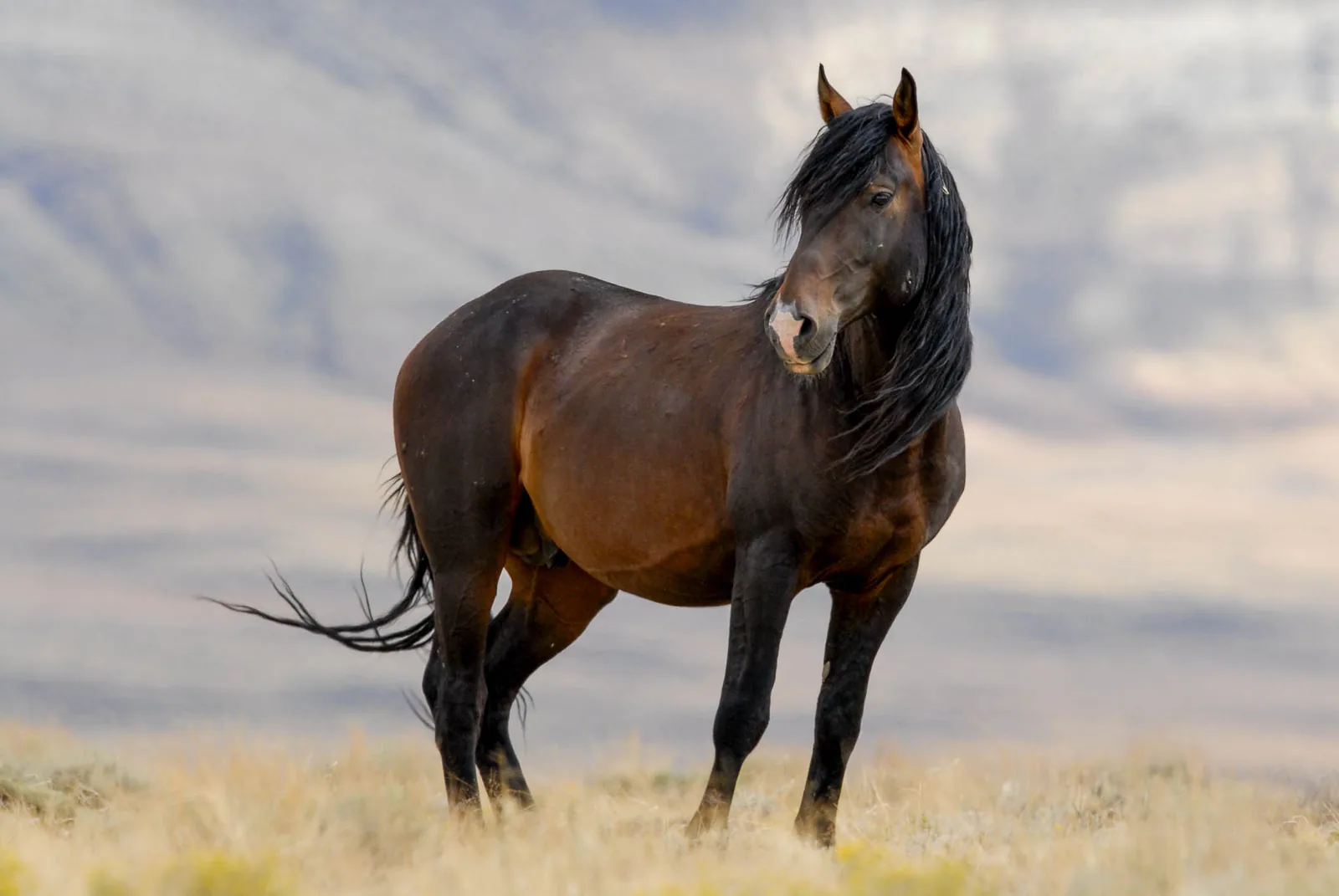
Temperament is individual. Many domesticated Mustangs are described as intelligent and hardy, but they are not born halter-broke, and their early handling history, or the lack of one, shapes how quickly they settle into domestic life.
Where Mustangs Live Today
Free-roaming wild horses managed by the BLM are found on public lands across 10 western US states. They live within specific management units, commonly called Herd Management Areas (HMAs).1, 4 To check whether an area currently holds managed herds, BLM publishes program maps, including maps by state, showing herd areas and HMAs.5
Why Mustangs Matter
Mustangs sit in a rare place: protected in law, woven into national imagery, and still managed as a population living on public land. The 1971 Act describes wild horses and burros as "living symbols of the historic and pioneer spirit of the West".2 That symbolism is powerful, but it does not remove the practical questions. On arid rangelands, forage and water can be limiting, and management decisions affect horses, native wildlife, and the condition of the land itself.
Population Management and Welfare
The central conservation problem is not predators or a single disease. It is the collision between a fast-growing free-roaming horse population and finite rangeland resources, especially during drought.3, 6 US Department of the Interior materials note that herd populations have repeatedly exceeded "appropriate management levels", and that longer-term solutions are needed to protect both animal welfare and rangeland health.3
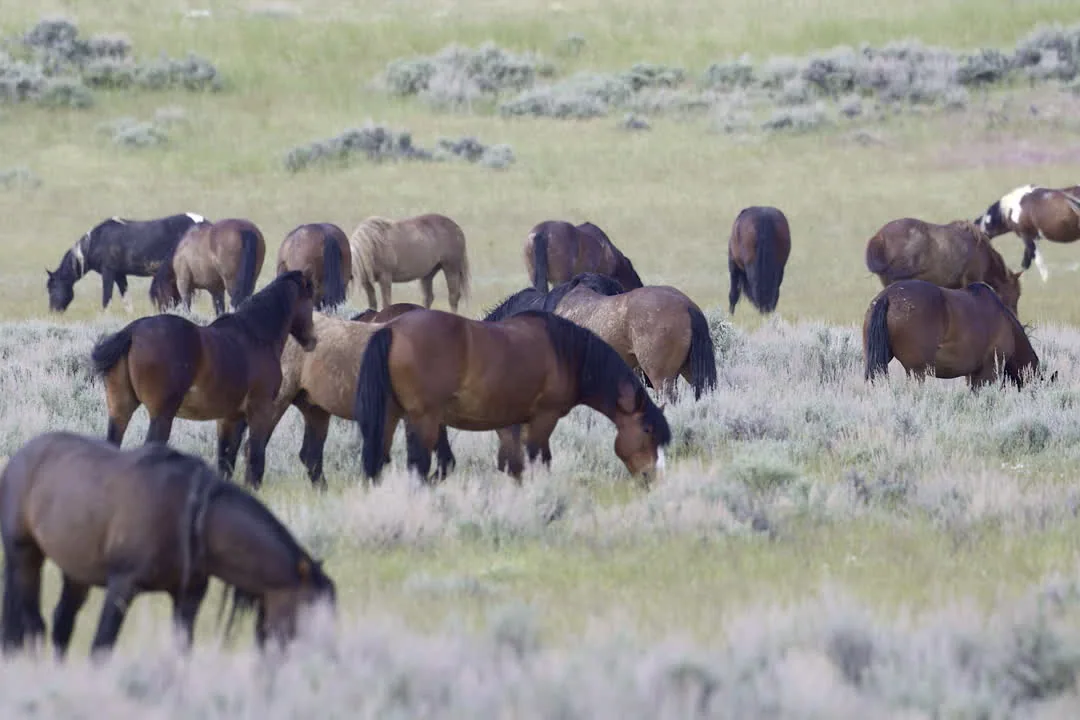
Management methods vary by place and policy, but commonly include:
- Gathers and removals, moving horses off the range to reduce pressure on forage and water6
- Adoption and sale programs for removed horses, including incentives in some periods1
- Fertility control, most commonly PZP, used where feasible but hard to deliver repeatedly in remote terrain3, 7
The National Academies' 2013 review describes fertility control as promising, while noting practical constraints around delivery and program design. It recommends more science-based, transparent decision-making to build confidence in outcomes.7
Training and Handling a Mustang
A domesticated Mustang can become a steady riding horse, but early training tends to be slower and more deliberate than with a well-handled domestic youngster. Expect a strong flight response at first, sensitivity to pressure, and rapid learning once the horse understands the pattern. Good handling is not about winning anything. It is about lowering stress, keeping people safe, and giving the horse a predictable world. The American Association of Equine Practitioners (AAEP) frames equine welfare around appropriate care, protection from avoidable suffering, safe handling and transport, and humane end-of-life decisions when needed.8

The Mustang's Ecological Role
Mustangs are large grazers and can shape vegetation patterns, especially around water. Where numbers are high and conditions are dry, their presence can contribute to heavy grazing pressure, soil disturbance, and competition with native wildlife and permitted livestock grazing.6 Even so, "good" or "bad for the ecosystem" is usually the wrong frame. The real question is density: how many horses, across how much country, through which seasons, and in what condition.
The Bottom Line
The American Mustang is a US animal with a specific legal and management history, not a breed you pick from a catalogue. It is a feral horse descended from domestic stock, protected since 1971, and managed as a free-roaming population on western public lands. As a domesticated riding horse it can be hardy, intelligent, and capable once given patient early handling. As a wild population it sits at the centre of a genuine and unresolved argument about horses, rangeland, and welfare.
References
- Bureau of Land Management (BLM), About Wild Horses and Burros
- Bureau of Land Management (BLM), Wild Free-Roaming Horses and Burros Act (legislation overview)
- U.S. Department of the Interior, Wild Horses and Burros (program overview and management challenges)
- BLM, Herd Management Areas
- BLM, Wild Horse and Burro Maps by State
- Associated Press, Nevada rangeland taxed by wild horses, land managers plan to round up thousands (Dec 2023)
- National Research Council (National Academies), Using Science to Improve the BLM Wild Horse and Burro Program: A Way Forward (2013)
- American Association of Equine Practitioners (AAEP), Principles of Equine Welfare

Dog lover and writer at My Pets Australia, sharing practical breed guides and care advice for Australian pet owners.