Setting up a Pet Spider Enclosure
A pet spider is one of the lowest-fuss animals you can keep: quiet, odourless, happy in a small footprint, and content to be left alone for days at a time. The catch is that almost none of its wellbeing is visible, so nearly all of it comes down to the box. A good enclosure gives the spider the right space, ventilation, substrate depth, a secure lid, and a steady water source, tuned to how its species lives in the wild. Get those basics right and the rest is mostly observation. Get them wrong and the problems (an escape, a fatal fall, a slow decline) tend to arrive quietly.
Legality and safety in Australia
Before you buy anything, check what you are actually allowed to keep. Australia has many spiders that are unsuitable for keeping and some that are regulated, and the rules differ by state and territory and change often enough that it is worth confirming first.
- Don't take spiders from the wild. Beyond the welfare issues, it can breach wildlife laws and disrupt local populations.
- Buy only from lawful sources. If a seller cannot clearly explain the animal's legal status and origin, walk away.
- Know your state's licence requirements. In Queensland, native tarantulas (Theraphosidae) are regulated under the native animal licensing framework and are not treated as exempt invertebrates.1, 2 In NSW, native animal keeping runs through a licensing system, and conditions include acquiring animals only from appropriately licensed suppliers.3, 4
If you are unsure which category your spider falls into, check your state environment department's native animal keeping pages, or call them. It is the quickest way to avoid accidentally doing the wrong thing.2, 5, 6
Choosing a spider that suits the keeper
A beginner-friendly pet spider is usually one that tolerates a stable indoor climate, is not highly defensive, is not fast and flighty, and does not depend on a narrow humidity band. Even the calm species are hands-off animals. Most stress shows up as hiding, refusing food, or frantic pacing, so you have to watch for the quiet signals rather than expect obvious ones.
Keep handling to an absolute minimum. Many common pet species get nothing out of it, and falls are a serious risk. An enclosure is a safer place for the spider than your hand.
Selecting the enclosure
Choose the enclosure around how the spider moves, not around how it looks on a shelf.
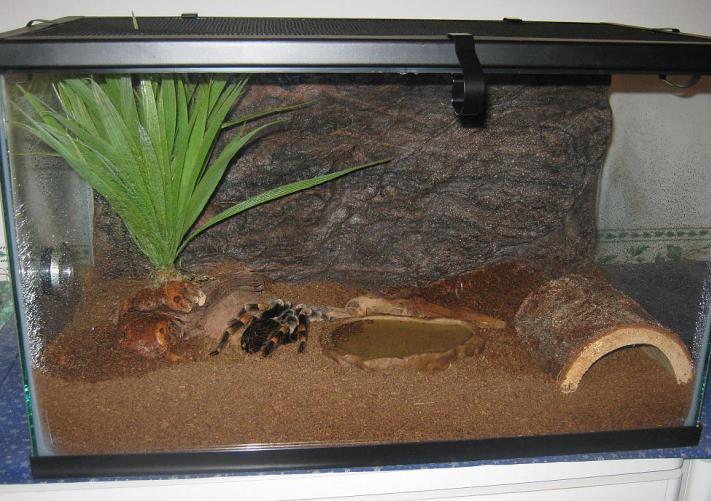
- Terrestrial and burrowing species: more floor space, lower height, deeper substrate. The goal is safe footing and room to dig.
- Arboreal species: more height, strong vertical hides such as cork bark, and secure anchor points for webbing.
Security matters more than volume. Use a tight-fitting lid and assume the spider can exploit any small gap. Ventilation holes should be fine enough to prevent escape, which matters most with juveniles. Avoid tall enclosures for heavy-bodied terrestrials, because a fall onto hard decor can be fatal. Keep climbing height low and make sure any furnishings are stable and cannot topple.
Habitat essentials: substrate, hides, ventilation
Substrate
Skip whatever is in the backyard. Outdoor soil can carry pesticides, moulds, mites, and other contaminants that are harmless to us but risky in a closed tank.7 For many species a simple base works well:
- coconut fibre (coir)
- peat moss or peat-based mixes
- unfertilised topsoil, with no pesticides or additives
Depth depends on the spider's natural behaviour. Burrowers need enough to dig a stable retreat, while arboreal species manage with a thinner layer but still benefit from some moisture buffering in the lower levels.
Hides
A spider that can retreat will usually settle. Provide one solid hide (cork bark, a half-log, or a stable piece of curved bark) and position it so the spider can choose deeper shade without being forced into constant exposure. One good dark retreat beats a busy, cluttered tank.
Ventilation
Stale, wet enclosures encourage mould and mites. Cross-ventilation, with vents on opposite sides, keeps humidity usable without turning the air swampy. When in doubt, improve airflow before you increase misting.
Temperature, humidity, and lighting
Avoid fixed one-size-fits-all numbers and copy the habitat instead, because requirements vary widely by species and life stage. As a general baseline, many commonly kept tarantulas do well at typical room temperatures of around 21 to 26 degrees Celsius, with species-dependent humidity supported by ventilation and a water dish rather than constant spraying.7, 8
- Arid and grassland species: mostly dry substrate, good airflow, constant access to water.8
- Tropical species: some moisture held in the lower substrate layers, but still with strong cross-ventilation to prevent stagnant, wet air.8
A basic thermometer and hygrometer help you catch slow drift, such as a room that drops too cool overnight or humidity that climbs when ventilation is too low.8, 9
Lighting stays simple. Most pet spiders do not need UVB, and bright lights or heat lamps are more likely to dry the enclosure and stress the animal than to help it. Normal room light and a steady day and night rhythm is usually enough.8 Never place the enclosure in direct sun, since glass and plastic heat fast and a spider cannot escape a sudden spike.
Food and water
Most pet spiders thrive on appropriately sized live insects, commonly crickets. Size the prey conservatively, especially for juveniles, and remove uneaten live insects after a reasonable window, particularly around moulting when the spider is vulnerable.7
Water is not optional. Provide a shallow, stable water dish and keep it clean and filled. For small spiders a bottle-cap sized dish is often used. Regular cleaning matters far more than any fancy filtration.7, 8
Maintenance and troubleshooting
Spiders do best with calm, predictable conditions, so the routine is light but consistent.
- Weekly: remove leftover prey, spot-clean waste, wipe obvious mess off the walls, and rinse and refill the water dish.
- As needed: replace sections of substrate that become mouldy or foul. Full substrate changes are usually occasional, not constant, unless you have had a spill or a pest outbreak.
- Always: check lid security and vent condition. Most escapes happen during feeding and cleaning.
A few common signs and what they usually mean:
- Spider stays pressed against the lid or climbs constantly: the enclosure may be too humid or stuffy, too hot, or lacking a usable hide.
- Mould patches: too wet with too little airflow. Reduce misting, improve ventilation, and remove the affected substrate.
- Refusing food for weeks: often normal (a seasonal slow-down or pre-moult), but review temperature, hydration, and stressors first.
- Lethargy with a shrivelled abdomen: a dehydration risk. Ensure water is available, match humidity to the species, and review ventilation so moisture is usable rather than stagnant.
The Bottom Line
A good spider enclosure looks almost understated: steady temperature, clean air, a dark retreat, safe substrate, and water always available. With that quiet structure in place, most of the care becomes observation, with small adjustments made early, before small problems turn into emergencies. Just sort out the legality for your state before you buy, and match the setup to the species rather than to a generic checklist.
References
- Queensland Government, Exempt, prohibited and species class listings (includes invertebrates, tarantulas)
- Queensland Government, Licences to keep, use or display native animals
- NSW Environment and Heritage, Maintain a native animal keeper licence (conditions, acquisition and disposal)
- Service NSW, Apply for a native animal keeper licence
- Western Australia DBCA, Fauna licences (overview and guidance)
- South Australia Government, Animal licences and permits (native animals)
- University of Kentucky Entomology, Pet tarantula basics (housing, substrate safety, feeding, water)
- Tree of Life Exotic Pet Medical Center, Tarantula care (temperature, humidity approach, lighting)
- Amateur Entomologists' Society, Tarantula care sheet (heating and humidity guidance)

Dog lover and writer at My Pets Australia, sharing practical breed guides and care advice for Australian pet owners.