Pet Wolf Spider
Wolf spiders (family Lycosidae) are among the most common spiders across Australia, and they make an unusually easy animal to observe: a ground hunter that stalks prey on foot rather than sitting in a web. They live in leaf litter, lawns and neat little burrows, they keep to themselves, and a torch at night will sometimes catch the eye-shine of the larger pair of eyes. People usually search for a "pet wolf spider" for one of two reasons, either they have found a fast, hairy spider in the garden, or they are weighing up whether one can be kept safely at home. Their bites are usually minor, but a few dangerous lookalikes share the same ground, so identification and first aid are worth getting right from the start.1, 6
Quick facts: wolf spiders (Lycosidae)
- Typical size: varies by species; many are medium to large-bodied, and some can reach around 3 cm body length.1, 4
- Colours: usually mottled brown, grey or black, sometimes with stripes or scroll-like markings that help them disappear into leaf litter.1, 4
- Where they live: on the ground in leaf litter, lawns and gardens; many species use burrows or temporary retreats.1, 2
- When you will see them: often at night, moving across open ground; a torch can catch eye-shine in some species.2
- Diet: mainly insects and other small invertebrates; larger species may take small vertebrates on occasion.1, 4
- Venom and risk: bites are usually local and short-lived, and serious effects are uncommon in confirmed Australian wolf spider bites.1, 9
- Lifespan: up to around two years, varying by species and conditions.1
What a wolf spider is (and what it isn't)
Wolf spiders are not web-centred house spiders. They hunt on foot, using speed, camouflage and sharp vision, and many spend their lives close to the soil surface, under leaf litter, beside paths, in lawns, or down a tidy round burrow in the garden bed.1, 2
The classic wolf spider feature is the eye arrangement: eight eyes in three rows (4, 2, 2), with the largest pair giving them a high-headed look in torchlight. Colour and pattern vary hugely across the family, so it is safer to think in terms of the family (Lycosidae) rather than one "standard" pet species.1
Common mix-ups
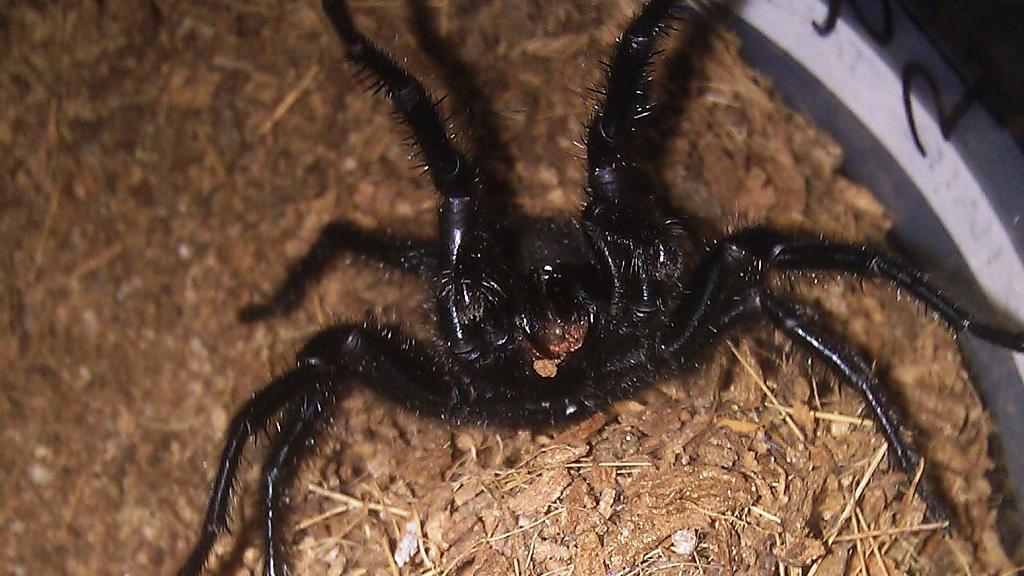
Wolf spiders are sometimes confused with huntsman spiders, because both can be large and fast, and at a glance they can also be mistaken for some other robust ground-dwelling spiders. If you are unsure and the spider is a big, black, hairy type, treat any bite seriously until it is assessed, especially in funnel-web and mouse spider country.7, 8
Behaviour you can expect in captivity
In a container, a wolf spider behaves much as it does outdoors: hiding for long stretches, then becoming active in low light. Many species are solitary. They do not need companionship, and housing two together often ends with one spider being eaten or badly injured.1
They are strong, practical animals, built for ground travel and sudden bursts of speed. That makes escape prevention part of basic welfare rather than an optional extra.
Housing and environment
A wolf spider enclosure should copy the ground layer: stable substrate, a secure hide, and enough room to turn and move without constantly climbing the walls. Many species are not dedicated climbers, but they can scramble up silicone seams, ornaments and corners when they feel like it.
Enclosure essentials
- Secure lid: tight-fitting and lockable, with fine mesh ventilation.
- Substrate: a few centimetres of clean soil or coco fibre mix so the spider can dig and settle; keep it lightly damp in one area rather than wet throughout.
- Hide: a piece of bark, a half-log, or a snug shelter with one entrance.
- Water: a very shallow dish, or a bottle-cap style, that cannot drown feeder insects; refresh regularly.
- Furnishings: keep it simple. Too many objects become escape ladders.
Temperature and humidity
Most keeping problems come from extremes: hot, dry boxes on sunny windowsills, or waterlogged substrate that grows mould. Wolf spiders occur across a wide range of Australian habitats, so the ideal numbers depend on the species. Aim for a stable, moderate indoor temperature, gentle ventilation, and a small moisture gradient, one end slightly damper and one end drier, so the spider can choose.1
Feeding: what to offer, and what to avoid
Wolf spiders are predators of live prey. In captivity they usually do well on appropriately sized insects offered one or two at a time. It is better to underfeed slightly than to leave large, aggressive feeders roaming the enclosure.
Good feeder options
- Small crickets
- Small cockroaches (appropriate species and size)
- Mealworms or woodies as occasional variety
Basic feeding rules
- Size matters: prey should be smaller than, or at most similar to, the spider's body size to reduce injury risk.
- Remove leftovers: uneaten prey can stress or injure a spider, especially during moulting.
- Skip wild-caught insects: pesticides and parasites are an avoidable gamble.
Handling: best kept to a minimum
Wolf spiders do not need handling for enrichment. If you must move one, use a gentle cup-and-card method: guide the spider into a container, slide a card underneath, and keep the lid on. This protects the spider from falls and protects you from defensive bites.
If you do get bitten, it is usually because the spider was trapped against skin or grabbed. The bite is a defence, not a temperament.1
Health and welfare problems to watch for
Spider-keeping is quiet when it goes well. Trouble tends to show up as stillness that does not match the spider's normal rhythm, repeated failed climbs, or a body that looks oddly shrunken.
Common issues in captivity
- Dehydration: sluggishness, reluctance to move, and a noticeably deflated abdomen.
- Mould and mite blooms: often linked to stale air and over-wet substrate.
- Moulting injuries: most often caused by humidity that is too low for the species, disturbance during a moult, or live prey left in with a vulnerable spider.
Breeding and reproduction
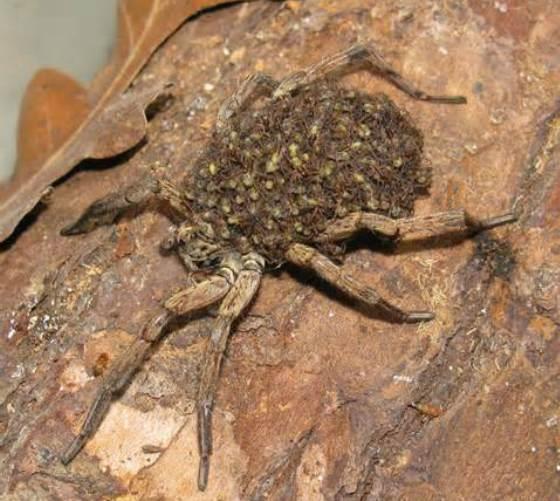
Wolf spider breeding is not a casual project. Courtship and mating usually occur at night, and the female may be unreceptive at different points in her cycle. When a female lays, she forms a rounded silk egg sac and carries it attached to her spinnerets. After hatching, the spiderlings climb onto her back and travel with her for a time before dispersing.1, 4
This means a single pet can suddenly become dozens if you buy an adult female that has already mated. Plan for that before it happens.
Are wolf spiders dangerous to humans?
Wolf spiders have venom, but in Australia confirmed wolf spider bites usually cause local effects such as pain, redness, swelling or itch. In a prospective study of Australian wolf spider bites, serious complications were uncommon and there were no necrotic ulcers reported in that series.9
Even so, any bite can become infected, people vary in their reactions, and if the spider is misidentified the stakes change quickly.
First aid if you think a spider has bitten you (Australia)
First aid depends on the type of spider.
- If it may be a funnel-web or mouse spider bite: call 000 and apply pressure immobilisation with a firm bandage and splint, keeping the person still.6, 7, 8
- For other suspected spider bites: wash with soap and water, use a cold pack, and monitor. Seek medical advice if symptoms worsen or you are unsure.6, 8
The bottom line
A wolf spider can be a calm, low-noise animal to observe, more like a small nocturnal documentary set in a shoebox than a companion pet. If you keep one, the essentials are steady conditions, live prey of the right size, and a lid that never slips. If your main goal is identification or bite advice, treat any uncertainty seriously. Australia has a handful of medically important spiders, and first aid is not one-size-fits-all.6, 8
References
- The Australian Museum, Wolf Spiders (Lycosidae)
- The Australian Museum, Garden Wolf Spider
- Museums Victoria Collections, Lycosidae (Wolf Spiders)
- Australian Geographic, Fact file: Australian wolf spider (Lycosidae)
- Australasian Arachnology Society, Araneae: Lycosidae
- healthdirect (Australian Government), Spider bites: symptoms, first aid and treatment
- Queensland Government, Bites and stings (first aid, including funnel-web and redback guidance)
- University of Melbourne (AVRU), First aid advice for spider bites
- Isbister GK et al. (2004), Australian wolf spider bites (Lycosidae): clinical effects (PubMed)

Dog lover and writer at My Pets Australia, sharing practical breed guides and care advice for Australian pet owners.