Pet Tarantula
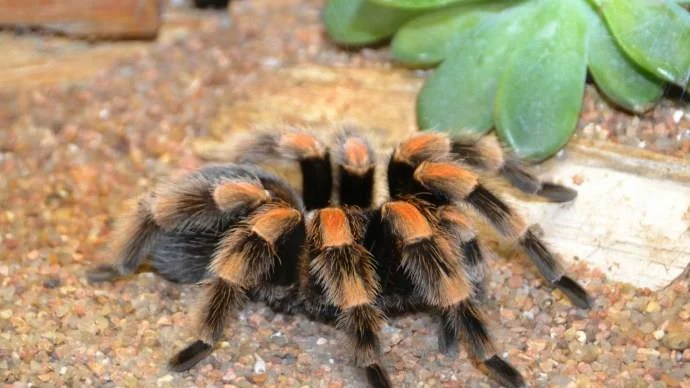
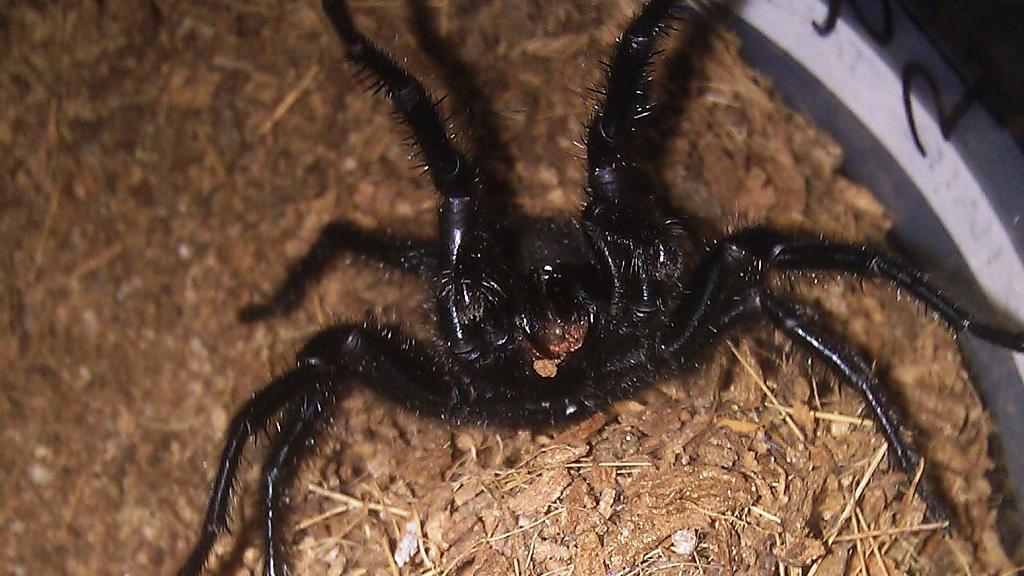
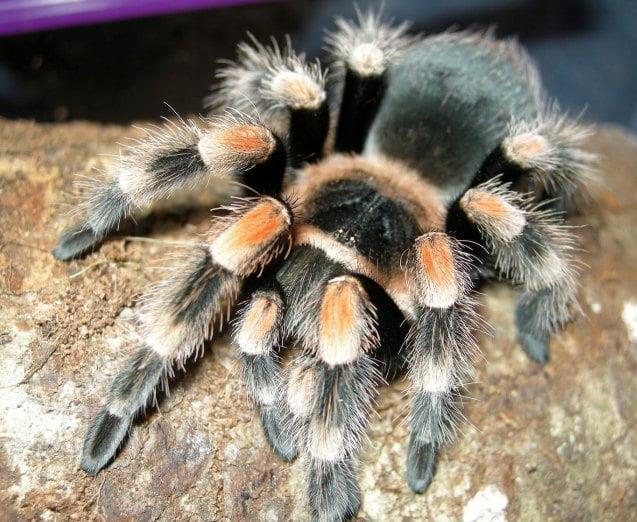
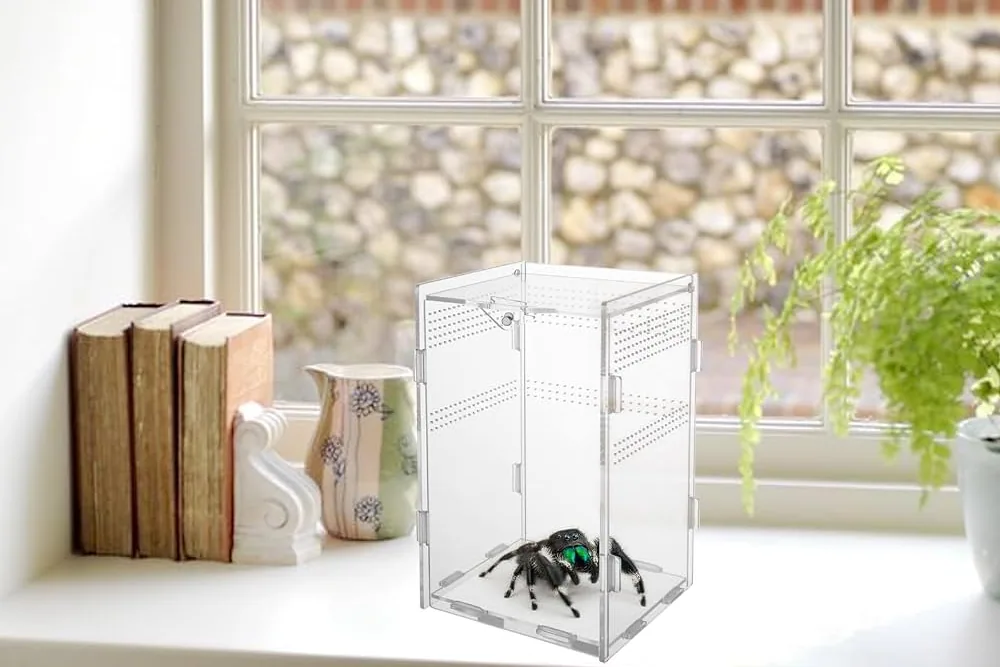
A pet tarantula is a quiet, low-space animal that asks very little of you day to day: no walks, no daily attention, just a stable enclosure and a feed once or twice a week. Kept well, a female can live for many years, watching the room from a silk-lined retreat and growing in slow increments through her moults. The care is genuinely simple once the setup is right. The catch is that small mistakes carry weight, because a short fall from your hand or a feeder insect left in overnight can injure a spider that would otherwise have lived for a decade. In Australia there is also a legal layer to check first, since native spiders are protected in some states and may need a permit.1, 2
Is it legal to keep a tarantula in Australia?
Sort this out before you buy anything. Rules vary by state and territory, and the line between native and exotic matters. In some jurisdictions spiders are protected wildlife and may require a permit to keep, with further restrictions on taking animals from the wild and on buying, selling, and moving them across borders.2, 6
- Northern Territory: spiders are protected, a permit is required to keep one, and permits also apply to taking from the wild and to import or export.2
- Queensland: keeping protected native animals can require a licence, and the licensing framework covers activities such as buying, selling, and breeding. Check the current rules for keeping native animals against your exact species and situation.6
If you are unsure, confirm with your local environment or wildlife authority before purchasing, especially if the seller advertises native stock or interstate shipping.2, 6
Quick basics
- Size: varies widely by species; many of the larger ones sit around up to roughly 20 cm legspan.3
- Lifespan: females often live many years, commonly a decade or more in some species. Males usually live less time and may die not long after maturity or mating.1, 3, 4
- Diet: predatory, mostly insects and other invertebrates, with occasional small vertebrates in some large species (not a requirement in captivity).2, 3
- Temperament: often calm when left alone, but defensiveness is normal, especially if the spider is cornered, disturbed, or exposed during moulting.2
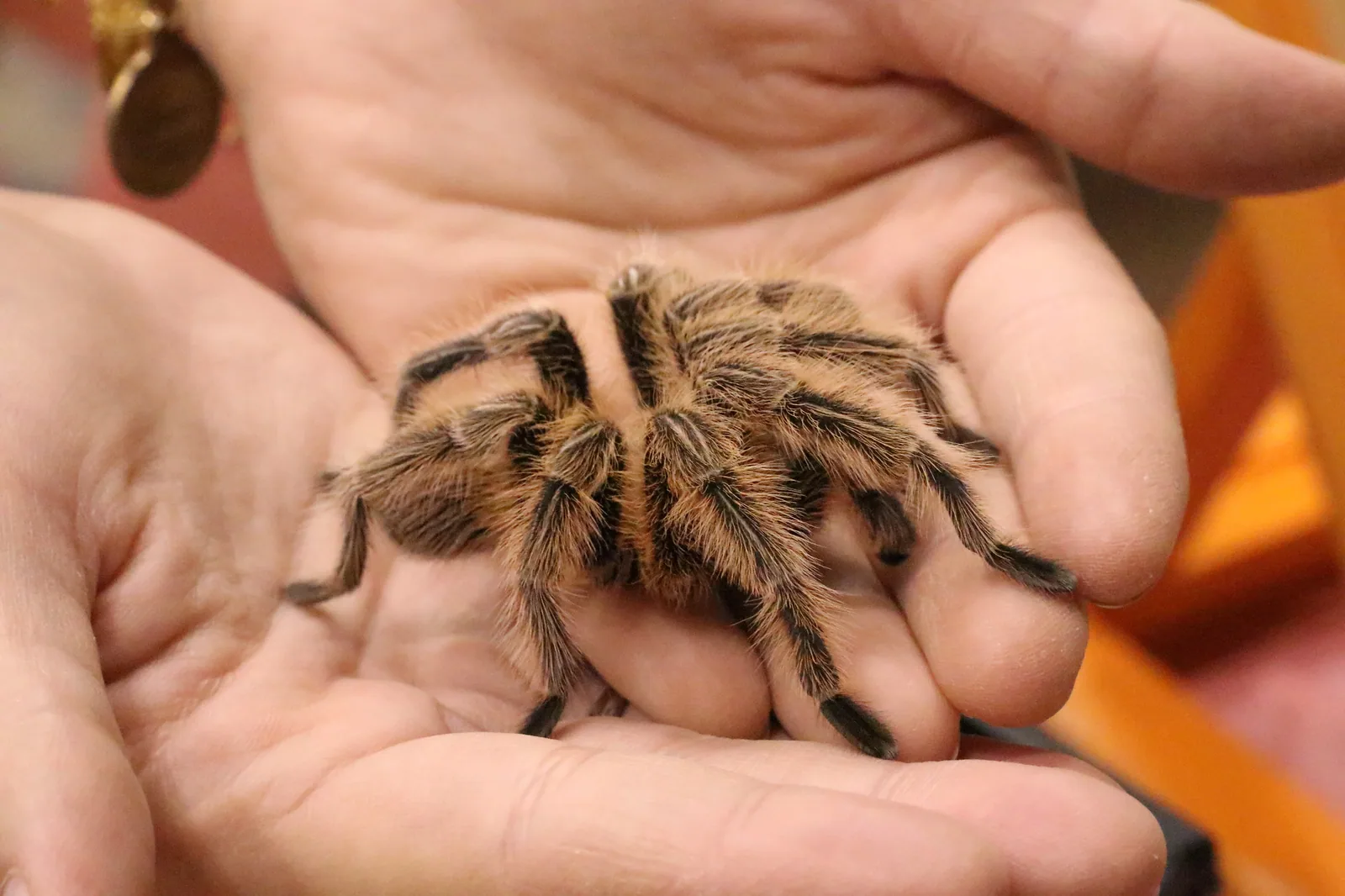
- Handling: best kept to a minimum. The biggest risk is a fall that ruptures the abdomen, which can be fatal.5
- Common problems in captivity: dehydration, poor ventilation with persistently damp substrate, and stress or injury from disturbance around moulting.2, 5
Choosing the right tarantula
The species you pick decides most of your experience. It affects speed, defensiveness, how much husbandry variation the spider tolerates, and how often you will actually see it. Before you buy, decide what you want in the room: a calm burrow-dweller that rarely shows itself, or a more active spider that is quicker and more reactive.
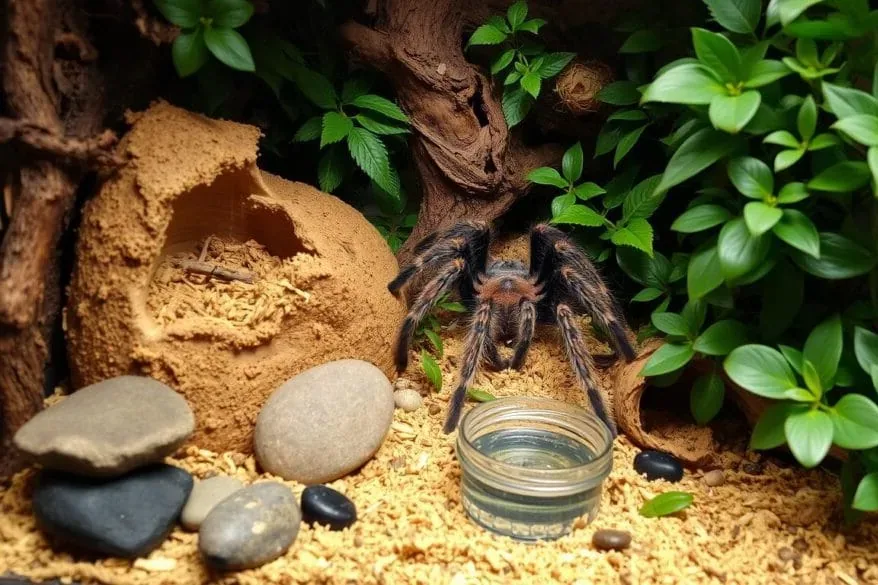
A useful first sort is lifestyle. Terrestrial burrowers spend much of their lives in web-lined burrows or retreats and may be most active at night, so they need depth of substrate and a stable hide.1, 2 Arboreal climbers use vertical space, bark slabs, and elevated retreats, and they are more prone to falls if the enclosure is set up poorly.
Origin is the other thing to understand. In the pet trade, Old World tarantulas (Africa, Asia, Europe) generally lack urticating hairs but can be faster and more defensive. New World tarantulas (the Americas) more often use urticating hairs as a deterrent. Whatever the origin, treat handling as an exception rather than a routine. And be honest about the time frame: many tarantulas, especially females, are long-lived compared with other invertebrate pets, so if you are hoping for a short-term animal, this is the wrong fit.4
Setting up the habitat
A good tarantula enclosure is dull in the best possible way: stable temperature, humidity matched to the species, clean water available, and nowhere the spider can wedge into a gap and escape. The aim is to mimic its normal microhabitat, not to chase exact numbers.
Security comes first. Seal the lid properly, because many spiders climb and escape through surprisingly small gaps.2 Give the enclosure fresh airflow without drying the spider out, since stale, persistently damp setups encourage mould and other problems. Keep the tank out of direct sun, which can overheat it quickly.2
Most tarantulas need a secure retreat, and burrowing species do best with enough substrate to dig and reinforce a hide. In the wild, Australian tarantulas spend much of their lives in burrows, using silk-lined chambers and entrances that can be plugged during harsh conditions.1 Always provide a shallow water dish or similar safe water source, and match humidity to the species rather than guessing.2 Some tarantulas prefer drier conditions with a water dish, while others need higher humidity paired with excellent ventilation.
Feeding
Tarantulas are predators, and in captivity they do well on appropriately sized insects from reputable suppliers, or insects collected only where you can be confident there is no pesticide exposure.2 Crickets, roaches, moths, and other suitably sized insects are the standard feeder options.2
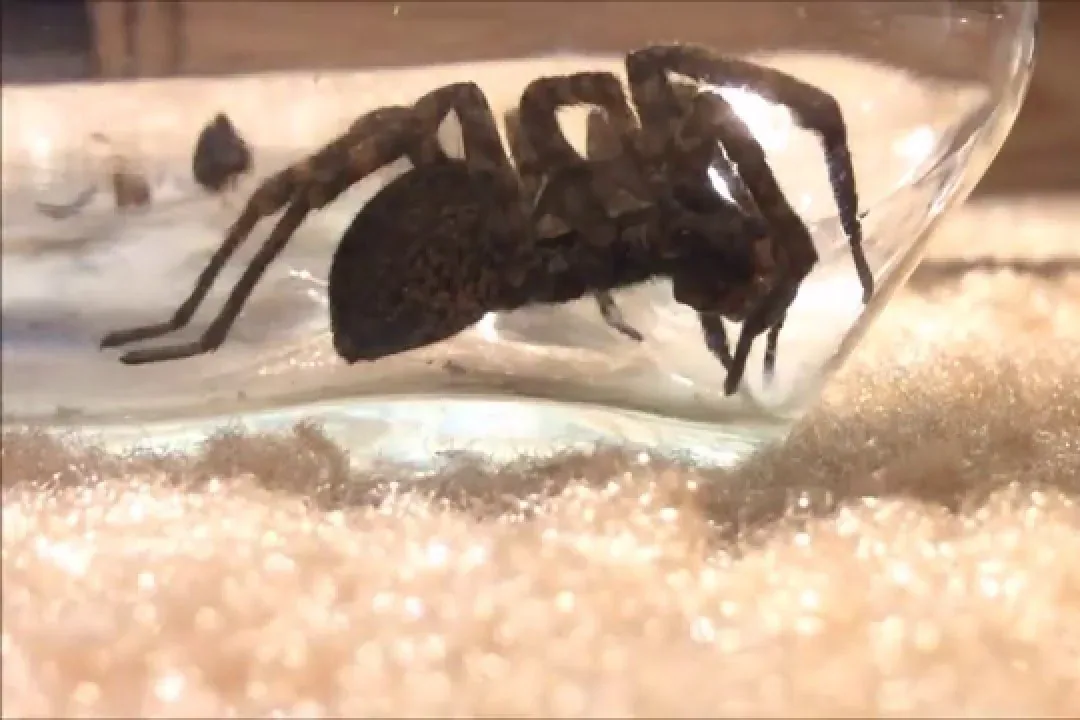
Many spiders are fed once or twice a week, adjusted for size, age, species, and season. A tarantula that refuses food is not automatically sick; it may be settling in, or preparing to moult.2, 5 Match the feeder to the spider, because over-large prey can injure it, and live insects left in the enclosure can attack a tarantula during moulting, when it is soft and vulnerable. If your tarantula goes off food and becomes more secretive, treat moulting as a real possibility and remove any uneaten live feeders.5
Moulting and limb regrowth
Moulting, or ecdysis, is when a tarantula sheds its old exoskeleton to grow. Many will stop eating for a period beforehand, then take time afterwards before feeding normally again. During this window, disturbance is a genuine hazard: the body is softer, coordination is different, and injury risk rises sharply.5
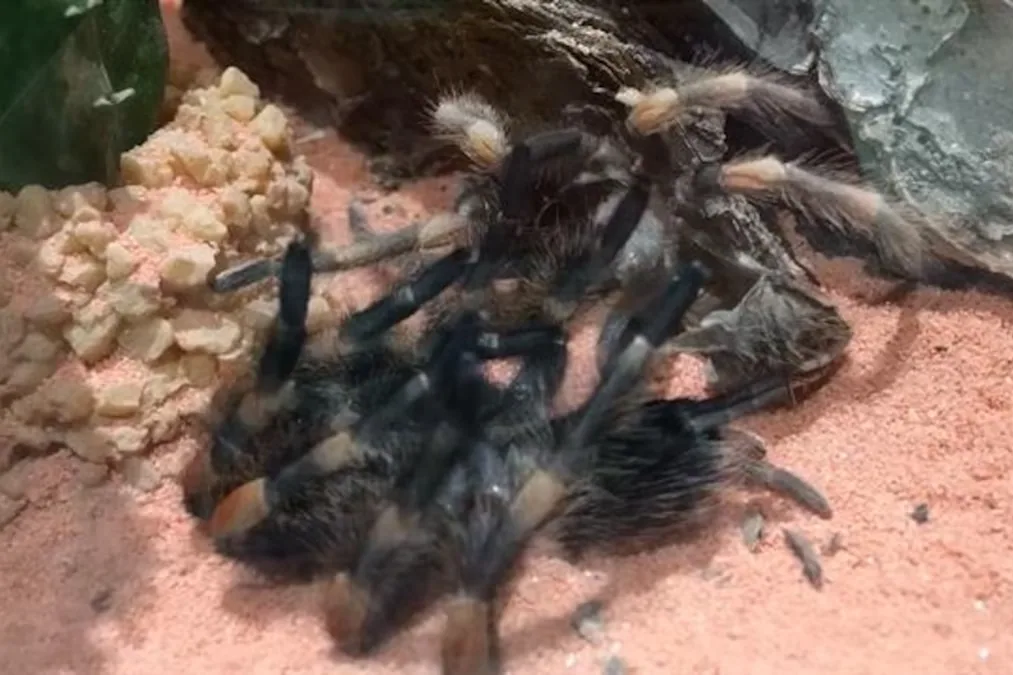
Tarantulas can also regrow lost limbs over subsequent moults, particularly when younger. Regrowth is slow and not something to rely on as proof that an injury is minor, but it is a real part of their biology.1
Handling: less is usually best
Handling is where most preventable disasters happen. A startled tarantula can bolt, and even a short fall can split the abdomen, so for many keepers the safest routine is hands-off: observe, feed, water, clean, and leave the spider to its own rhythms.5
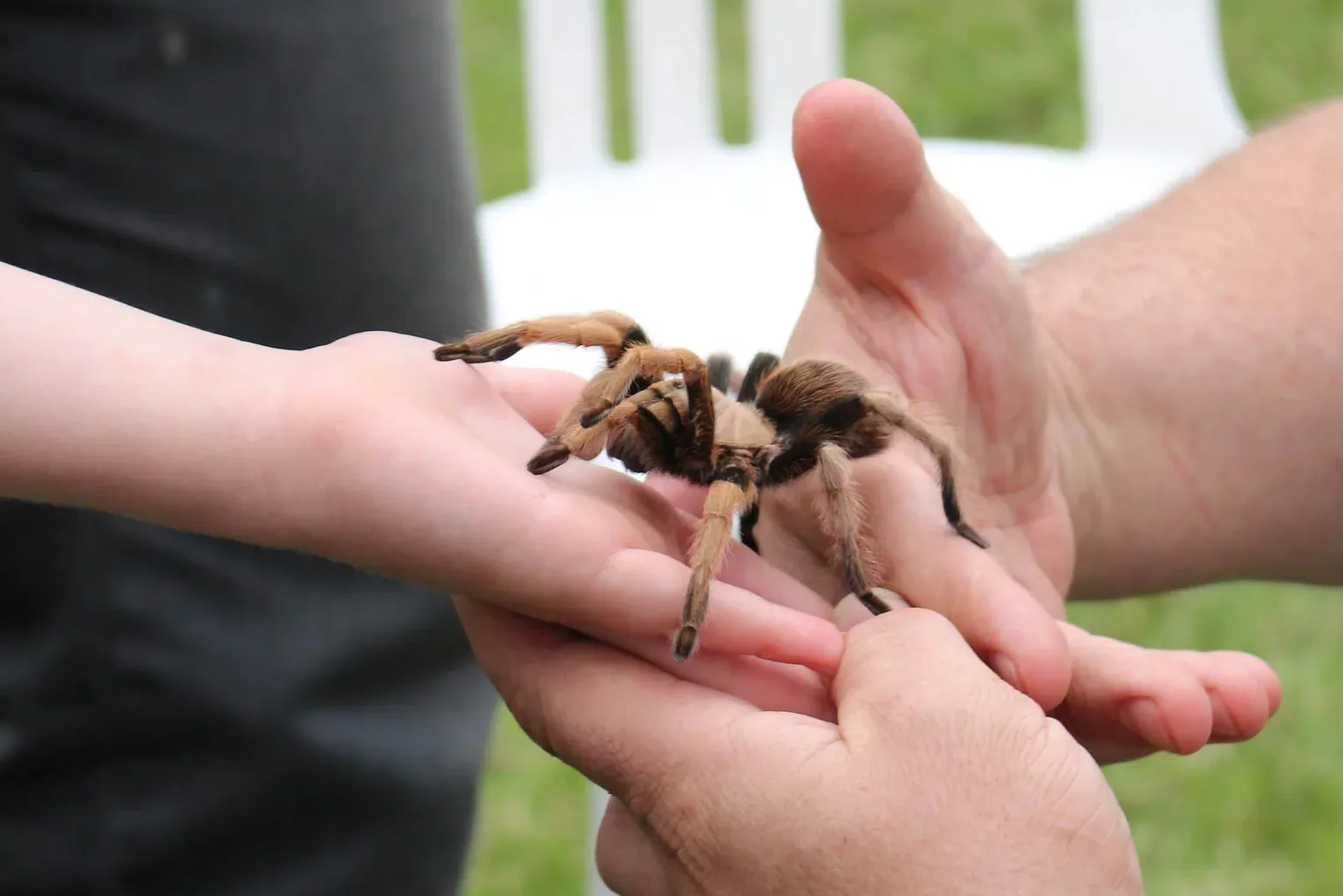
- Handle only when necessary, for rehousing, essential maintenance, or veterinary-style intervention.2
- Work low over a soft surface to reduce the fall risk.
- Move slowly and avoid cornering the spider. Defensive behaviour is usually a response to threat and vibration rather than aggression.2
- Wash your hands before any contact. Spiders can be vulnerable to infections, and clean hands also reduce the chance of contaminating the enclosure.2
Common health issues
When a tarantula looks unwell, the cause is often husbandry: ventilation, moisture, temperature swings, or stress from disturbance. Correcting the environment gently is usually the first step.
Dehydration: provide clean water consistently and review the humidity for your species. A stable enclosure in a warm, shaded area, not sun, helps avoid rapid drying and overheating.2
Mites and mould: these are often linked to persistently damp, poorly ventilated setups and uneaten food. Improve ventilation, remove leftovers, and keep the enclosure clean without over-wetting it.
Injury from falls: this is one of the clearest reasons to avoid casual handling. A tarantula can appear fine, then deteriorate rapidly after an abdominal injury.
Breeding: pause before you start
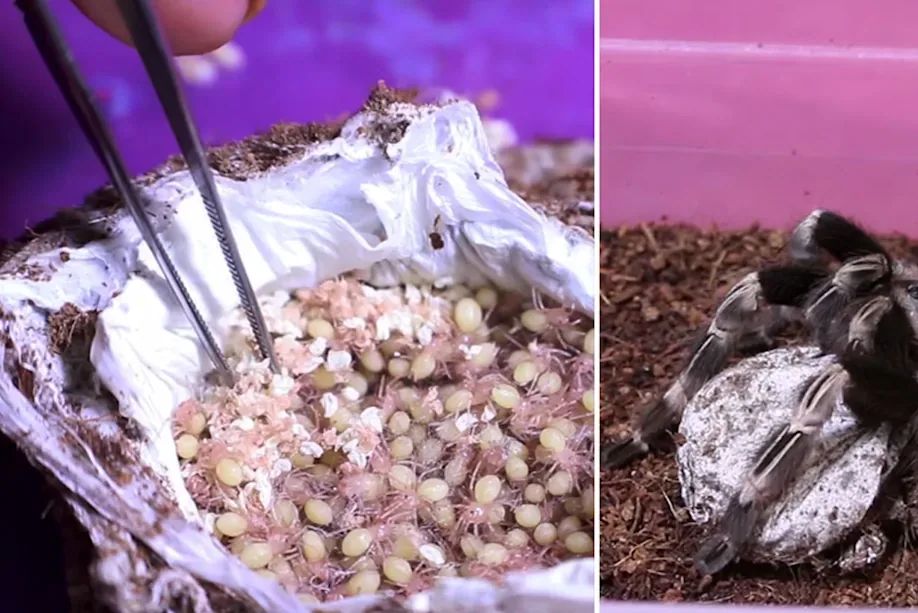
Breeding is not a casual add-on. It involves sexing, pairing risk, and managing egg sacs and spiderlings, and in Australia it may be regulated depending on the species and your location. Some licensing frameworks explicitly address breeding and trading conditions, so check the rules before you attempt it.6
What to do if you are bitten
Most spider bites are minor, but Australia has medically significant spiders, and first aid depends on the suspected species. If there are symptoms, or if you are unsure what bit you, get medical advice promptly.
- Funnel-web and similar high-risk bites: a pressure bandage with immobilisation is recommended, and urgent medical care is needed.7, 8, 9
- Redback bites: pressure immobilisation is generally not recommended because it can worsen the pain; seek medical advice if you are concerned or if symptoms develop.7
If you keep spiders at home, it is worth reading an Australian clinical first-aid guide once, calmly, before you ever need it.7, 8
The Bottom Line
A pet tarantula is less a companion than a small, watchful predator living on its own timetable, feeding when conditions suit and hiding when it chooses. Provide a stable enclosure, resist the urge to handle, and keep the care routine simple and consistent, and tarantula keeping is usually straightforward. Just settle the legal question for your state first, then let the spider do the rest.
References
- Australian Museum, Australian tarantulas (life history, burrows, lifespan)
- Northern Territory Government, Keeping spiders as pets (housing, feeding, handling, permits)
- Australian Geographic, Fact file: Australian tarantula (size and lifespan overview)
- Australian Museum, Ask an expert: Spider lifespan
- Minibeast Wildlife, Bug keeping FAQs (handling risk, falls, moulting and feeding precautions)
- Queensland Government, Licences to keep, use or display native animals (licensing framework)
- NSW Agency for Clinical Innovation (Emergency Care Institute), Snake and spider bite clinical tool
- healthdirect, Spider bites (symptoms, first aid, pressure immobilisation guidance)
- Sydney Children's Hospitals Network, Spider bites factsheet (pressure bandage guidance)

Dog lover and writer at My Pets Australia, sharing practical breed guides and care advice for Australian pet owners.