Pet Ants
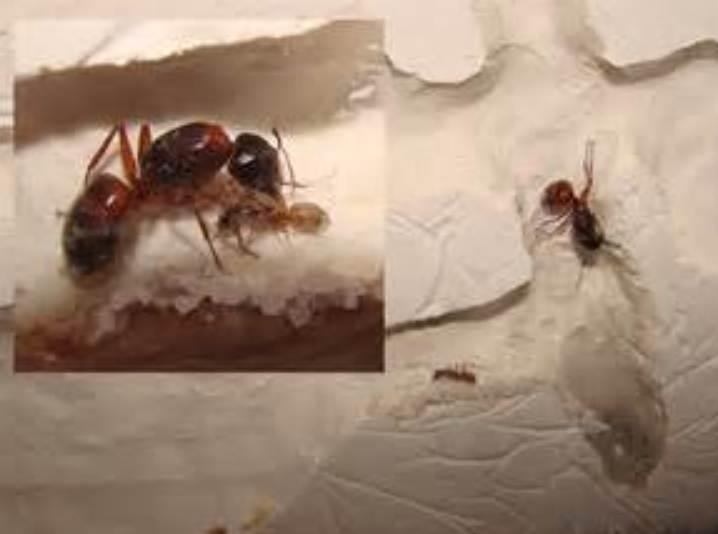
An ant colony is one of the few pets you keep to watch rather than to hold. Behind glass it runs like a small self-managing system: foragers head out, food comes back, brood develops, and waste gets carried away, most of it coordinated by chemical trails you can actually see form and fade. People usually start looking into it after finding a queen from a mating flight, buying a starter colony, or falling down a few videos. It is a genuinely rewarding thing to observe, and it is also low-effort in the best way once the setup is right. The catch is not drama but detail: dried-out nests, mould, drowned workers, and, in Australia, biosecurity rules that matter more than the hobby itself.1, 2
Why keep ants
Ants suit people who enjoy observation more than handling. A healthy colony behaves like a living machine, with foragers moving out, food coming in, brood developing, and waste being carried away. Much of that is guided by chemical communication, which is why trails appear, vanish, and re-form as conditions change.1
They also make a strong classroom species for slow, careful watching. You can follow the roles within a colony, see how food is shared, and notice how simple cues produce surprisingly organised behaviour.2
Legality and Biosecurity in Australia
Keeping ants is legal in much of Australia, but it sits inside a bigger reality: the country actively manages invasive ants, and movement controls exist because people spread pest ants without meaning to. That includes moving colonies, soil, potted plants, turf, mulch, and other carrier materials out of declared zones.3, 4
- Do not collect and transport wild colonies across suburbs, towns, or states. If you are unsure, do not move them.
- Check whether your area is under movement controls. Fire ant biosecurity zones in Queensland, for example, change over time.4
- Never post or export native insects without the right permits. Australia treats this as wildlife trafficking, with serious penalties.5
If you suspect an invasive ant such as a red imported fire ant, do not try to keep it. Report it through your state program or the National Fire Ant Eradication Program channels.4
Choosing an Ant Species
Species choice matters, but not for the reasons people often assume. The big differences are humidity needs, growth rate, worker size (tiny workers are escape artists), and whether the species is likely to sting. In Australia it is safer to focus on locally common, non-declared species that are legal to keep in your state or territory. Rules vary by jurisdiction, and some species that are easy to keep overseas, such as Lasius niger, are not native here and should not be imported or traded.5
A practical beginner-friendly checklist:
- Medium-sized workers, which are easier to contain and to observe.
- A moderate growth rate, so there is less pressure to expand the setup quickly.
- Forgiving humidity needs, since some species cope poorly with drying or over-wetting.
- Low sting risk, especially if children will be watching.
Setting Up a Formicarium
A workable setup has two parts: a nest area that is humid, dark, and stable, and an outworld where you place food and where most of the mess happens. Keeping the nest dark is not a gimmick. It reduces disturbance and makes the colony more likely to use the nest properly rather than clustering in exposed corners.2
A few principles hold for most commonly kept ants:
- Containment first: a tight lid, no gaps around tubing, and an escape barrier suited to your enclosure.
- Ventilation without drafts: enough airflow to reduce mould pressure, while keeping the nest from drying too quickly.
- A moisture gradient: ants often do best when they can choose slightly wetter or drier nest zones rather than one uniform condition.6
- A cleanable outworld: most feeding should happen outside the nest so leftovers can be removed.
Feeding Pet Ants
Ant diets are usually described as sugar and protein, but it helps to picture how the colony uses each. Many adult ants mainly take in liquids, while larvae can process more solid foods that workers bring back and prepare.1
Carbohydrates for energy. Offer small amounts of sugar water or honey water, presented so workers cannot drown, for example on cotton or a sponge. Replace it regularly to avoid mould and fermentation. The Australian Museum notes you can supply water using a dampened sponge, which is a simple, low-risk approach for small colonies.2
Protein for brood growth. Protein drives brood growth, and small insects are commonly used. Commercial feeder insects can be safer than wild-caught ones, which may carry pesticides or parasites. Keep servings small and remove leftovers before they spoil.
Water, always available. Even species that prefer drier nests still need reliable drinking water. A cotton-plugged water tube or a dampened sponge reduces drowning risk while keeping access steady.2
Reading Their Behaviour
Trail lines and sudden shifts in activity usually come down to communication, not moods. Ants are well known for chemical signalling through pheromone trails that guide nestmates to food and back again, and they also exchange information through contact with their antennae. The Australian Museum describes ants' chemical communication as especially complex and central to their success.1
Once you know this, the daily pattern becomes easier to read. A food find sparks recruitment, trails strengthen, then fade as the resource is exhausted or the route changes.7
Common Problems in Captive Colonies
Most illness in pet ants is environmental stress. The colony cannot tell you what is wrong, but the enclosure usually can.
- Mould blooms: excess moisture, poor ventilation, or old food left too long.
- Die-offs after feeding: food contaminated with pesticides, or spoiling protein left in the nest or outworld.
- Brood not developing: too cold, too dry, not enough protein, or constant disturbance and light over the nest.
- Frequent escapes: enclosure gaps, condensation bridges, or a barrier that does not hold very small workers.
If you see sudden, widespread losses, stop feeding questionable foods, remove leftovers, stabilise temperature and moisture, and reduce disturbance. For large stinging species, or if you are worried about an invasive ant, prioritise safe containment and seek local biosecurity advice rather than trying to treat the colony yourself.4
Ants in the Classroom
A formicarium makes slow biology visible. The Australian Museum suggests simple observation and marking experiments where appropriate, and describes classic behaviours such as ants tending aphids for sugary secretions, which can be watched with care using appropriate plant material.2
- Track how long a sugar trail persists after the food is removed.
- Offer two food sources and see which is recruited to first.
- Compare activity at different times of day without changing the setup.
The Bottom Line
Ants thrive in captivity when the setup is steady and boring: a dark nest, reliable water, measured feeding, and clean airflow. Your job is mostly to keep the conditions within a safe range, then watch the colony solve the rest with chemicals, touch, and movement. In Australia, the most responsible ant-keepers are also quiet biosecurity allies. Do not move ants or risky materials without checking restrictions, and do not trade or ship native insects outside the rules.3, 4, 5
References
- Australian Museum, Ants: Family Formicidae
- Australian Museum, Observing ants (collecting and care of a colony)
- Business Queensland, Electric ant (biosecurity zone and movement controls)
- National Fire Ant Eradication Program, Fire ant biosecurity zones
- Australian Government (DCCEEW), Tiny cargo, big crime: exporting insects without a permit is illegal
- Keeping Insects, Keeping ants as pets (humidity and feeding overview)
- Encyclopaedia Britannica, Ant (behaviour and communication overview)
- Ramirez et al. (2018), Modeling tropotaxis in ant colonies: recruitment and trail formation (arXiv preprint)

Dog lover and writer at My Pets Australia, sharing practical breed guides and care advice for Australian pet owners.