The Ultimate Guide to Russian Blue Cats: Characteristics, Care, and More
The Russian Blue is a short-haired cat known for a plush silver-grey coat and a quiet, watchful nature. It is the classic calm-house cat: affectionate with the people it knows, reserved with strangers, and happiest in a home with a predictable rhythm. People usually start reading up on the breed when they are weighing up a kitten, trying to identify a grey cat they have adopted, or checking whether it will suit a busy household or someone with allergies. The details matter, because a Russian Blue's dense coat and reserved temperament are a good fit for some homes and a frustrating mismatch for others. A few common claims online, especially about "hypoallergenic" cats, also need a more careful look.
Size: Medium, commonly around 3 to 6 kg, varies by sex and build1, 2
Coat: Short, dense double coat; blue (grey) with silver tipping1, 2
Temperament: Quiet, intelligent, often reserved with strangers; affectionate with familiar people1, 2
Life span: Commonly around 10 to 20 years, individual variation is normal2
Grooming: Low; weekly brushing is usually plenty2
Activity level: Moderate; enjoys climbing, games, and routine play2
Health watch-outs: Weight gain if overfed; general cat health risks include dental disease and urinary tract problems, not unique to this breed2, 5, 7
Training: Learns quickly with gentle, reward-based training2
With children: Often fine with calm, respectful handling; tends to prefer predictability2
With other pets: Can do well with a slow introduction; many prefer a peaceful home over a hectic one2
History and Origin
The breed is commonly linked to northern Russia, often associated with the port of Arkhangelsk, historically known as "Archangel", and Russian Blues were being shown in England by the late 1800s. As with many breeds, the origin story blends documented history with some uncertainty, and the modern Russian Blue was shaped by selective breeding over time.3 Stories about royalty and folklore are part of the breed's lore, but they are hard to substantiate and are best treated as tradition rather than fact.
Appearance and Physical Characteristics
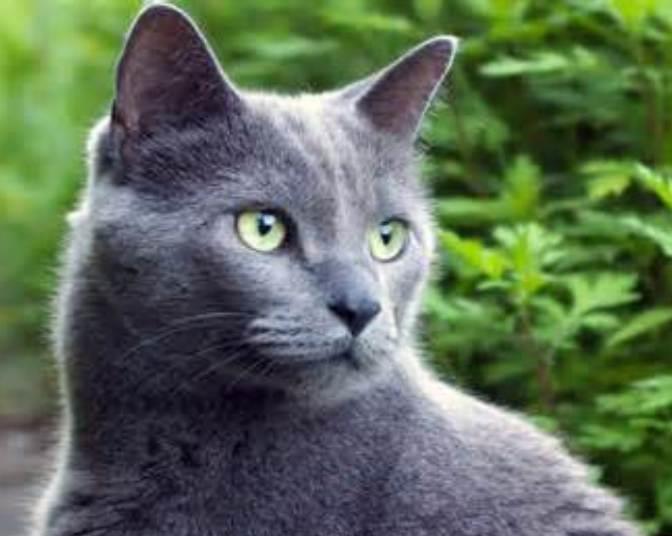
A classic Russian Blue has a fine-boned but muscular body, a wedge-shaped head, large ears, and a short plush coat that sits up off the body like velvet. The colour is always "blue" in cat-fancier terms: a deep grey with silver-tipped guard hairs that catch the light as the cat moves.1, 2
Many short-haired grey cats resemble the breed at a glance, which makes it easy to misidentify. Without pedigree papers from a recognised cat association, most "Russian Blue" cats in shelters are best described as domestic short-hairs with a blue coat.2
Temperament and Personality
Russian Blues are observant and routine-oriented. They tend to watch first, then approach on their own terms, especially around visitors. With familiar people, many become devoted shadows: present, close by, but rarely demanding.1, 2
They usually enjoy interactive play and problem-solving toys. Short sessions spread through the day suit them better than a single long workout, and climbing space, whether a cat tree, wall shelves, or a cleared bookcase, often becomes part of their daily circuit.2
Is a Russian Blue Right for You?
A Russian Blue tends to suit a calm home more than a hectic one. Run through this quick checklist:
- You prefer a calm, predictable household rhythm.2
- You like an affectionate cat who may not greet every stranger like family.2
- You can provide daily play and climbing space, without needing a hyperactive cat.2
- You are willing to manage diet and dental care as part of normal cat ownership.2, 6, 8
If you want a boisterous, constantly-in-your-face cat, or a household full of noise and surprise visitors, this is probably not the breed for you. It rewards households that value quiet company and a steady routine.2
Training and Enrichment
Russian Blues often respond well to reward-based training, and they learn quickly. Keep sessions brief and predictable. Many enjoy:
- food puzzles and treat balls for mental work2
- wand toys and short chase games, finished with a "catch"2
- climbing routes and window perches for vertical territory2
If your cat is shy, socialisation is less about forcing interaction and more about steady, low-pressure exposure. Let the cat control the distance, reward calm curiosity, and keep the environment consistent.2
Health and Lifespan
Russian Blues commonly live around 10 to 20 years, and individual variation is normal.2 They are not "destined" for obesity, but they can gain weight quietly if meals are generous and activity is low. Beyond that, the main things to watch are not unique to the breed: they are the ordinary risks that face most cats.
Urinary problems, often discussed under the umbrella of feline lower urinary tract disease, are common enough in cats that it is worth building good habits early. Regular access to fresh water, and including wet food in the diet, can support hydration. Seek veterinary advice promptly if you notice straining, frequent trips to the tray, blood in urine, or urinating outside the litter tray. These can escalate quickly, especially in males.7
Dental disease is widespread in cats, and Russian Blues are not exempt. Home tooth brushing, with pet toothpaste only, helps, but many cats need professional dental care at some point. Build a calm routine early: short sessions, gentle handling, and a stop-before-stress approach.6, 8
Grooming and Care
The coat is dense but does not typically mat, so grooming is low fuss. A weekly brush removes loose hair and keeps the coat even, with a little extra brushing during seasonal shedding. Keep nails trimmed, and check ears and eyes as you would with any cat.2
Diet and Nutrition
A Russian Blue's weight can drift upwards slowly if you are not paying attention. Aim for a complete and balanced diet suitable for your cat's life stage, measure portions, and reassess if you cannot easily feel the ribs under a light fat cover.2, 7
For Australian households, RSPCA guidance is a sensible baseline: choose a high-quality complete food, avoid unbalanced diets, and ask your vet for tailored advice if your cat has medical needs or weight changes.5, 7
Are Russian Blue Cats "Hypoallergenic"?
No cat is truly hypoallergenic or allergen-free. Cat allergies are usually triggered by proteins, especially Fel d 1, carried in saliva and skin secretions, not the fur itself. Some individual cats may be easier for a particular person to live with, but it is not something a breed can guarantee.4
If allergies are part of your decision, the most reliable approach is practical: spend time with the specific cat you are considering, in a home setting if possible, and speak with your GP or allergy specialist about managing exposure.4
The Bottom Line
A well-bred, well-settled Russian Blue is a plush, sharp-minded, quietly particular cat that thrives on routine. Keep the coat simple, the meals measured, the play regular, and the vet care steady, and you will usually see the best of what this breed is known for: plush beauty, a sharp mind, and calm companionship.1, 2
References
- PetMD, Russian Blue Cat Breed Health and Care
- The International Cat Association (TICA), Russian Blue
- Wikipedia, Russian Blue (history overview and show timeline)
- Purina Institute, There Are No Allergen-Free or "Hypoallergenic" Cats
- RSPCA Knowledgebase, What should I feed my cat? (Updated 20 Nov 2025)
- RSPCA Knowledgebase, How should I take care of my cat or dog's teeth?
- RSPCA NSW, Nutrition (cat care)
- Cat Protection Society of NSW, Factsheet: Feline dental care

Dog lover and writer at My Pets Australia, sharing practical breed guides and care advice for Australian pet owners.