The Benefits of Microchipping Your Pets
A microchip is a small radio-frequency identification device implanted under your pet's skin that carries one unique number. It is the single most reliable way to reunite a lost cat or dog with its owner, and in much of Australia it is a legal requirement rather than an optional extra. The chip does not track your pet or store your address inside it. What it does is link a scannable number to a registry record that vets, councils, and shelters can look up. That link only works if your details are correct and current, which is where most failures happen.1, 2, 3
Understanding pet microchipping
A pet microchip is a tiny RFID device, usually implanted between the shoulder blades at the back of the neck. When a scanner passes over it, the chip transmits a unique identification number.1 That number is then used to search a registry record where the owner's contact details are stored. The chip itself is an ID key, not a portable file of personal information.1, 2
It helps to be clear about what the device actually does. A microchip provides a unique ID number that a compatible scanner can read and match to a registry record.1, 2 It does not work like GPS, does not show your pet's location, and does not broadcast continuously. It is a passive device activated by the scanner at very short range.3
How microchipping is done
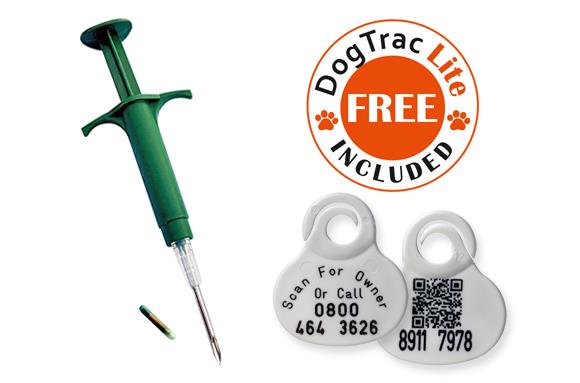
Microchipping is typically performed by a veterinarian or an authorised identifier. The chip is inserted using a sterile applicator needle. The process takes seconds, much like a routine injection, and most animals react only briefly.1 After implantation, the critical step is registration: making sure the microchip number is correctly recorded and linked to current contact details in the relevant database.1, 2
Microchip types and frequencies
Pet microchips come in different frequencies, and in practice what matters is scanner compatibility and standards compliance, especially if you travel or import an animal. Australia's import conditions specify that cats and dogs must have a microchip that can be read by an ISO-compatible reader, and a non-functional or mismatched chip can lead to serious delays and costs.4, 5
The widely used international standard for animal identification uses 134.2 kHz (ISO 11784/11785), which is why "ISO-compliant" is the phrase you will see repeated in travel and import guidance.6
How microchips help locate lost pets
Microchips do not prevent a pet from going missing, but they change what happens next. When a found animal is taken to a vet clinic, council, or shelter, staff can scan for a chip and use the number to contact the registered owner.1 Large shelter studies have found markedly higher return-to-owner rates for microchipped animals compared with non-microchipped animals.7
A microchip is only as useful as its registry record. If you move, change phone numbers, or adopt a pet and never complete the ownership transfer, a scan may not lead back to you.1, 2 Keeping those details current is the one job that stays with you for the animal's whole life.
A standard identification method in Australia
Across Australia, microchipping is widely treated as a baseline of responsible pet ownership, and in many places it is compulsory. In NSW, for example, cats and dogs must be microchipped before being sold or given away, or by 12 weeks of age, and the details are recorded in the NSW Pet Registry.2 Because requirements vary between states and territories, check your own state authority for the exact rules that apply to you.
Collars and tags still matter, because they give instant visual identification and do not rely on someone taking your pet to be scanned. The collar is the quick check anyone can read on the spot, and the microchip is the backup identity that stays with the animal when a collar has come off.2
Microchips and travel or import
If you are importing a cat or dog to Australia, the Australian Government requires the animal to be identifiable by a working, ISO-compliant microchip, and the microchip number must match the import documents. If the chip cannot be read or the number is inconsistent, the animal may not be cleared as planned and can face extended quarantine or other serious outcomes.4, 5
For travel planning, have your vet scan the chip well ahead of any deadlines, and make sure the microchip number is recorded accurately on every form that relies on identity verification.4, 5 Chips are usually implanted between the shoulder blades but can sometimes move slightly under the skin, which is one reason shelters and vets scan more than one area and why import guidance recommends verification scans during the process.4, 5
What a microchip does and does not enable
A standard pet microchip does not store your pet's medical history. What it provides is a stable ID number that can be linked, through clinic systems and registries, to the correct animal, which is especially useful if a lost pet arrives at a shelter or clinic with no other identification.1 Claims that routine microchips monitor activity, detect disease early, or track vital signs belong to future-facing concepts and specialised devices, not the typical identification microchip used for companion animals today.
Two common worries are worth answering directly. A microchip cannot track your pet, because it is not a GPS tracker and can only be read when a scanner is held close enough to energise it.3 It also does not expose your personal information to the public: the chip holds an ID number, and your details sit in registry systems accessed only by authorised organisations such as vets, shelters, and councils when they need to contact the owner of a found animal.1, 3
Longevity and practical maintenance
Pet microchips are designed to last for the animal's lifetime and do not need a battery. They are passive devices that respond only when energised by a scanner at close range.3 The upkeep is mostly administrative:
- Keep your phone number, email, and address current on the relevant registry.1, 2
- After adoption or sale, make sure the ownership transfer is completed, not just handed over informally.2
- Ask your vet to scan the chip occasionally, for example during annual check-ups, and especially before travel.4, 5
Registry providers do change over time, so it is worth confirming which database holds your pet's record and that it is still active.8, 9
Costs and low-cost options
Microchipping costs vary by clinic, by state or territory requirements, and by whether it is offered through a council or welfare program. The cost is usually a once-off charge for implantation, though some registries may charge fees for transfers or updates depending on the provider and jurisdiction. If cost is a barrier, check your local council and major animal welfare organisations for periodic discounted microchipping events and programs.
References
- RSPCA Australia, Microchipping
- NSW Office of Local Government, Microchipping (NSW Pet Registry)
- RSPCA Pet Insurance, Pet microchipping myths
- Australian Government (Department of Agriculture, Fisheries and Forestry), Microchips for importers of cats and dogs
- Australian Government (DAFF), Cats and dogs frequently asked questions (microchip requirements)
- ISO 11784 and ISO 11785 (overview of animal RFID standards and 134.2 kHz carrier frequency)
- Journal of the American Veterinary Medical Association (JAVMA), Microchipped animals and return-to-owner outcomes (shelter study)
- RSPCA Queensland, Important update: Pet microchipping (HomeSafeID closure and checking registration)
- RSPCA Knowledgebase, Who to contact to change microchip registry details

Dog lover and writer at My Pets Australia, sharing practical breed guides and care advice for Australian pet owners.