Siamese Cat
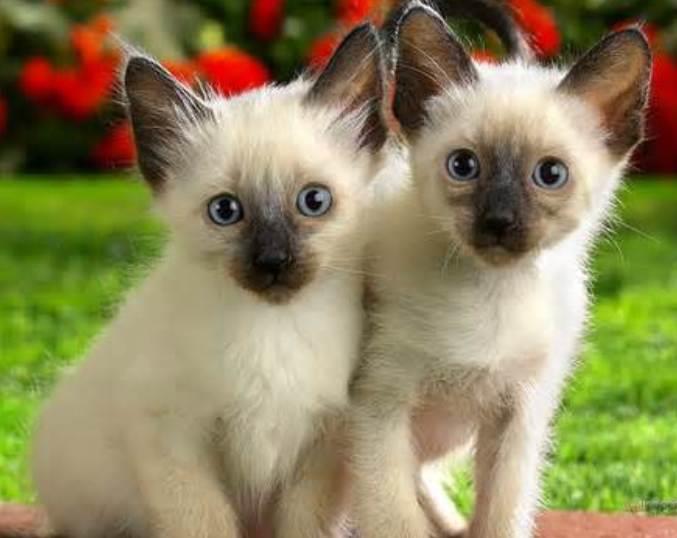
The Siamese is a sleek, blue-eyed cat from Thailand, instantly recognisable for its pale body and dark "points" on the face, ears, legs and tail. It is one of the most people-oriented breeds you can bring home: intelligent, playful, talkative, and genuinely interested in what you are doing all day. That sociability is the whole appeal, and it is also the catch. A Siamese wants company and stimulation, and a home that cannot offer either will hear about it.1, 2
History and Origin
The Siamese is a pointed cat native to Thailand, formerly Siam, where it has a long history in Thai culture. It was exported to Europe during the 19th century, and Western breeders there refined it into the Siamese lines most people recognise today.1, 3
You will hear about two broad styles. Modern show lines are very slender and angular, while "traditional" or "old-style" cats are more moderate in build. Some registries separate the old-style cat as the Thai breed, reflecting the earlier, less extreme type.1
Appearance and Physical Characteristics
A Siamese is built for movement: medium-sized, fine-boned and athletic, with a long body and tail, large ears and a wedge-shaped head. The coat is short, fine and close-lying, so it shows muscle tone and outline rather than hiding it. Modern show-style cats can be more extreme in type than traditional ones.4
The "point" pattern means the body stays relatively pale while the extremities carry the darker colour. This comes from a form of pigment expression that is strongest in the cooler parts of the body, which is why the face, ears, legs and tail hold the deepest colour.5 In many registries the classic Siamese point colours are seal, blue, chocolate and lilac, with blue eyes expected in the breed standard.4
You will also see Siamese labelled "traditional", "modern", or by point colour (seal point, blue point, and so on). These terms often reflect style, registry rules or breeder lines rather than entirely separate breeds. Some patterns are classified differently between registries: certain "lynx point" (tabby-point) cats count as Siamese in some systems, while other registries place expanded colours and patterns under related categories such as Colourpoint Shorthair.4 If paperwork matters to you for showing, breeding, insurance or simple clarity, ask which registry the breeder uses and what name it assigns to the cat's colour and pattern.
Temperament and Personality
A Siamese tracks the household like a spotlight: present, observant, and quick to respond to sounds and movement. They are widely described as intelligent, active and strongly people-oriented, often seeking frequent interaction rather than quietly disappearing for the day.2
They are also famously vocal. That voice is not bad behaviour so much as a normal part of how many Siamese communicate, especially in homes where they have learnt that sound reliably brings attention, play or food. A bored or under-stimulated Siamese tends to get louder, not quieter.2
Is a Siamese Right for You?
For a lively household that is home often, a Siamese is a rewarding cat. For a quiet home where the cat would be alone all day, it is a harder fit. Consider one if you match most of the points below.
- Someone is around often, or the cat has safe companionship such as another cat plus consistent human interaction.
- You enjoy an interactive, playful cat and can provide daily mental stimulation.
- You are happy to manage noise, since Siamese can be chatty, particularly when bored or under-stimulated.2
Care and Housing
The day-to-day care is straightforward, but the lifestyle piece matters. A Siamese thrives on a steady rhythm of play, food and rest, conserving energy between bursts of activity like a small predator living indoors.
Siamese cats are built to move. Indoor life is safer for both wildlife and cats, but it needs compensation.
- Provide climbing opportunities, scratchers, and short daily play sessions that let them stalk, chase and pounce.
- Rotate toys to keep novelty alive.
- Use food puzzles or scatter feeding for mental work.
- Provide vertical space such as cat trees and sturdy shelves for surveying and resting.
Training a Siamese is mostly about shaping routines: rewarding calm behaviour, building positive associations with handling, and keeping the home predictable. Keep sessions short and use gentle, consistent reinforcement. For socialising, let the cat set the pace. Even a bold cat needs gradual introductions to new people, animals and environments, quiet rooms first and wider access as confidence settles.
Health and Lifespan
No breed is guaranteed trouble-free. Siamese lines have been associated with some inherited and breed-linked conditions, and any individual cat can develop common feline problems such as dental disease or obesity. The useful approach is simple: know what is plausible, watch for early signs, and keep regular veterinary checks.
Amyloidosis. This is a disorder where abnormal protein deposits (amyloid) build up in organs and can cause serious disease if critical tissues are affected. Veterinary references describe the condition and its potential severity, and some resources discussing Siamese welfare note liver involvement in the breed.8, 9
Dental disease. Gingivitis can progress to periodontitis, which can lead to pain and tooth loss. Signs include bad breath, red gums, drooling or reluctance to eat. Preventive care and vet checks matter here more than breed labels.6, 7
Congenital megaoesophagus. Some congenital oesophageal disorders are reported more often in Siamese cats than in other breeds. If a kitten repeatedly regurgitates, which is different from vomiting, or struggles with eating, that is a reason for prompt veterinary assessment.10
Grooming and Care
The short coat is low-maintenance, and a weekly brush is usually enough to remove loose hair and keep the coat glossy.
Dental care is the part worth starting early. Dental disease is common in cats, and prevention is far easier than treatment once gum disease sets in. If your cat will tolerate it, toothbrushing with cat-safe toothpaste is one of the most effective home habits you can build, introduced slowly and gently.6, 7
Diet and Nutrition
Choose a complete, balanced diet suitable for your cat's life stage, keep an eye on body condition over time, and speak with your vet if weight creeps up or down unexpectedly. Fresh water should always be available.
A Few Things Worth Knowing
- Siamese cats appear constantly in film, books and illustration because the silhouette reads instantly: pale body, dark mask, bright eyes.
- That visibility can mislead. Real Siamese are not ornaments; they are active animals with strong preferences, and they notice when life gets dull.
- Blue eyes are part of the breed standard for pointed Siamese types.4
The Bottom Line
A Siamese is often a close companion: quick to learn household patterns, quick to voice an opinion, and quick to become bored if the days are empty. If you can offer company, play and steady care, they settle into a lively, attentive presence that feels less like a decorative pet and more like a small, watchful creature sharing your space.
References
- The International Cat Association (TICA), Thai (Old-Style Siamese) breed information
- International Cat Care, Siamese breed information
- EuroPetNet, Siamese (history and early imports)
- Governing Council of the Cat Fancy (GCCF), breed standards and Siamese colour information
- UC Davis Veterinary Genetics Laboratory, cat coat colour genetics (colourpoint)
- Cornell Feline Health Center, feline dental disease
- Cat Protection Society of NSW, feline dental care
- Merck Veterinary Manual (Pet Owner Version), amyloidosis in cats
- Universities Federation for Animal Welfare (UFAW), Siamese: amyloidosis
- Merck Veterinary Manual, congenital oesophageal disorders of cats (breed most often affected)

Dog lover and writer at My Pets Australia, sharing practical breed guides and care advice for Australian pet owners.