Rex Cat
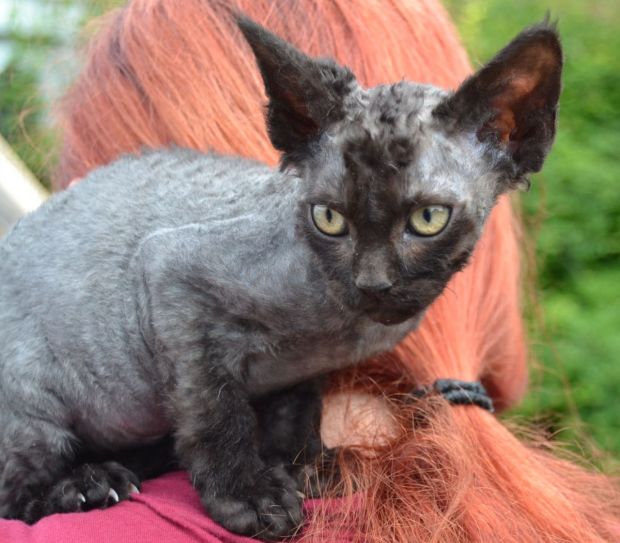
A Rex cat is the one with the curly coat, the big ears and the light, athletic build that people notice the moment it crosses a room. The catch is that "Rex" is not a single breed. It is a word for a curly or wavy coat caused by a genetic mutation, and it turns up in several cat breeds. Most of the time the cat people mean is a Cornish Rex or a Devon Rex, two separate breeds with different coat genetics.1, 2 These are social, playful, people-focused cats, and the sections below sort out which is which and what daily care actually involves.
Quick profile
- Meaning of "Rex": a curly or wavy coat caused by a genetic mutation, used across several cat breeds.
- Common "Rex cats" people mean: Cornish Rex and Devon Rex, which are different breeds with different coat genetics.1, 2
- Size: typically small to medium, fine-boned but often surprisingly muscular when you pick one up.1, 4
- Coat: short, soft and wavy. The Cornish Rex has no guard hairs and forms neat "Marcel waves".1, 4
Which Rex cat is it?
Cornish Rex and Devon Rex look similar at a glance, with big ears, short coats and a light frame, but they are not the same breed. Their curls come from different mutations, which is why early attempts to cross the two produced straight-coated kittens.2
- Cornish Rex: tight, even waves over the body, whiskers often crinkled, and a coat that lacks guard hairs.1, 4
- Devon Rex: also wavy or curly, but usually with a different look to the head and coat texture. The breed was founded from a curly-coated kitten found in Devon in 1960, named Kirlee.2
If you are trying to identify a pet cat, the most reliable answer comes from pedigree papers or a breeder's documentation. Many curly-coated cats are simply domestic shorthairs with a coat variation.
History and Origin
Cornish Rex
The Cornish Rex began with a single curly-coated kitten, Kallibunker, born in Cornwall, England, in 1950. Breeding back to his mother helped establish the trait, and the line was later developed through carefully managed outcrossing.3, 5 In the UK, the breed gained official recognition with the GCCF in 1967, with championship status.4
Devon Rex
The Devon Rex traces back to Kirlee, a curly-coated kitten found in Buckfastleigh, Devon, in 1960. The coat gene turned out to be different from the Cornish Rex, which is why the two breeds later developed along separate lines.2
Appearance and Physical Characteristics
Rex coats feel unusually soft because the hair structure differs from most cats. In Cornish Rex cats the coat is short, dense and silky, with defined waves and no guard hairs, and even the whiskers can curl.1, 4
That fine coat also changes how the cat experiences its environment. Rex cats chill more easily than thick-coated breeds and will seek out warm spots around the house. Sun exposure is worth managing too, since a thin coat offers less natural protection.1
Temperament and Personality
Temperament varies from cat to cat, but breed organisations consistently describe Cornish Rex cats as social, affectionate and keen to play. They tend to be lively indoors and stay interested in interaction well into adulthood.4
The intelligence shows up as curiosity. Cupboards get investigated, new objects get tested with a paw, and routines are learned quickly. It reads less as naughtiness than as persistence. Plan on climbing space, puzzle feeders and play that mimics stalking and pouncing.
Is a Rex Cat Right for You?
A Rex cat suits a home where someone is around and happy to interact, because these are social animals that want company and activity. They are not a good match for a household that wants a quiet, independent cat to keep to itself. The fine coat also means a bit more attention to warmth and sun than a typical shorthair. If you can offer indoor warmth, climbing space and daily play, a Rex cat settles well.
Training and Socialisation
Rex-type cats often respond well to gentle, consistent training because they enjoy engagement and routine. Keep sessions short, let the cat walk away when it wants to, then try again later.
- Use rewards: tiny treats, a favourite toy or a brief game can reinforce calm behaviour.
- Handle early: regular, gentle handling of paws, ears and mouth makes grooming and vet visits less stressful over time.
- Slow introductions: new people and pets should arrive gradually, with safe retreat spaces and predictable feeding and play routines.
Health and Lifespan
No breed is problem-free, but many Rex cats do well with sensible breeding and routine preventive care. A few issues come up repeatedly in breed guidance and veterinary resources.
- Weight gain: some Cornish Rex cats will overeat if allowed. Measure meals, monitor body condition and keep play and climbing in the daily routine.6
- Heart and joint screening: the Cornish Rex may be predisposed to conditions such as hypertrophic cardiomyopathy (HCM) and patellar luxation. If you are buying a kitten, ask what health screening the breeder does in their lines.1
- Skin and sun: a fine coat means less protection from sun and environmental irritation. Provide shade, avoid harsh grooming products, and see a vet early if you notice redness, itching or hair loss.1
The earlier you spot a change in coat texture, appetite, breathing or exercise tolerance, the easier it is to investigate. Annual vet checks are a quiet kind of insurance.
Grooming and Care
Despite the curly coat, grooming is usually straightforward. Over-brushing can be counterproductive on some Rex coats, so use a gentle approach and let the natural wave settle back into place.
- Coat care: light grooming as needed. Some Cornish Rex cats need an occasional bath, because skin oils can build up more noticeably on a fine coat.6
- Ears and toes: some Cornish Rex lines develop greasy build-up, so check and clean gently as advised by your vet.1
- Teeth: regular dental care matters for all cats. Ask your vet about tooth brushing, diet choices and professional cleaning intervals.7
- Warmth and shelter: thin-coated cats should have warm resting areas and should not be left exposed to cold, wet weather.4
A Few Things Worth Knowing
- Curly-coated cats show up in film, books and online media because the coat is so distinctive.
- A "Rex-like" look in a story does not guarantee the character is meant to be a Cornish or Devon Rex. Famous fictional cats are not always tied to a real breed.
- In Australia, the Cornish Rex is listed among the breed standards recognised by the Co-ordinating Cat Council of Australia.8
The Bottom Line
"Rex cat" is really a coat story. Once you work out which breed you are looking at, or whether it is simply a curly-coated pet cat, the care becomes straightforward: warmth, good food habits, gentle coat care, clean ears and teeth, and the kind of play that keeps a bright, active animal settled indoors. The curls are the first thing you notice, but the daily rhythm is what makes the match work.
References
- The International Cat Association (TICA), Cornish Rex
- Devon Rex (overview and history)
- Cat Fanciers' Association (CFA), Cornish Rex (breed history)
- Governing Council of the Cat Fancy (GCCF), Cornish Rex
- The Cat Fanciers' Association / TICA breed history resource, Classic Cornish Rex history (Kallibunker)
- Cornish Rex Breed Council, About the breed (care notes and lifespan ranges)
- RSPCA Australia, How should I care for my cat's teeth?
- Co-ordinating Cat Council of Australia (CCCA), Breed standards listing (includes Cornish Rex)

Dog lover and writer at My Pets Australia, sharing practical breed guides and care advice for Australian pet owners.